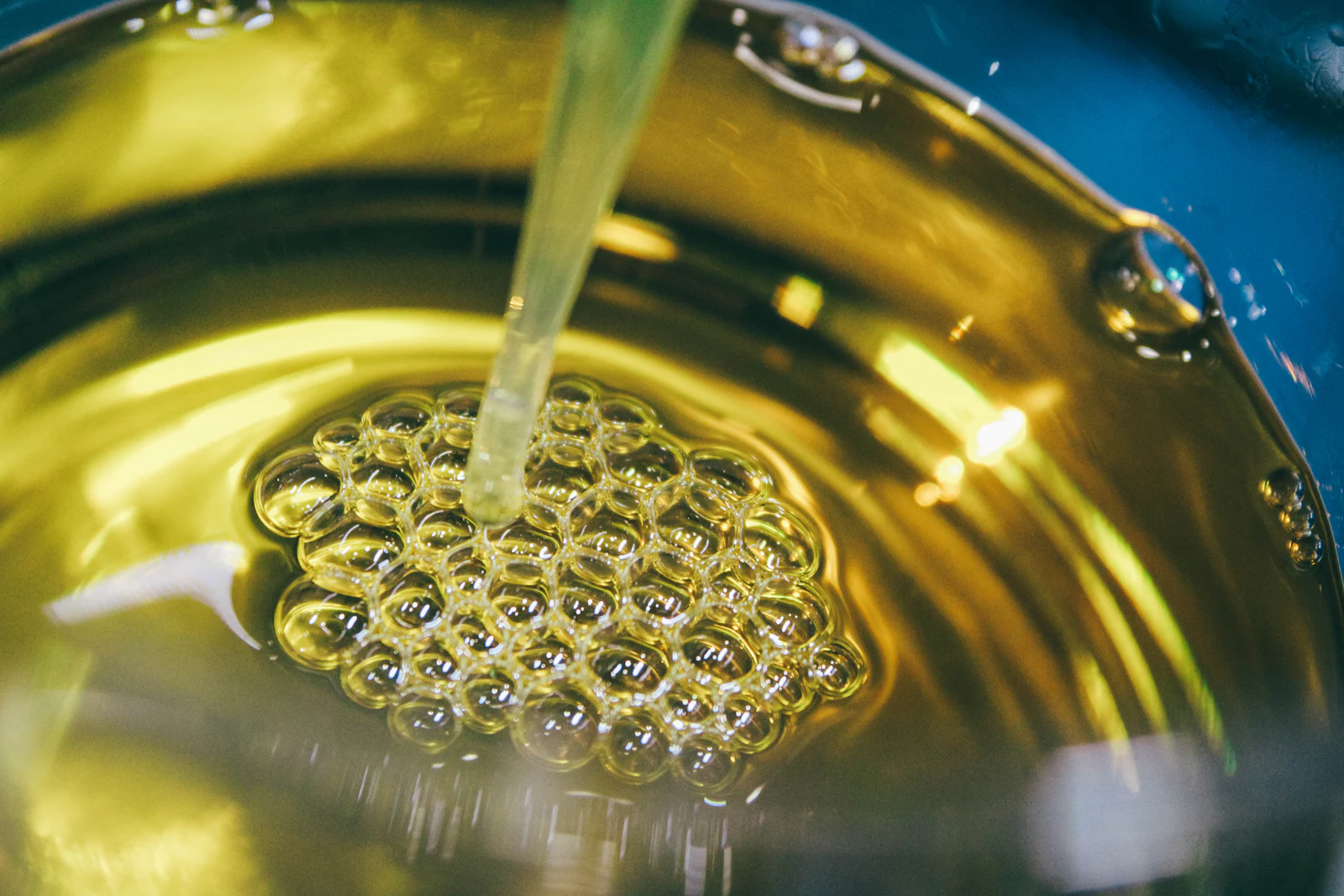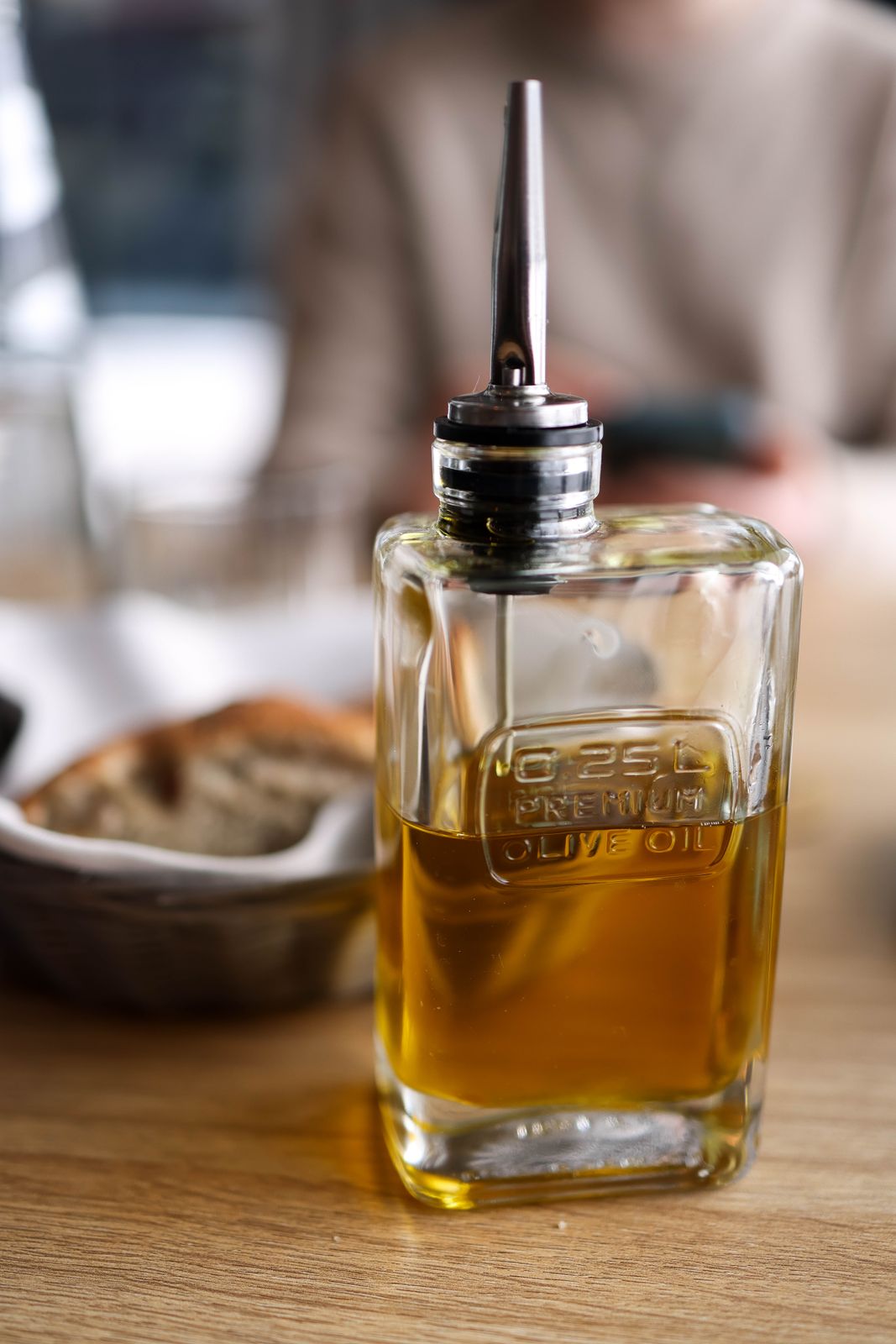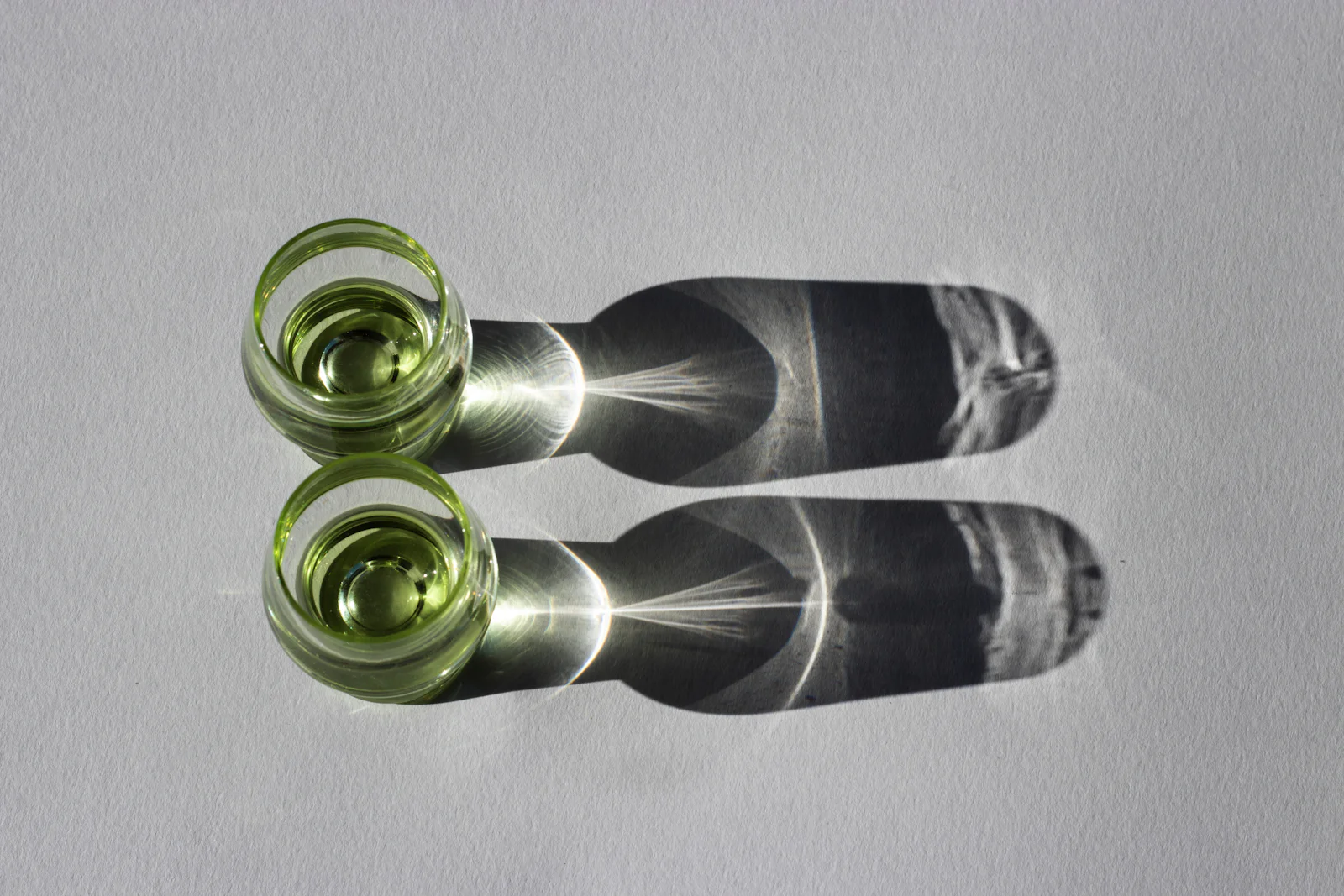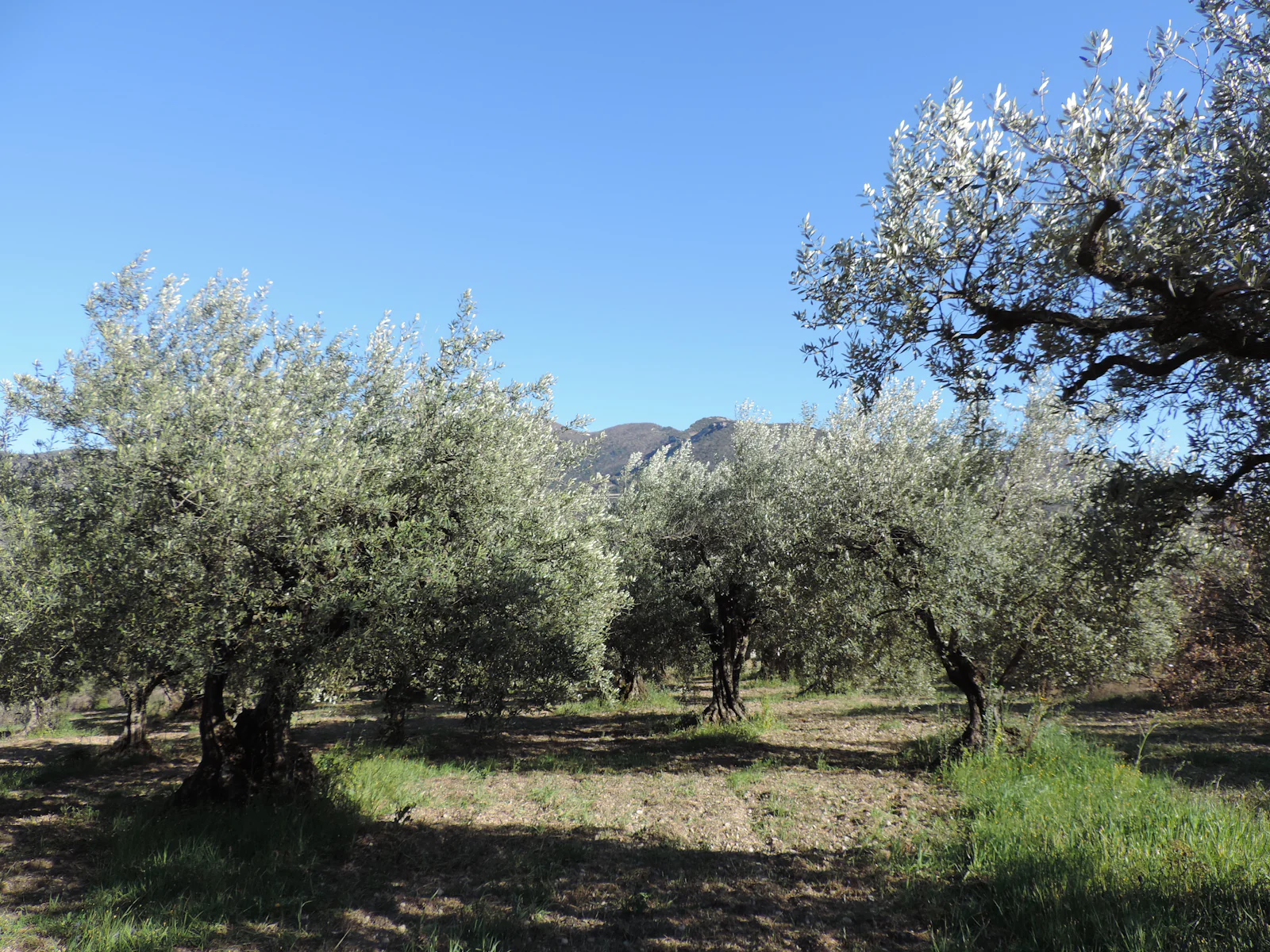
Drive through the province of Jaén in spring and you see the same picture for hours: olive trees in straight rows to the horizon, over hills, through valleys, right up to the edges of the villages. Around 66 million trees stand here on some 550,000 hectares – the largest continuous olive landscape in the world. Almost all of them belong to the same variety: Picual. It supplies roughly half of Spain's olive oil and, by common estimates, about a quarter of the world's. No other olive variety shapes the global market so strongly – and few are so underrated.
Origin and names
The name comes from the Spanish pico, the tip: the fruit ends in a distinct point. The cradle of the variety is Martos in the province of Jaén, where it is still called Marteño or Marteña. Other regional names are Lopereño (after Lopera), Nevadillo Blanco, Picuda and Salgar. This abundance of names is typical of old varieties that spread by cuttings long before any official register existed.
The great Picual groves did not appear overnight. Andalusia's olive landscape goes back to the Roman province of Baetica and was developed further in al-Andalus; the Picual monoculture as we know it today emerged mainly in the 19th and 20th centuries, when Jaén gradually replaced its grain fields and vineyards with olive trees.
Jaén: the largest olive landscape in the world
| Indicator | Figure |
|---|---|
| Olive area of Jaén province | around 550,000 hectares |
| Olive trees | about 66 million |
| Share of Picual in Jaén | over 90 percent |
| Share of Spanish production | more than 50 percent |
| Share of world production | around one quarter (estimate) |
| Oil content of the fruit | 20 to 27 percent |
For comparison: Spain produced around 1.42 million tonnes of olive oil in the 2024/25 season, the world about 3.57 million tonnes. The country figures are on our Spain page.
Why Picual keeps so well
Picual is not only the most common variety but also one of the chemically most robust:
- Oleic acid: around 80 percent. This monounsaturated fatty acid is far more stable against oxygen than polyunsaturated ones.
- Linoleic acid: only about 4 percent – the main reason for its long shelf life.
- Polyphenols: typically 300 to 700 mg/kg, above all oleuropein derivatives, hydroxytyrosol and tyrosol, acting as natural antioxidants in the oil.
- Oxidative stability: in a study of single-variety oils from Extremadura, Picual oils led the field at over 55 hours in the Rancimat test.
For the kitchen this means Picual is one of the most heat-stable virgin olive oils there is. For shopping it means a Picual forgives a few more months on the shelf than an Arbequina – which makes buying fresh no less important.
How Picual tastes
A well-made Picual oil is robust but not coarse. Typical traits:
- Aroma: green tomato, tomato leaf, fig leaf, freshly cut grass, sometimes a note of green banana.
- Taste: clear bitterness in the middle, distinct pungency at the finish – both signs of intact polyphenols, not faults.
- Early harvest (October, cosecha temprana): intensely green, bitter, pungent, aromatic, with a lower yield.
- Late harvest (December, January): milder, rounder, nuttier, more oil per fruit, but less character and shorter shelf life.
How Picual compares with other varieties is set out in our overview Olive varieties in Europe; we portray its mild counterpart in Arbequina.
The designations of origin of Jaén
Three protected designations of origin (PDO) and one protected geographical indication (PGI) cover the province:
- PDO Sierra de Segura: mountain groves in the north-east, partly above 900 metres, almost exclusively Picual.
- PDO Sierra Mágina: oils from Picual and the local Manzanillo de Jaén – very stable, markedly fruity, slightly bitter.
- PDO Sierra de Cazorla: Picual together with the native Royal variety, which bears its own almost reddish fruit.
- PGI Aceite de Jaén: the broader geographical indication covering the whole province.
Altitude makes an audible difference: oils from the mountain zones are often finer and more aromatic than those from the hot Campiña.
Why many Picual oils still disappoint
The variety has a doubtful reputation it does not deserve. The reason lies not in its genetics but in practice:
- Late harvesting: harvesting for maximum yield means accepting overripe fruit. That costs aroma and polyphenols.
- Long waiting times: if olives sit around after picking, fermentation starts – a classic defect.
- Quantity before quality: only part of the annual harvest reaches extra virgin grade; much of it is refined.
- Cheap goods on the shelf: many private labels use Picual as their base – often decent, rarely outstanding. Our test of private-label oils from Spain and France shows the range.
An early-harvest Picual from one of the mountain zones, by contrast, is a top-class oil that regularly wins international competitions.
Picual outside Spain
Because the variety bears early, yields plenty of oil and suits modern groves, it has long since emigrated: to Extremadura and Ciudad Real, to the Portuguese Alentejo, to Morocco, Argentina, Chile, Australia, the United States and Israel. In many of these countries it grows alongside Arbequina and Koroneiki in super-intensive plantings – the trio that defines the modern world market.
Picual in the kitchen
- Frying and deep-frying: thanks to oleic acid and polyphenols, Picual is especially heat-stable – the first choice when olive oil goes into the pan.
- Pulses and stews: a thread of raw Picual over lentils or chickpeas replaces any seasoning sauce.
- Grilled vegetables and potatoes: the bitterness balances sweetness and roasted notes.
- Bread and tomato: the classic – see also Tomato salad with olive oil.
- Less suitable: delicate desserts, mayonnaise, fine fish – here Picual quickly drowns everything else.
Buying Picual in Switzerland
Picual rarely appears prominently on the label, yet it is the base of many Spanish oils sold in Switzerland. What to look for:
- Harvest year or harvest date on the label – better than a mere best-before date.
- Dark glass or tin rather than a clear bottle under shop lighting.
- PDO seals (Sierra de Segura, Sierra Mágina, Sierra de Cazorla) as an indication of origin and control.
- Wording such as "cosecha temprana" or "early harvest" for the more aromatic, polyphenol-rich version.
Which oils performed well in Swiss tests is covered in our Swiss olive oil test 2026. How to store the oil afterwards is explained in How to store olive oil.
Frequently asked questions
What is Picual olive oil?
An oil from the Spanish Picual olive variety, grown above all in the province of Jaén. It supplies more than half of Spain's olive oil and is considered the most widely planted variety in the world.
What does Picual taste like?
Robust and green: green tomato, fig leaf, fresh grass, with noticeable bitterness and pungency. Late-harvest oils are milder and nuttier.
Is Picual healthier than other varieties?
Picual typically contains plenty of polyphenols (300–700 mg/kg) and a lot of oleic acid. The only health claim authorised in the EU is tied to at least 5 mg of hydroxytyrosol and its derivatives per 20 grams of oil – a threshold polyphenol-rich Picual oils can reach. More in Polyphenols and antioxidants in olive oil.
Can you fry with Picual?
Yes, particularly well. A high oleic acid share and abundant polyphenols make it one of the most heat-stable virgin olive oils.
Why is Picual also called Marteño?
After the town of Martos in Jaén, regarded as the cradle of the variety. Other names are Lopereño and Nevadillo Blanco.
Sources
- Wikipedia: Picual
- International Olive Council: World Catalogue of Olive Varieties
- Fatty acid and phenolic compound concentrations in eight monovarietal virgin olive oils from Extremadura and the relationship with oxidative stability
- Junta de Andalucía: quality designations for olive oil
- Michelin Guide: Jaén – from the world's largest olive grove to a new gastronomic destination