For almost eight centuries, from 711 to 1492, much of the Iberian Peninsula was under Muslim rule. This era, al-Andalus, left behind mosques, palaces and gardens – and an olive oil culture whose influence is still felt today. The Spanish words for oil, olive and oil mill come from Arabic, and the Guadalquivir valley is still home to the largest olive groves in the world.
The legacy of Rome
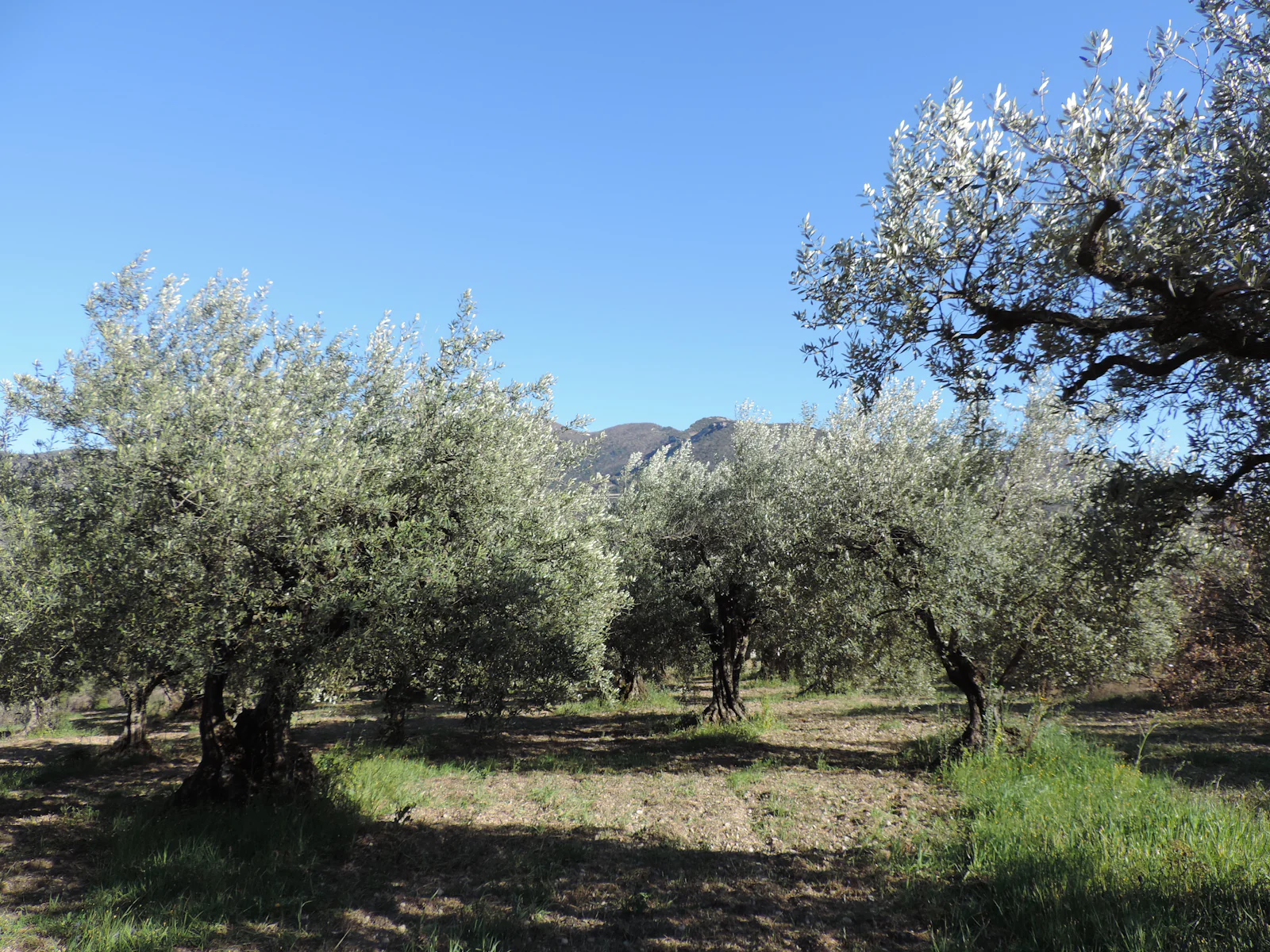
When Arabs and Berbers arrived on the peninsula in 711, they found an ancient olive landscape. The Roman province of Baetica, today's Andalusia, was already a centre of oil production. Rome's Monte Testaccio bears witness to it: a 35-metre hill made of the fragments of more than 53 million amphorae that carried olive oil to Rome during the first three centuries AD, most of it from Baetica. In al-Andalus this cultivation was continued and expanded.
The oil of the Aljarafe
The most famous oil came from the Aljarafe, in Arabic al-Sharaf, the hill country west of Seville. Several chroniclers praise its quality and quantity:
- Ibn Razi (10th century): if Seville could not export its oil, there would be so much that it could not be stored and would spoil.
- al-Udri (11th century): the oil was exported “to all places, far and wide”, and the best grade travelled east by sea.
- al-Zuhri (12th century): oil from the Sharaf of Seville went to the “lands of the Rum”, the Maghreb, Ifriqiya, Egypt and Alexandria.
Under the emirate and caliphate of Córdoba, olive oil became the region's main export. From the 12th century, merchants from Pisa and Genoa also carried Andalusi oil east and west.
The agronomists of al-Andalus
Al-Andalus produced a whole series of agricultural treatises. The most important is the Kitab al-Filaha (“Book of Agriculture”) by the Sevillian Ibn al-Awwam, probably written towards the end of the 12th century. It is considered the most comprehensive agricultural treatise in Arabic: 34 chapters, 585 plants and the cultivation of more than 50 fruit trees.
Ibn al-Awwam farmed land in the Aljarafe himself and describes his experiments in grafting wild olives from the mountains onto cultivated olives from the plain. He recommends calcareous soils, “especially if soft and moist”, on which trees bear fleshy fruit rich in oil. In the 13th and 14th centuries, Ibn Luyun of Almería advised planting olive cuttings in winter and harvesting on mild January days.
Arabic words around olive oil
The vocabulary shows how deeply the olive culture of al-Andalus shaped the Spanish language. While French, Italian and German carry on the Latin “oleum”, Spanish says “aceite”:
| Spanish word | Arabic origin | Meaning |
|---|---|---|
| aceite | az-zayt | oil, olive oil |
| aceituna | az-zaytūna | olive |
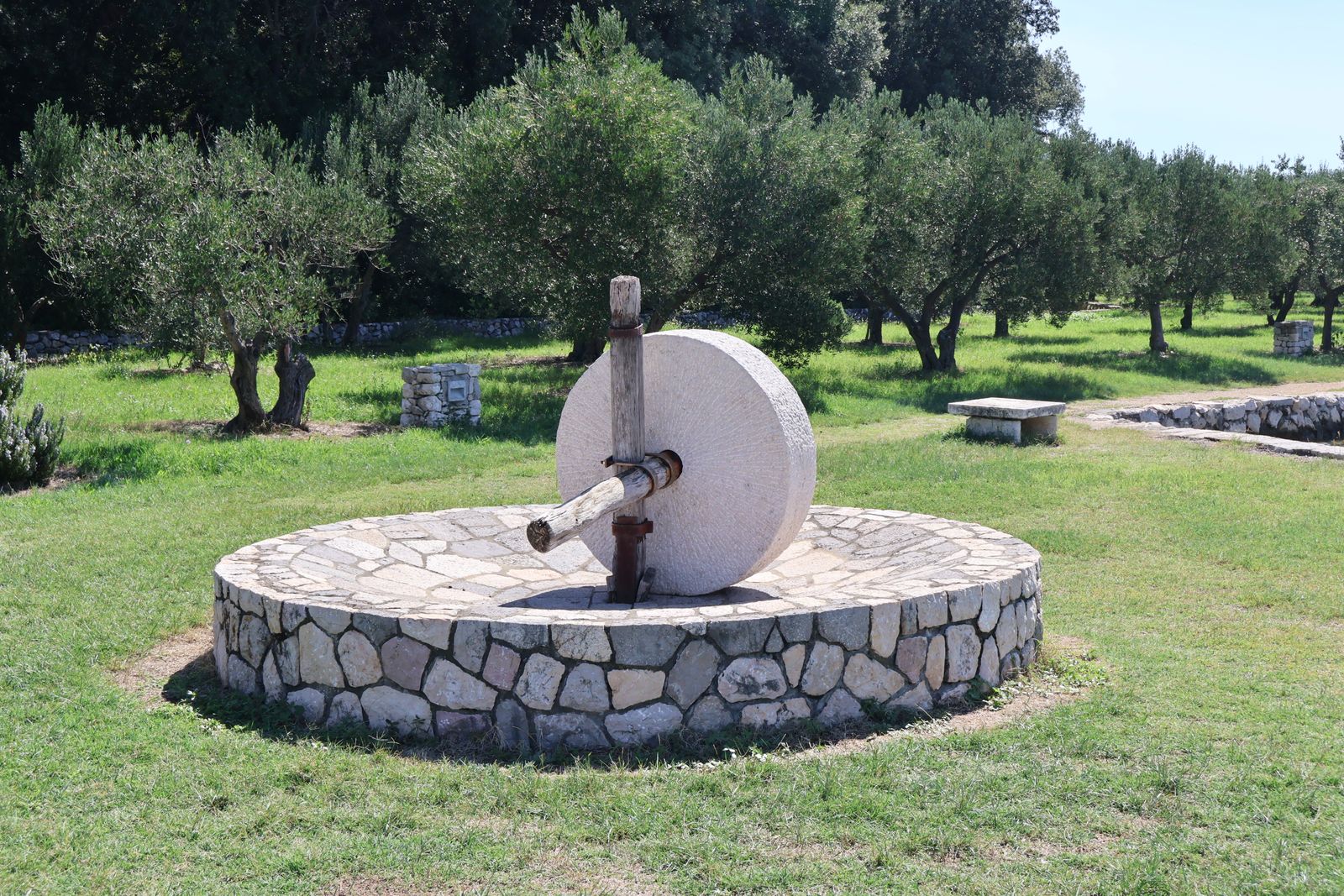
| almazara | al-maʿṣara | oil mill, “place of pressing” |
| acebuche | az-zabbūǧ | wild olive tree |
| alcuza | al-kūza | oil cruet |
| almona | – | soap works |
The word “almona”, a soap works according to the historical dictionary of the Spanish Academy, also has Arabic roots.
Olive oil in Andalusi cooking
Two major cookbooks survive from al-Andalus and are the key sources for its lost cuisine:
- The anonymous Kitab al-Tabikh from the Almohad period (12th or 13th century) is the oldest known cookbook of the Iberian Peninsula, with 462 recipes.
- The Fadalat al-Khiwan by the scholar Ibn Razin al-Tujibi (1227–1293) gathers 475 recipes from al-Andalus and the Maghreb.
Olive oil appears again and again: for seasoning, frying fish and omelettes, and preserving. According to the Fundación de Cultura Islámica, different grades of oil were distinguished, from simply extracted oil to oil pressed in a stone mill and oil from pomace.
Light for the mosque of Córdoba
Olive oil was also the main fuel for light. In the Great Mosque of Córdoba, lamps of different sizes held glass vessels filled with oil, and consumption rose markedly during Ramadan. According to medieval sources, shortly before the year 1000 the military leader Almanzor had the bells of the shrine of Santiago de Compostela brought to Córdoba, where they served as large lamps.
Soap from Seville: the Almonas of Triana
Olive oil was also turned into soap. The soap works of Triana in Seville, the Almonas, date back to the Andalusi period. The soap was made from Aljarafe olive oil and the ash of saltwort plants (barilla) from the Guadalquivir marshes. After the Christian conquest of Seville, the Almonas became a royal monopoly. In the 16th century the white “Castile soap” from Triana reached its peak and was exported to England, Flanders and across the Atlantic.
Medicine and cosmetics
The physicians of al-Andalus were among the most important of their time, and olive oil was among their remedies and care products, used mainly externally:
- Ibn Zuhr (Avenzoar, 1091–1162) of Seville wrote, besides the medical Kitab al-Taysir, a book on foods describing their preventive and healing properties as well as their culinary value.
- Ibn al-Baytar from the province of Málaga (died 1248 in Damascus) compiled a great encyclopedia of simple remedies and foods containing virtually all the pharmacological knowledge of his time.
The medical ideas of the time do not correspond to modern medicine. What current research knows about olive oil, and how well each claim is supported, is set out in our guide to the evidence.
After al-Andalus: a lasting legacy
Even after the Christian conquest of Seville in 1248 and the fall of Granada in 1492, Andalusia remained the olive heartland of the peninsula. Oil from Seville reached Flanders by 1358, and in the 16th century around 200,000 arrobas of olive oil were shipped to the Americas each year. The words, techniques and landscape of al-Andalus still shape Spanish olive oil culture – more in Why Spanish olive oil ranks among the world's best and The history and origins of olive oil.
Frequently asked questions
What is al-Andalus?
The name Muslims gave to the parts of the Iberian Peninsula they ruled, from 711 until the fall of Granada in 1492. Its extent varied greatly; the south, today's Andalusia, remained Muslim the longest.
Where does the Spanish word “aceite” come from?
From the Arabic “az-zayt”, oil. “Aceituna” (olive), “almazara” (oil mill) and “acebuche” (wild olive) also come from Arabic.
What was olive oil used for in al-Andalus?
For cooking and preserving, as lamp oil, for soap-making and in medicine and cosmetics. A large share was exported.
Which olive oil was most famous in al-Andalus?
The oil of the Aljarafe west of Seville, praised by chroniclers from the 10th to the 12th century for its quality and abundance.
Sources
- Fundación de Cultura Islámica (FUNCI): El aceite en la cocina andalusí
- Filaha Texts Project: Ibn al-'Awwam's Kitab al-filaha
- University of Seville, Encrucijada group: Exportación de aceite de oliva
- Wikipedia: Monte Testaccio
- Wikipedia (Spanish): Libro de cocina del anónimo andalusí
- Wikipedia: Ibn Razin al-Tujibi
- Centro Virtual Cervantes: Mosque of Córdoba – lighting
- Tu guía de Sevilla: Las Almonas de Triana, la fábrica del jabón de Castilla
- Andalucía en la Historia: Avenzoar, un médico universal de al-Andalus
- Wikipedia: Ibn al-Baytar
- La Pontezuela: El origen árabe de algunas palabras relacionadas con el aceite
- Diccionario etimológico: aceite