Whenever the virtues of olive oil come up, one word appears: polyphenols. They are why a good extra virgin olive oil tastes bitter and catches at the back of the throat – and why two bottles carrying the same description can be worlds apart nutritionally.
What polyphenols are
Polyphenols are plant compounds the olive produces to protect itself against oxidation, UV radiation and pests. Several dozen occur in the fruit and the oil. Four matter most for taste and effect:
| Compound | What it accounts for |
|---|---|
| Oleuropein | the olive's main bitter principle; present in oil mostly as its breakdown product (aglycone) |
| Oleocanthal | responsible for the throat catch that only olive oil produces |
| Hydroxytyrosol | the compound the one authorised health claim rests on |
| Tyrosol | significant in quantity, less noticeable in taste |
Unlike vitamin E, which is in every vegetable oil, these compounds are characteristic of olive oil. They largely do not survive refining – one reason why “olive oil, composed of refined and virgin olive oils” is nutritionally a different product from virgin oil.
Why the content varies so much
Total phenol content ranges roughly from 50 to 800 milligrams per kilogram depending on the oil. That is a factor of more than ten between two bottles that can sit side by side on a shelf. What decides it:
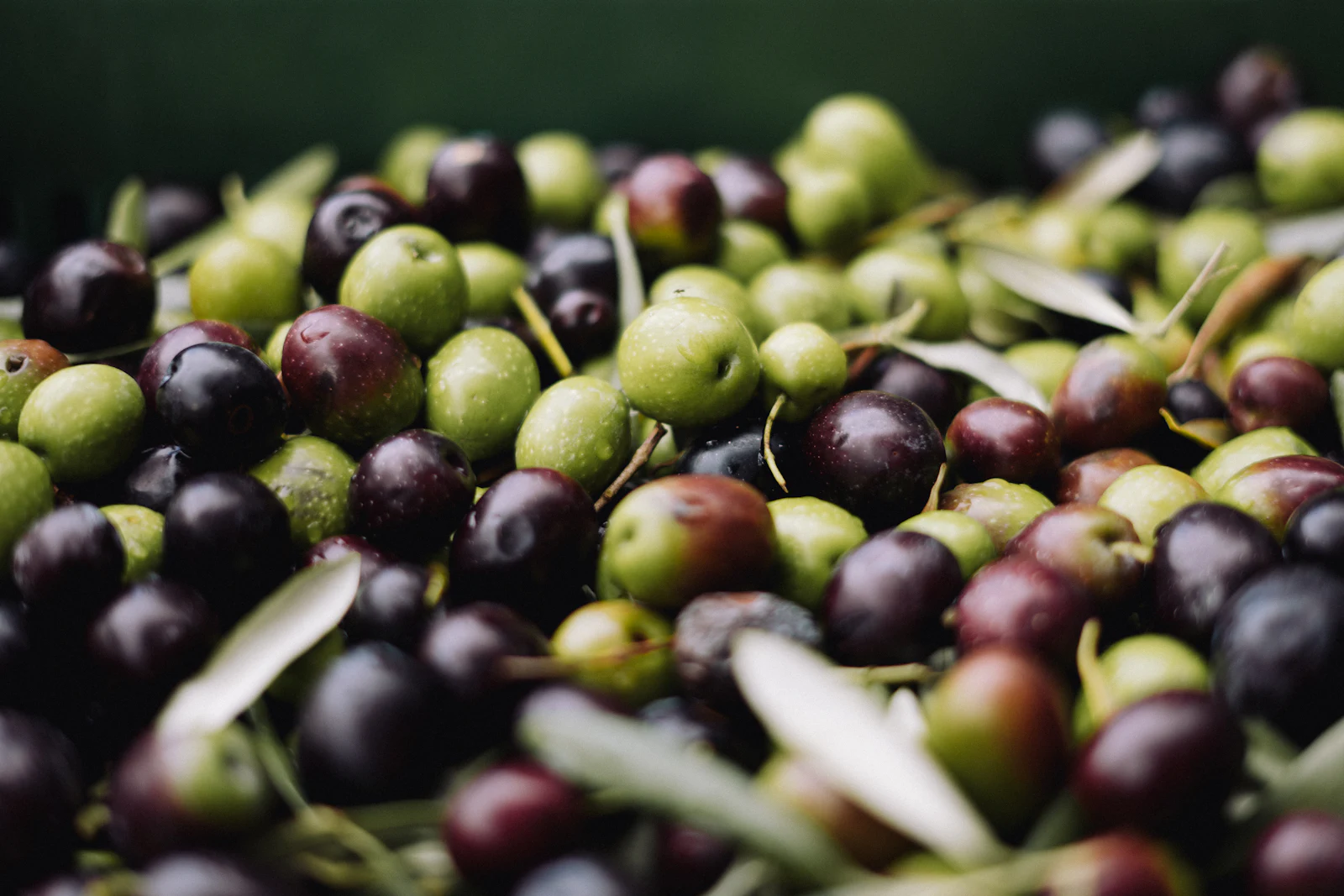
- Harvest date. The biggest lever. Green, not yet ripe olives give far more polyphenol-rich oil – at a lower yield. Picking early therefore costs the producer volume.
- Variety. Picual and Coratina are naturally high, Arbequina much lower. For the wider picture see olive varieties in Europe.
- Processing. A short gap between picking and milling, malaxation at low temperature and little contact with air all preserve more.
- Storage. Polyphenols are the first thing to go. An oil that stood in the light for a year retains a fraction of what it had – see how to store olive oil.
The EFSA claim and what it actually requires
The European Food Safety Authority assessed a health claim for olive oil polyphenols in 2011, which was added to Regulation (EU) No 432/2012 the following year. In substance it says: olive oil polyphenols contribute to the protection of blood lipids from oxidative stress.
What matters are the conditions of use:
- at least 5 mg of hydroxytyrosol and its derivatives (such as oleuropein complex and tyrosol) per 20 g of oil;
- based on a daily intake of 20 g of olive oil – a good two tablespoons.
That works out at 250 mg of those compounds per kilogram. Many supermarket oils do not reach it, which is why the claim appears on few bottles. Where it is missing, that does not automatically mean the oil falls short – the measurement costs money, and many producers simply do not commission it. How far the olive extracts tested in sports studies exceed this threshold is worked out in Olive oil in sports nutrition.
How to spot a polyphenol-rich oil
Without a laboratory figure, three indications are useful:
- Taste. Bitter and pungent means rich. The catch in the throat comes straight from oleocanthal – not heat in the chilli sense, but irritation of exactly those receptors.
- Harvest year. The fresher the better. Oil from the current harvest beats any older bottle, however good it once was.
- Early-harvest wording. Phrases such as “early harvest”, “cosecha temprana” or “raccolta anticipata” are not protected terms, but they indicate what the producer is aiming at.
The threshold at which an oil may carry the authorised polyphenol claim is in nutrition facts and authorised health claims; for the overall picture of the evidence, see the guide to the evidence.
What the research shows — and where its limits are
PREDIMED. The largest intervention trial on the Mediterranean diet, a Spanish randomized trial with nearly 7,500 participants at high cardiovascular risk, was published in the New England Journal of Medicine (Estruch et al., 2013, corrected republication 2018). A Mediterranean diet supplemented with extra virgin olive oil or nuts reduced the risk of major cardiovascular events compared with a low-fat control diet. The authors attribute part of that effect to the oil's polyphenols and monounsaturated fatty acids.
Oleocanthal and cancer cells. In 2015 a paper by Onica LeGendre, David Foster and Paul Breslin (Rutgers University and Hunter College, New York, with the Monell Chemical Senses Center) in Molecular & Cellular Oncology showed that oleocanthal — the very compound that catches in the throat — killed several human cancer cell lines in laboratory experiments within 30 to 60 minutes by rupturing their lysosomes, while healthy cells were largely unharmed. A follow-up by the same group (LeGendre et al., PLOS ONE, 2019) confirmed the mechanism — lysosomal membrane permeabilization — using oleocanthal-rich olive oil rather than the isolated compound.
An important caveat: these findings come from cell and laboratory experiments (in vitro), not from clinical trials in humans. They show a biologically plausible mechanism, but they are not proof that eating olive oil prevents or cures cancer. The researchers involved are explicit about that distinction themselves. Olive oil replaces neither preventive care nor medical advice.
Frequently asked questions
Does olive oil kill cancer cells?
In the laboratory, isolated oleocanthal kills human cancer cells, and oleocanthal-rich oil shows the same mechanism. In people it has not been shown: no clinical trial demonstrates that eating olive oil prevents or treats cancer. Anyone claiming otherwise is stretching the evidence.
Does heating destroy the polyphenols?
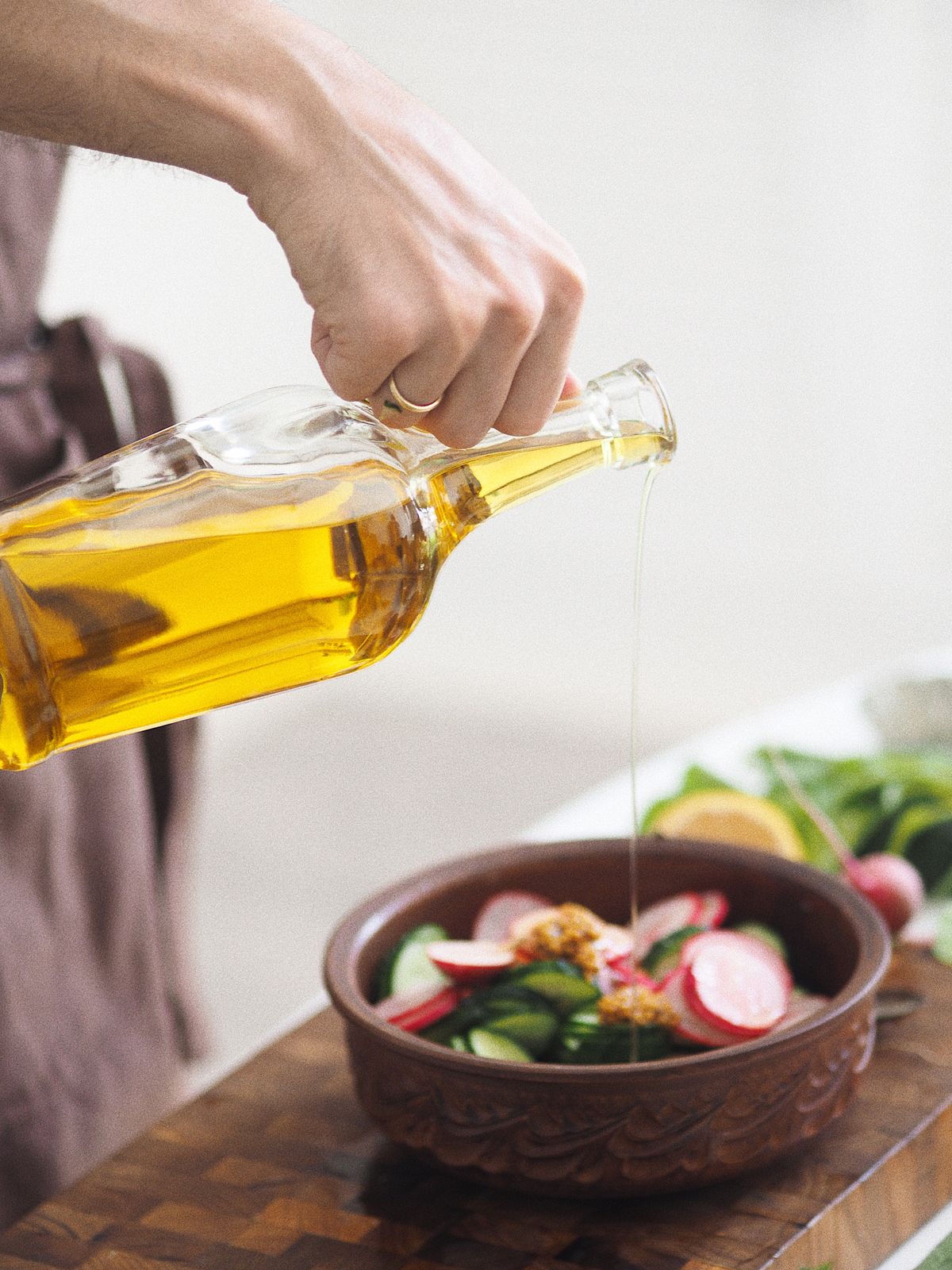
Partly. Frying and deep-frying reduce the content, by how much depends on temperature and time. At the same time the polyphenols protect the oil itself from oxidation while it heats, so a rich oil is more heat-stable than a poor one. For the full amount, what counts is using it raw: over salad, over soup, on bread.
Is a bitter oil a sign of poor quality?
The opposite. In the sensory test, bitterness and pungency are positive attributes, not defects. The defects are fusty, musty, winey and rancid – nothing to do with bitterness.
How much olive oil would you have to eat?
The EFSA claim refers to 20 g a day, a good two tablespoons, and assumes an oil that reaches the threshold. More is not automatically better: olive oil supplies around 880 kilocalories per 100 g.
Do organic oils contain more polyphenols?
Not systematically. Organic certification governs cultivation, not the harvest date or the processing – and those are what decide the content.
Sources
- Estruch, R. et al. (2013, corrected 2018): “Primary Prevention of Cardiovascular Disease with a Mediterranean Diet.” New England Journal of Medicine.
- LeGendre, O., Breslin, P. A. S., Foster, D. A. (2015): “(-)-Oleocanthal rapidly and selectively induces cancer cell death via lysosomal membrane permeabilization (LMP).” Molecular & Cellular Oncology.
- LeGendre, O. et al. (2019): “(-)-Oleocanthal and (-)-oleocanthal-rich olive oils induce lysosomal membrane permeabilization in cancer cells.” PLOS ONE.
- Regulation (EU) No 432/2012 establishing a list of permitted health claims made on foods, other than those referring to the reduction of disease risk.
- EFSA Panel on Dietetic Products, Nutrition and Allergies: “Scientific Opinion on the substantiation of health claims related to polyphenols in olive”, EFSA Journal 2011;9(4):2033.
- International Olive Council (IOC): Trade Standard Applying to Olive Oils and Olive Pomace Oils, COI/T.15/NC.
Note: This article is for general information only and does not replace advice from a doctor or dietitian. If you have health questions, please consult a professional.