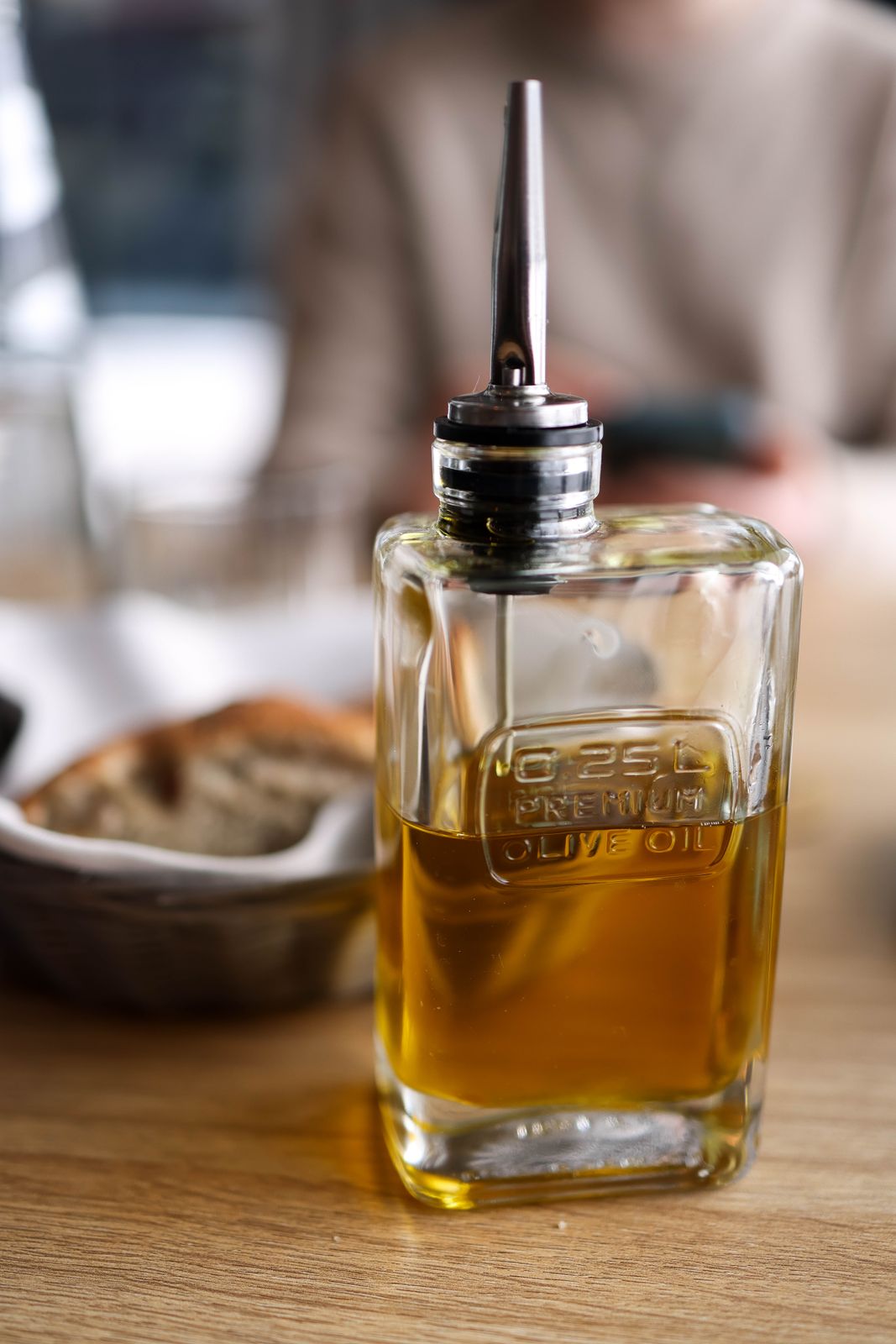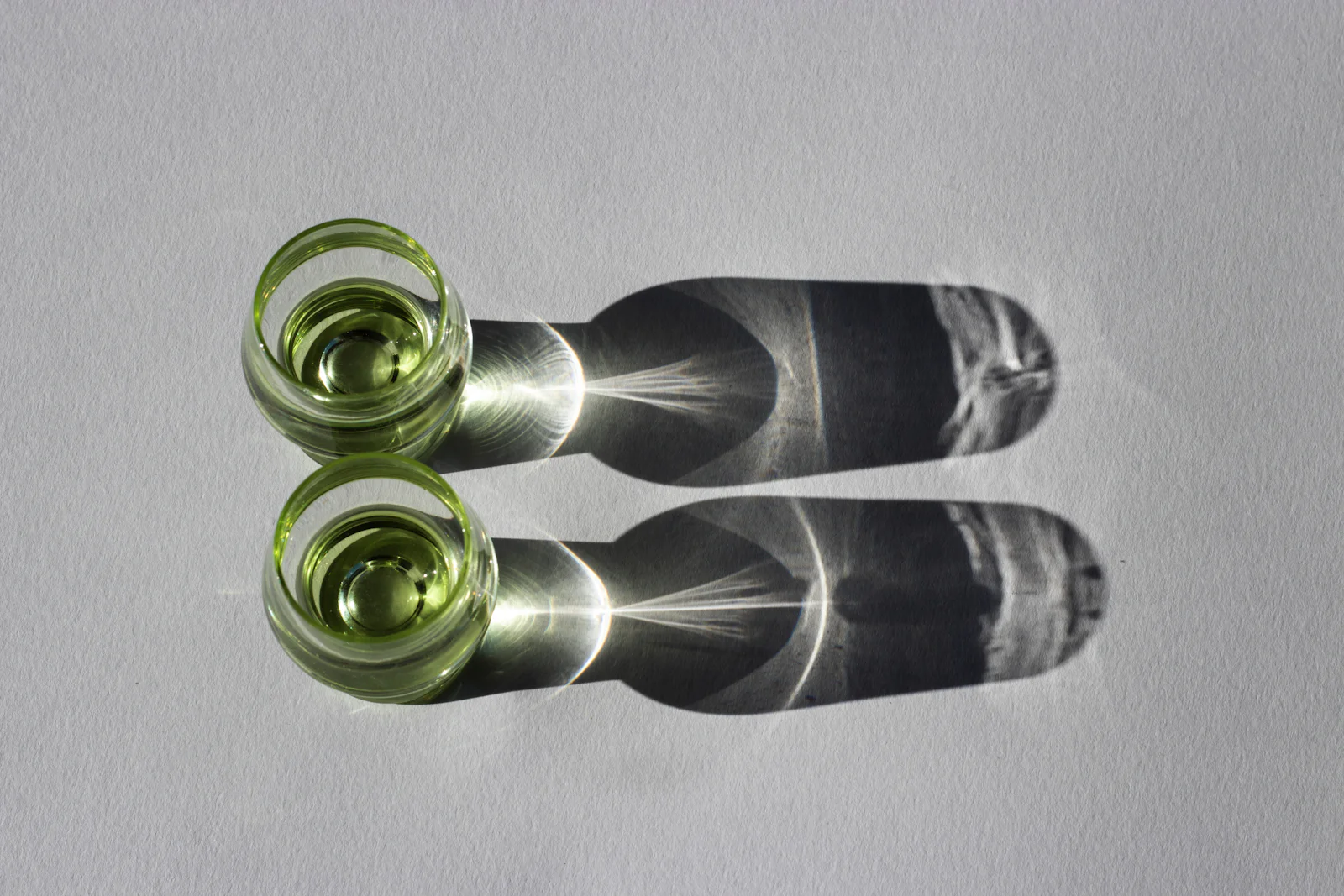
Some time in November, a bottle arrives that looks faintly wrong. The oil inside is cloudy, almost opaque, and a shade of green closer to pea soup than to the golden oil on supermarket shelves. Tasted from a spoon, it is bitter first and then catches at the back of the throat. For anyone who knows olive oil, this is the moment of the year. For anyone who does not, it can look like a fault.
That bottle usually holds the first oil of the season: olives picked green, milled within hours and bottled without filtering. In Spain it is sold as aceite de cosecha temprana or primer aceite, in Italy as olio nuovo or olio novello, in France as huile nouvelle non filtrée. Our editorial team looked at why the Picual variety from Jaén is so often the olive behind these oils, and at what the research says about keeping them. For the variety's background, see our portrait of Picual from Jaén.
Decoding the label: what the words actually mean
Several of the terms on these bottles are marketing language, a few are regulated. It helps to know which is which before paying a premium.
| Term | Status | What it tells you |
|---|---|---|
| Cosecha temprana / early harvest / olio novello / huile nouvelle | Not legally defined | Picked early in the season; only meaningful alongside a harvest month |
| Sin filtrar / unfiltered / non filtrato | Not legally defined | Bottled with suspended water and fruit particles; shorter life |
| Harvest year or month of harvest | Regulated (EU 2022/2104, Art. 11) | Only allowed if 100% of the contents come from that harvest |
| Cold extraction | Regulated (EU 2022/2104, Art. 10) | Obtained below 27 °C by percolation or centrifugation |
| First cold pressing | Regulated (EU 2022/2104, Art. 10) | Obtained below 27 °C by first mechanical pressing in a traditional hydraulic press |
Most Spanish oils sold in Switzerland are bottled and labelled under EU rules, so these definitions are the ones that apply to what you see on the shelf.
The "first press" that no longer exists
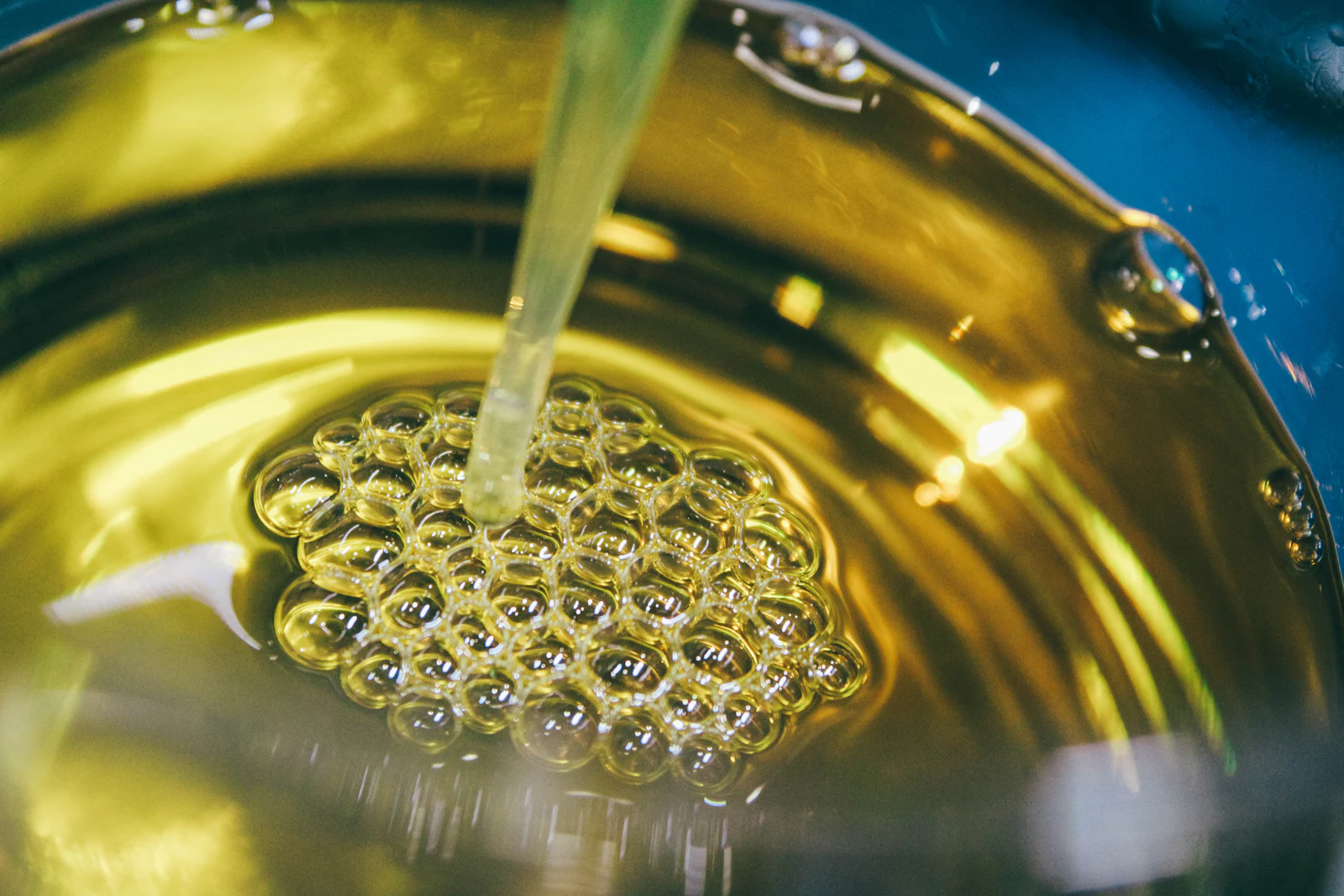
"First cold pressed" still appears on a surprising number of bottles, including early-harvest oils. The phrase belongs to the era of stacked mats and hydraulic presses. The oil school run by the DOP Estepa describes that traditional method as less hygienic than today's processes, and notes that extraction by centrifuge is now almost universal. In a modern mill, the paste is malaxed and then separated in a horizontal centrifuge, or decanter. There is no second pressing, so "first" carries no information.
EU law caught up with this. Under Article 10 of Delegated Regulation 2022/2104, "first cold pressing" is reserved for virgin or extra virgin oils obtained below 27 °C by a first mechanical pressing in a traditional hydraulic press system. Oil from a centrifuge mill, which is almost every early-harvest Picual, may instead say "cold extraction". Neither term decides the grade. Whether an oil counts as extra virgin depends on laboratory parameters and a panel test, which we explain in What is extra virgin olive oil?
Why Picual carries an early harvest so well
Picking green is a gamble on flavour and on durability. The oil has to stay fresh long enough to be sold and eaten. Picual starts with an advantage. Spanish sources consistently describe it as rich in oleic acid and polyphenols, and the Jaén cooperative Oleícola Jaén calls it more stable against oxidation than other varieties. Juan Antonio Parrilla, scientific adviser to the producer Picualia, told Infobae in March 2026 that Picual degrades more slowly, over 18 to 24 months. That is an industry voice rather than an independent measurement.
The independent evidence points the same way. García, Brenes and colleagues, writing in 2002 in European Food Research and Technology, analysed Picual oils from across Jaén province and found that oils from the start of each season contained more of every phenolic compound than those from the end, particularly the ortho-diphenols. After two years in amber glass bottles, phenolic compounds had fallen by only about 30%. A 2023 study in Antioxidants by Olmo-Cunillera and colleagues, using the Catalan variety Corbella, identified oleacein and oleocanthal as key contributors to the oxidative stability of extra virgin olive oil. The principle carries over: the more of these compounds an oil starts with, the longer it holds up.
Harvesting green: the arithmetic behind the price
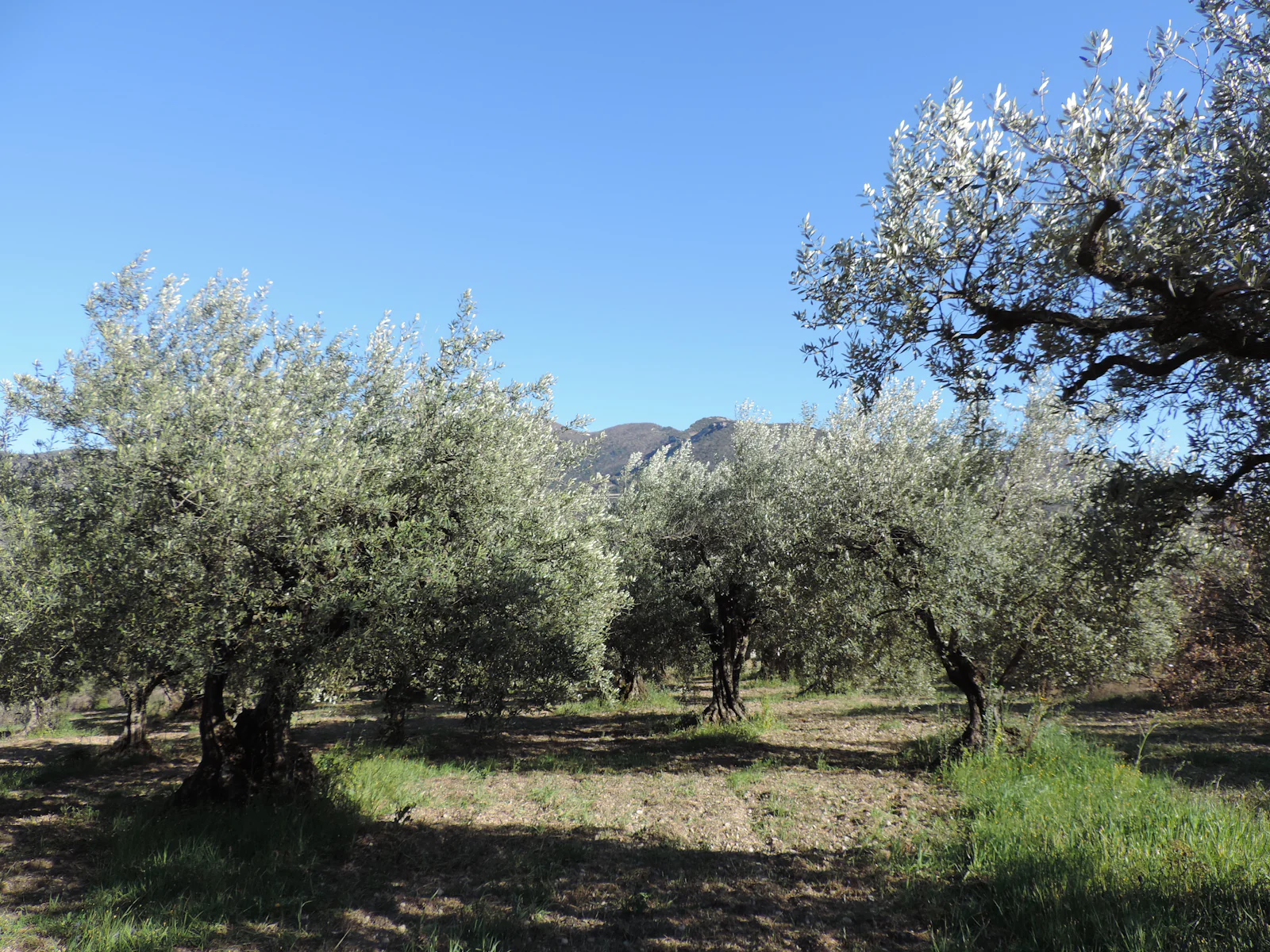
There is no legal definition of early harvest. In practice it means picking when olives are still green or just turning purple, the stage Spanish growers call envero. The producer Las Valdesas gives a window from early or mid-October to mid-November. The Spanish olive oil interprofessional, behind the Olive Oils from Spain campaign, speaks of late October to early November. An early-harvest Picual from Sierra Mágina described by the trade magazine Almaceite in 2019 was picked in mid-October and milled below 20 °C.
Green fruit holds more water and less oil. Figures from the Andalusian control agency AICA, reported by Oleum Xauen, put the average October 2023 yield at 12.51% in Jaén and 14.99% across Andalusia, against 14.34% and 16.26% in October 2022. Las Valdesas cites 12 to 14% for early-harvest oil versus 20 to 25% for conventional harvests. The laboratory group Poligen describes a range from around 10% in early olives to 30% or more in fully ripe fruit, while cautioning that part of the later rise, for example from 16% to 26% by December, simply reflects the fruit losing water.
On our calculation, a 12.5% yield means roughly 8 kg of olives per kilogram of oil; at 20% it is 5 kg. Add hand or mechanical picking of fruit that still clings firmly to the branch, and the higher shelf price needs no further explanation.
What it tastes like
Ripeness steers flavour. Jiménez Herrera and colleagues compared Picual, Hojiblanca and Picudo oils across ripening stages in Grasas y Aceites in 2012. In all three, fruitiness and bitterness declined as the fruit matured while sweetness increased. Early Picual sits at the green, assertive end of that curve. Descriptions from Jaén agree closely:
- Green fruitiness with olive leaf, tomato plant and freshly cut grass, plus marked bitterness and pungency (Oleícola Jaén).
- Olive leaf and green almond, with a characteristic bitter and peppery finish (DOP Sierra de Segura).
- Tomato and fresh grass with a balanced taste (DOP Sierra Mágina, via Origen España).
- Fig tree, artichoke, banana peel and green almond in the Sierra Mágina early-harvest example mentioned above (Almaceite).
Tasting panels score bitterness and pungency as positive attributes. They soften somewhat after a few weeks in the bottle.
Cloudy by design: the case for and against
The haze is made of tiny droplets of vegetation water and fragments of skin, pulp and stone, known in Spanish as borras. A 2023 literature review in Foods by Frangipane and colleagues gives around 0.24% water and 0.23% solids for fresh unfiltered oil, compared with about 0.05% water and no solids after filtration. The particles carry aroma and phenols, which is why unfiltered oil tastes so immediate.
They also carry enzymes, including lipase and polyphenol oxidase, and in the studies the review cites, microorganisms that filtered samples lacked. Over time, the breakdown of proteins and sugars in that suspension produces the classic defects: fusty-muddy and winey. The review's advice to mills is to filter quickly, ideally under inert gas.
A 24-month study by Ghanbari Shendi and colleagues (OCL, 2020), on a Turkish variety, put numbers on the difference. The unfiltered oil exceeded the peroxide limit of 20 mEq O₂/kg after three months, the filtered oil after ten. Free acidity in the unfiltered oil reached 0.8%, the extra virgin ceiling, after eleven months; the filtered oil took 23. Paper filtration did, however, reduce total phenols and sensory scores. Frangipane and colleagues also cite work in which removing water cut phenolic content by about 20%, because some phenols dissolve in the water phase.
The honest summary: unfiltered is fresher and more intense, filtered keeps longer. The Italian site OlivoNews recommends using unfiltered oil within three to four months of production and filtering anything meant to last longer.
Living with the sediment
- Let a larger bottle or tin stand cool and still for a few weeks so the particles settle.
- Pour the clear oil gently into a clean dark bottle and use the cloudy remainder first.
- Keep it away from heat and light and close the cap after each use; our guide on how to store olive oil covers the details.
- Plan to finish it by late winter. The Spanish-language Wikipedia advises against using unfiltered oil in summer.
Polyphenols and the one permitted health claim
Early-harvest oils are often marketed on their polyphenols. The only EU-authorised health claim, in Regulation 432/2012, reads: "Olive oil polyphenols contribute to the protection of blood lipids from oxidative stress." It may be used only if the oil contains at least 5 mg of hydroxytyrosol and its derivatives per 20 g, and the label must say the effect comes from a daily intake of 20 g. That equals 250 mg per kilogram.
Early harvest is not the same as meeting that threshold. In a 2021 Food Chemistry study, López-Huertas, Lozano-Sánchez and Segura-Carretero tested many Spanish varieties at three ripening stages; their Picual samples cleared the bar at the turning stage with about 296 mg/kg and at the ripe stage with about 318 mg/kg. Only a lab analysis of the specific batch settles the question. For the chemistry behind these compounds, see polyphenols and antioxidants in olive oil.
Buying the first oil in Switzerland
- Look for a harvest month. "October 2026" or "harvest 2026/27" is only allowed if the whole bottle comes from that crop.
- Check the variety and origin. 100% Picual, ideally with a DOP such as Sierra Mágina or Sierra de Segura. According to Origen España, Sierra Mágina caps acidity at 0.5%, stricter than the legal 0.8%.
- Prefer dark glass or tin. An oil with a lifespan of a few months should not be sold in clear glass.
- Be wary of a lone acidity figure. Under EU rules, maximum acidity may be stated only together with peroxide value, wax content and UV absorption.
- Mind the calendar. With picking from mid-October, we would expect the first Spanish bottles in Swiss specialist shops and web shops from November. Unfiltered "new oil" still on a shelf in June deserves a close look.
Some readers ask whether prestige bottles like these are worth putting aside. We looked at that question in olive oil as an investment; for unfiltered oil, the short shelf life settles it quickly.
At the table
New oil is a finishing oil. Italian producers such as Agricola Conforti recommend using olio novello raw only, since heat flattens the aromas. Try it on toasted country bread with a pinch of salt; over ripe tomatoes, white beans or a squash soup; on burrata or fresh goat's cheese; or on grilled fish and lentils just before serving. If the bitterness is too much at first, blend it with a milder oil or give it a few weeks. For everyday frying, a filtered, later-harvest Picual does the job at a lower price.
Frequently Asked Questions
Is cloudy olive oil safe to eat?
Yes. The cloudiness is water and fruit particles from the olive. It becomes a problem only if the sediment sits in contact with the oil for months and starts to ferment, which gives a smell of spoiled, fermented olives.
How long does unfiltered early-harvest oil last?
Specialists advise using it within three to four months of production. In one long-term study, unfiltered oil passed the peroxide limit after three months. A best-before date 18 months away is no reason to wait.
Should I cook with it?
You can, but you lose what you paid for. Its aromas are best used raw; a filtered oil is the better choice for heat.
Why is it more expensive?
Green olives yield less oil. AICA figures show 12.51% in Jaén in October 2023; on our calculation that is about 8 kg of olives per kilogram of oil, against 5 kg at a 20% yield.
Does "cold extracted" mean the same as "first cold pressed"?
No. Both require a temperature below 27 °C, but "first cold pressing" is legally limited to traditional hydraulic presses, while "cold extraction" covers centrifuge mills.
Sources
- FoodTimes (Dario Dongo): Marketing of olive oils, reg. EU 2022/2104 (20.11.2022)
- Food Safety Authority of Ireland: Olive Oil – legislation overview (Reg. 2022/2104)
- EUR-Lex: Commission Delegated Regulation (EU) 2022/2104, consolidated version (10.06.2024)
- EUR-Lex: Commission Regulation (EU) No 432/2012 (16.05.2012)
- Aristoleo: EFSA regulation – health claim for olive oil polyphenols
- Food Chemistry (López-Huertas, Lozano-Sánchez, Segura-Carretero): Olive oil varieties and ripening stages containing hydroxytyrosol in compliance with EFSA health claim (2021)
- European Food Research and Technology (García, Brenes et al.): Study of phenolic compounds in virgin olive oils of the Picual variety (2002)
- Grasas y Aceites (Jiménez Herrera et al.): Influence of fruit maturation on the sensory quality of Picual, Hojiblanca and Picudo oils (2012)
- Antioxidants (Olmo-Cunillera et al.): Oleacein and Oleocanthal – Key Metabolites in the Stability of Extra Virgin Olive Oil (2023)
- Foods (Frangipane et al.): Effects of Filtration Processes on the Quality of Extra-Virgin Olive Oil – Literature Update (2023)
- OCL (Ghanbari Shendi, Sivri Ozay, Ozkaya): Effects of filtration on the minor constituents and oxidative stability of virgin olive oil during 24 months (2020)
- Oleum Xauen: Rendimiento medio en octubre 12,51 % en Jaén y 14,99 % en Andalucía (datos AICA) (14.11.2023)
- Las Valdesas: ¿Qué es el aceite de oliva de cosecha temprana?
- Laboratorios Poligen: Rendimiento graso de las aceitunas
- Olive Oils from Spain (Interprofesional del Aceite de Oliva): Olive harvesting season – when is the best time to harvest? (18.02.2025)
- Oleícola Jaén: Variedades de aceite de oliva virgen extra
- D.O.P. Sierra de Segura: Aceite de oliva virgen extra de Jaén
- Origen España: DOP Sierra Mágina
- Revista Almaceite: Dominus Cosecha Temprana, un Picual de Sierra Mágina (01.10.2019)
- Infobae: El aceite de oliva de aceituna Picual, una joya jiennense (17.03.2026)
- DOP Estepa, Escuela del Aceite: ¿Extracción en frío o primera presión en frío? (2021, act. 2025)
- OlivoNews: L'olio d'oliva va sempre filtrato! La morchia, come riconoscerla (10.12.2024)
- Agricola Conforti: Olio novello – cos'è, quando esce e come usarlo
- Wikipedia (es): Aceite de oliva sin filtrar