If you like a mild, rounded olive oil without much bitterness, chances are you will end up with Arbequina. The small olive from Catalonia now grows in groves from California to Italy and shapes the taste of many modern olive oils. This article explains where the variety comes from, why it is so successful, what its oil tastes like and what to look for when buying.
Origin: Arbeca in Les Garrigues
The variety is named after the village of Arbeca in the Les Garrigues district in the south of the province of Lleida. According to tradition, the Duke of Medinaceli brought the first trees from Palestine to Arbeca in the 17th century. The Arbeca cooperative points out, however, that olive records suggest the variety already grew in the area before then. From Les Garrigues it spread across Catalonia; today it is grown mainly in Camp de Tarragona, Urgell and Les Garrigues.
Les Garrigues PDO: Arbequina with protected origin
Arbequina is the main variety of the Les Garrigues PDO. According to its regulatory council, it was recognised in 1975 as Spain's first designation of origin for extra virgin olive oil and registered by the EU as a protected designation of origin in 1996. The authorised varieties are Arbequina and Verdiell.
- Area: the south of the province of Lleida, mainly the Les Garrigues district plus municipalities in Segrià and Urgell, with more than 32,000 hectares of olive groves.
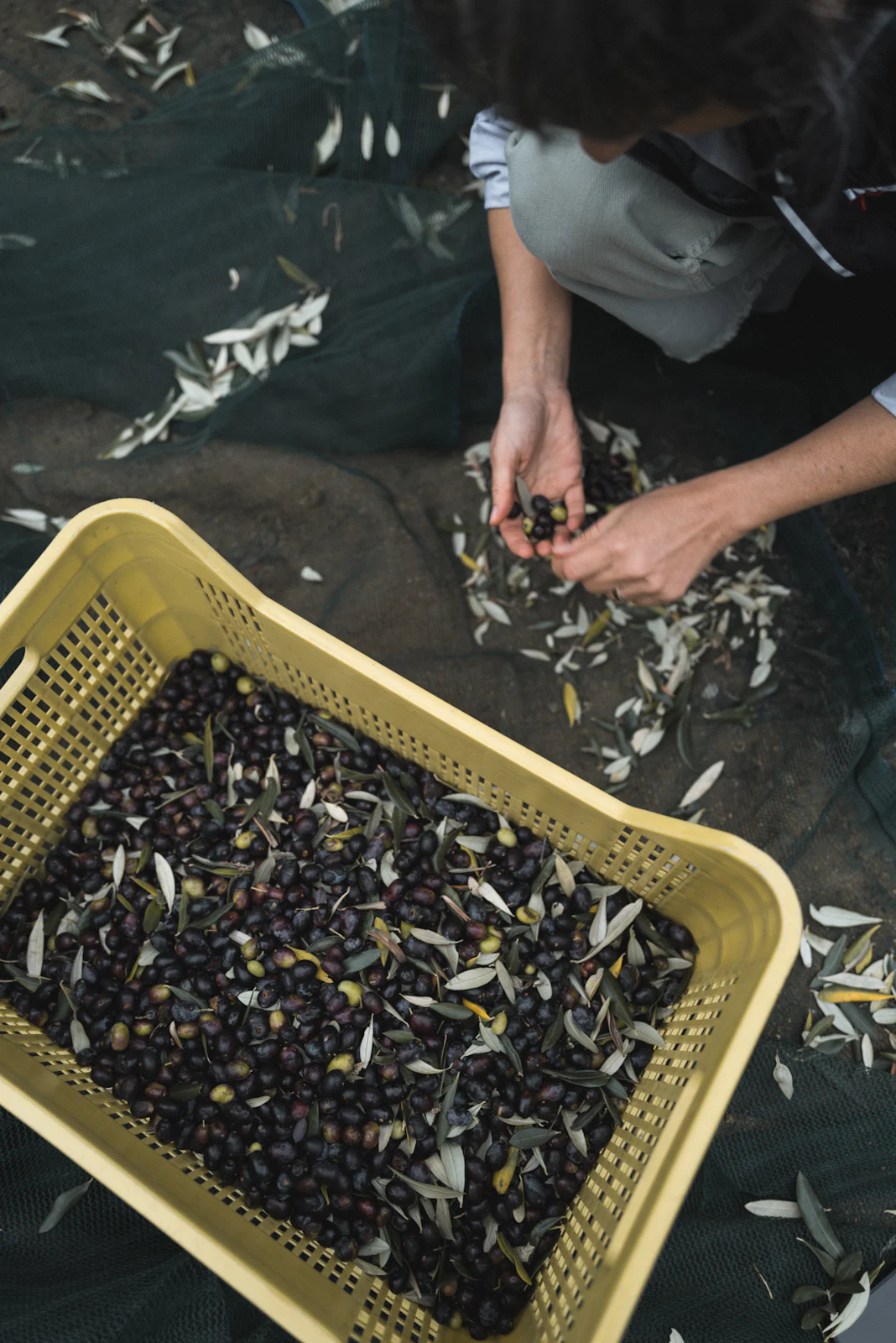
- Processing: olives are picked straight from the tree and, according to the original specification, pressed within 72 hours at most. Milling and bottling take place within the area.
- Two styles: the original specification distinguishes “Frutado” from an early harvest – greenish, with more body and an almondy, bitter taste – and “Dulce” from a late harvest – yellow, more fluid and sweet.
- Control: PDO bottles carry a numbered back label from the regulatory council.
For how a family firm from this comarca works today, see our portrait of PONS from L'Albagés: its Janiroc line is bottled as an Arbequina alongside Koroneiki and Lecciana.
Tree and fruit: small, early and adaptable
The Arbeca cooperative describes Arbequina as hardy, frost-resistant and highly adaptable. The fruits are small, round and grow in clusters; they turn black when ripe. The variety is self-fertile and ripens from mid-November, though not evenly. Young trees bear fruit early, often from their third year. According to nursery data, the oil yield is usually between 12 and 15 per cent.
Why Arbequina conquered the world
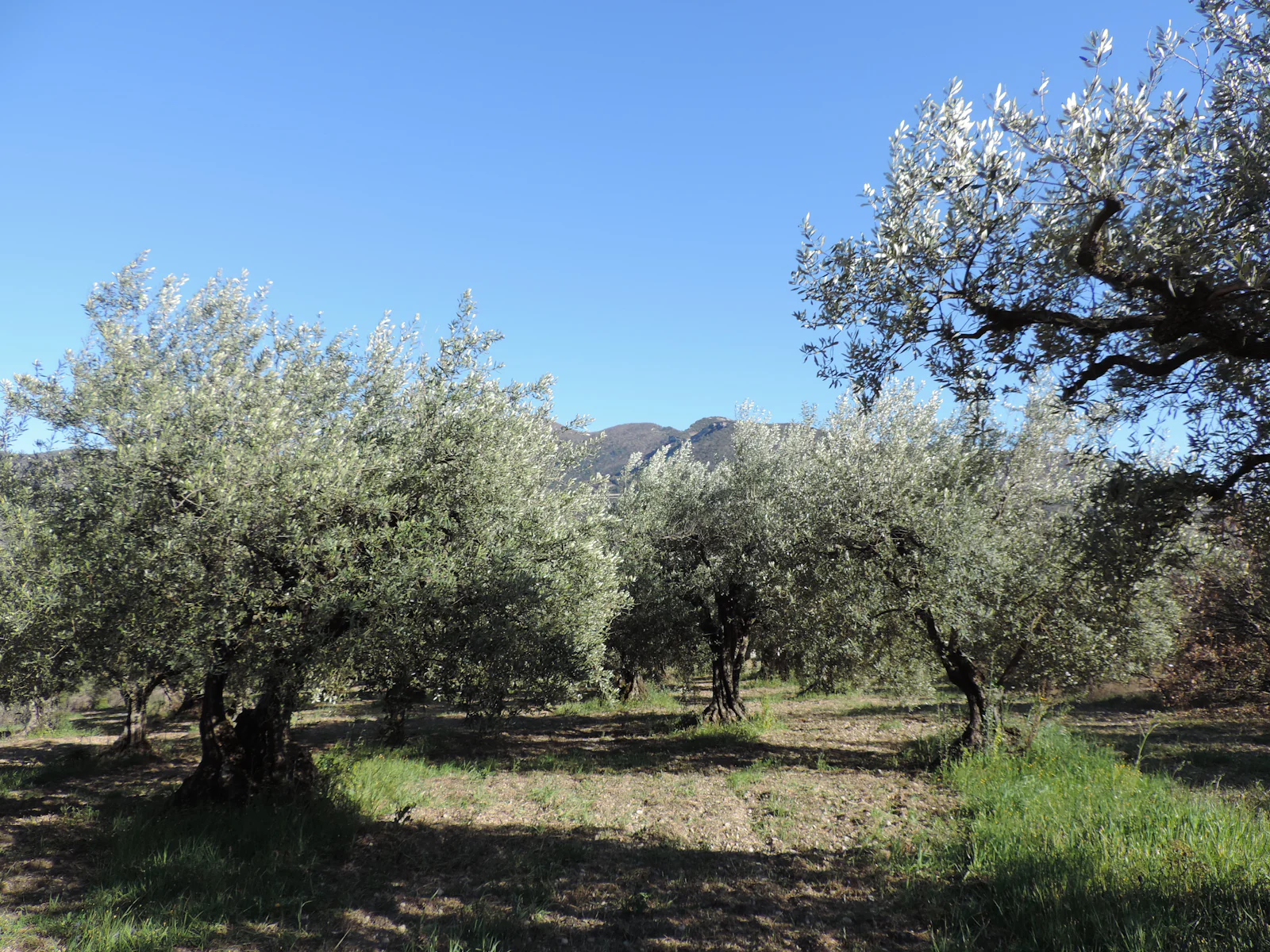
The main reason is its low vigour. The trees stay compact and can be planted closely in hedgerows that straddle harvesters pick, much like in vineyards. Such super-high-density orchards can hold up to around 1,650 trees per hectare depending on spacing, compared with a few hundred in traditional groves. Arbequina is the most widely used variety in super-high-density orchards, often alongside Arbosana and Koroneiki.
California shows how far the variety has spread beyond Spain: at producer California Olive Ranch, Arbequina accounts for 80 per cent of the olives harvested in northern California, according to the company. The award-winning organic producer Artajo in Navarre also relies on Arbequina.
What does Arbequina oil taste like?
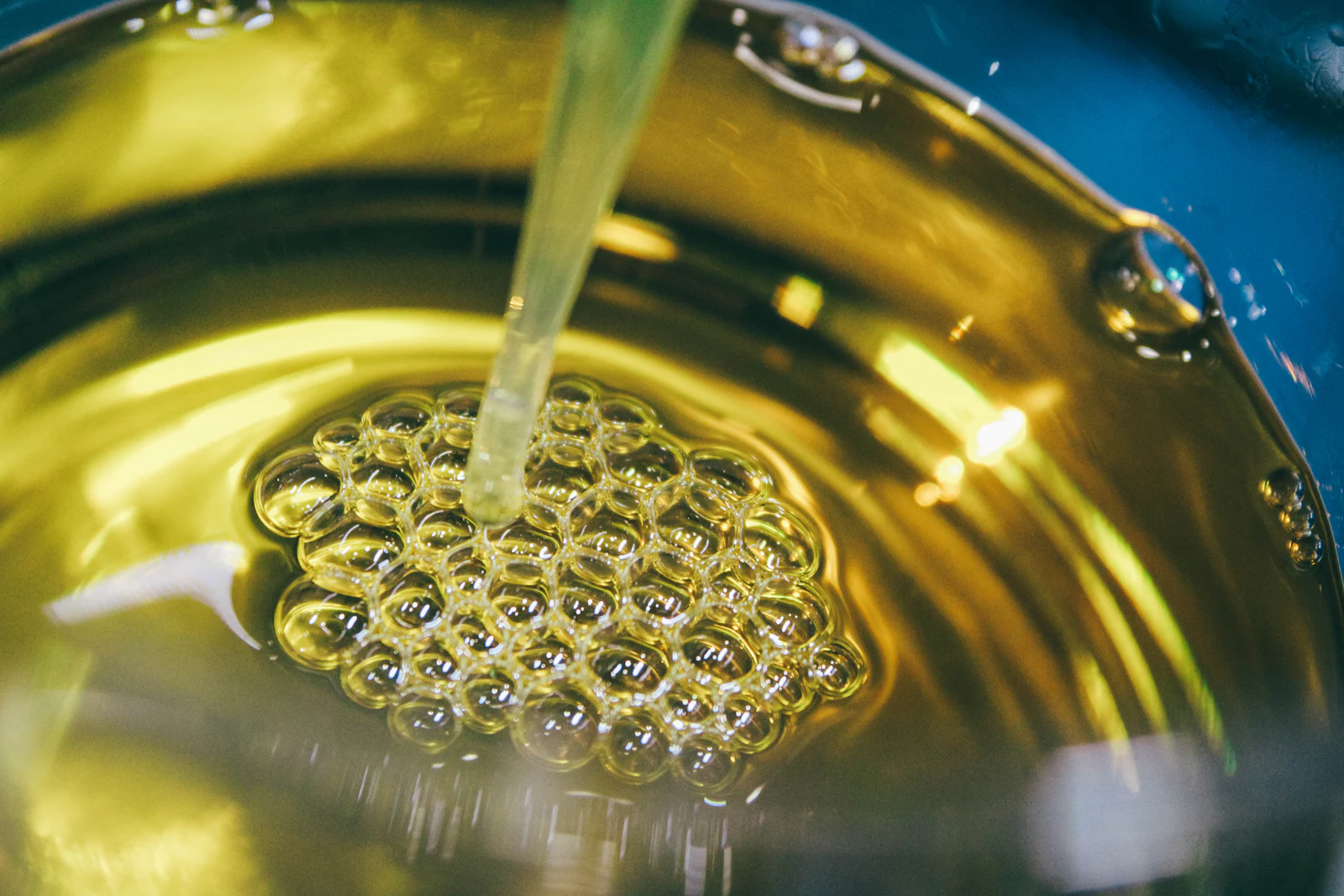
Arbequina oils are considered mild, sweetish and fruity. Typical notes are ripe fruit, apple, almond, banana and fresh artichoke. Bitterness and pungency are usually low. Early-harvest Arbequina oils taste greener and a little more robust, late-harvest ones rounder and sweeter – exactly the distinction between “Frutado” and “Dulce” made by the Les Garrigues PDO.
Shelf life: the variety's weak point
Its mildness has a downside. A 2016 study by Montaño and colleagues compared oils from eight varieties grown in Extremadura:
| Variety | Oxidative stability (Rancimat) | Oleic acid | Total phenols |
|---|---|---|---|
| Arbequina | 29.8 hours | 67.3% | 200 mg/kg |
| Picual | 66.6 hours | 80.7% | 380 mg/kg |
Arbequina oil contains less oleic acid, more polyunsaturated fatty acids and fewer polyphenols than Picual, so it oxidises faster. A study from Iran likewise found considerably more polyphenols and higher stability in Koroneiki than in Arbequina. For you this means: buy Arbequina oil as fresh as possible, store it dark and cool and use it up quickly once opened. Tips in How to store olive oil; why polyphenols matter is explained in Polyphenols and antioxidants in olive oil.
Arbequina, Picual and Koroneiki compared
| Arbequina | Picual | Koroneiki | |
|---|---|---|---|
| Origin | Catalonia (Spain) | Andalusia (Spain) | Greece |
| Flavour | mild, sweetish, fruity | robust, green, clearly bitter and pungent | intensely green, bitter and pungent |
| Shelf life | rather short | long | long |
| Best for | beginners, fish, mayonnaise, baking | frying, hearty dishes, pulses | salads, vegetables, Greek cuisine |
Arbequina in the kitchen
- For beginners: if you don't like robust, bitter oils, Arbequina is a good introduction to extra virgin olive oil.
- With fish and delicate salads: the mild oil doesn't mask subtle flavours, for example with perch fillets or lamb's lettuce.
- Mayonnaise and aioli: bitter oils can make mayonnaise unpleasantly bitter; Arbequina stays rounded.
- Baking: a mild Arbequina oil is ideal for olive oil cakes or tart pastry. Recipes in Swiss recipes with olive oil.
Frequently asked questions
Where does the name Arbequina come from?
From the village of Arbeca in the Les Garrigues district of the province of Lleida (Catalonia). Legend has it that the Duke of Medinaceli brought the variety there from Palestine in the 17th century.
What does Arbequina olive oil taste like?
Mild, sweetish and fruity, with notes of ripe fruit, apple, almond and artichoke. Bitterness and pungency are usually low; early-harvest oils taste greener.
How long does Arbequina oil keep?
Less long than oils from varieties such as Picual or Koroneiki, because it contains less oleic acid and fewer polyphenols. Buy oil from the current harvest where possible and finish an opened bottle within six to eight weeks.
Can you fry with Arbequina oil?
Yes, at medium heat. For very high temperatures and long heating, more stable oils from varieties such as Picual are better suited.
What is the Les Garrigues PDO?
The protected designation of origin for extra virgin olive oil from the south of the province of Lleida, made from Arbequina and Verdiell. According to its regulatory council, it was Spain's first recognised designation of origin for olive oil, in 1975.
Sources
- Cooperativa Arbequina (Arbeca): Oliva Arbequina, la oliva de Arbeca
- PDO Les Garrigues: Arbequina extra virgin olive oil
- Denominación de Origen “Les Garrigues”: registration application (product specification)
- Montaño A. et al.: Fatty Acid and Phenolic Compound Concentrations in Eight Different Monovarietal Virgin Olive Oils from Extremadura, International Journal of Molecular Sciences (2016)
- Ghreishi Rad S. A. et al.: Maturity impact on EVOOs from Manzanilla, Arbequina and Koroneiki, Food Science & Nutrition (2023)
- Agronomy (2021): Response of Oil Production and Quality to Hedgerow Design in Super-High-Density Olive cv. Arbequina Orchards
- California Olive Ranch: What is the Arbequina olive?
- Livita+: Arbequina olive tree – characteristics