Unlike wine, olive oil does not improve with keeping. From the day it is pressed, only one process runs: decline. Aroma, polyphenols and vitamin E slowly disappear, and eventually the same oil would no longer pass the test that made it extra virgin olive oil in the first place. You cannot stop that – but you can slow it down considerably.
The three enemies
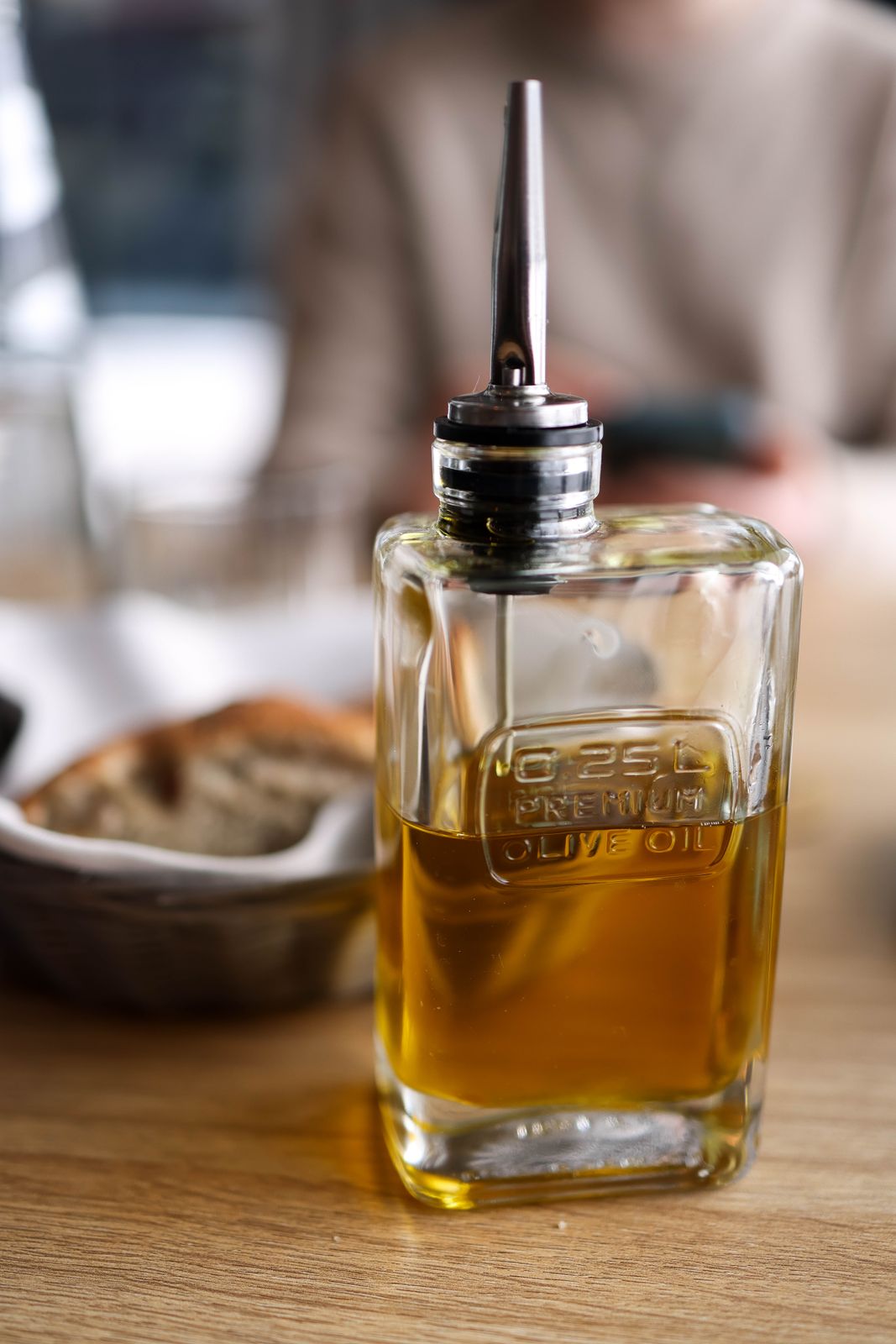
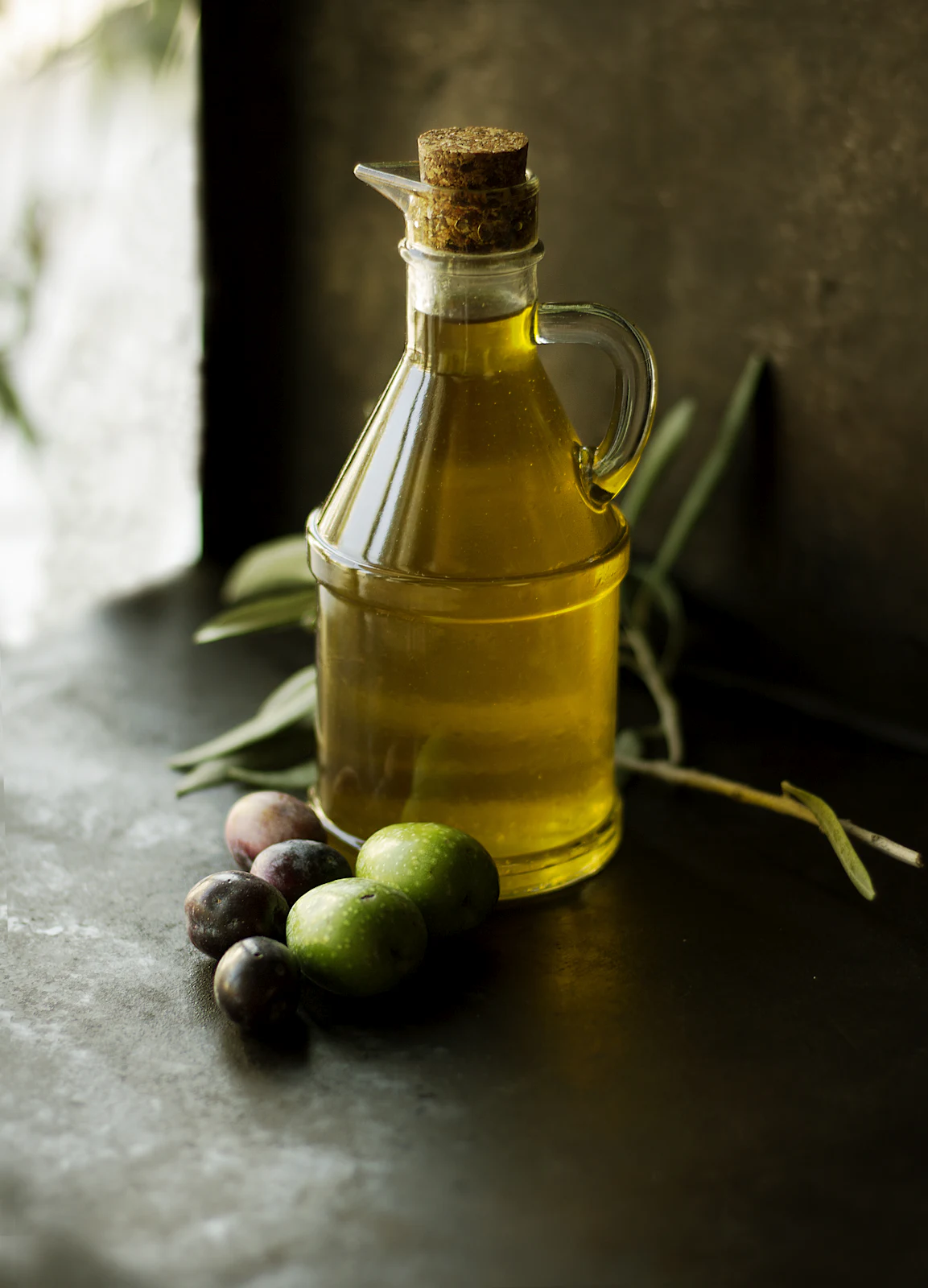
Light is the most aggressive. Extra virgin olive oil contains chlorophyll, which under light acts as a photosensitiser: it transfers light energy to dissolved oxygen and creates singlet oxygen, which attacks the fatty acids directly. This photo-oxidation runs many times faster than ordinary oxidation in the dark. A clear bottle on the windowsill is the quickest way to ruin a good oil.
Heat accelerates every chemical reaction. As a rough rule of thumb, reaction rates roughly double for every 10 °C increase. An oil that survives a year at 15 °C is noticeably finished sooner at 25 °C – and above the hob it regularly gets much warmer than that while you cook.
Oxygen works more slowly but never stops. While the bottle is closed, only the oxygen in the headspace is available. Every pour lets more air in and the headspace grows, so a half-empty bottle ages faster than a full one.
The right temperature
Aim for 14 to 18 °C – an ordinary kitchen or larder cupboard on an outside wall is often exactly there. More important than hitting the perfect degree is avoiding the obvious: the shelf next to the hob, the windowsill, the cupboard above the oven, and the car after the shop.
The fridge does the oil no harm. Below roughly 7 °C it turns cloudy and forms white flakes as some of the triglycerides crystallise. This is not a defect and is fully reversible: at room temperature the oil clears again. It is rarely practical, because you have to let the oil warm up before every use. Where it does make sense is for a spare bottle you will not open for months.
Which packaging protects
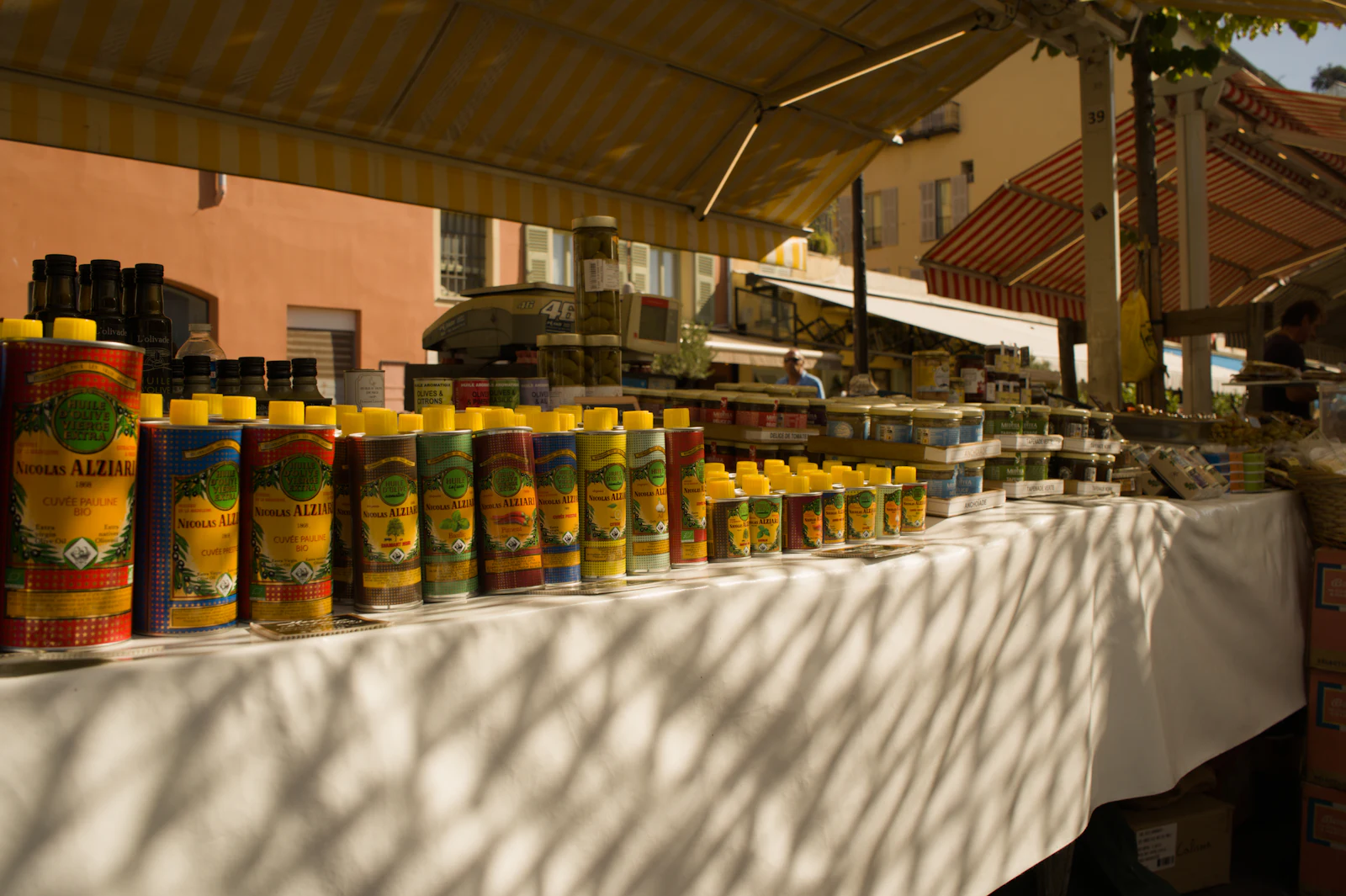
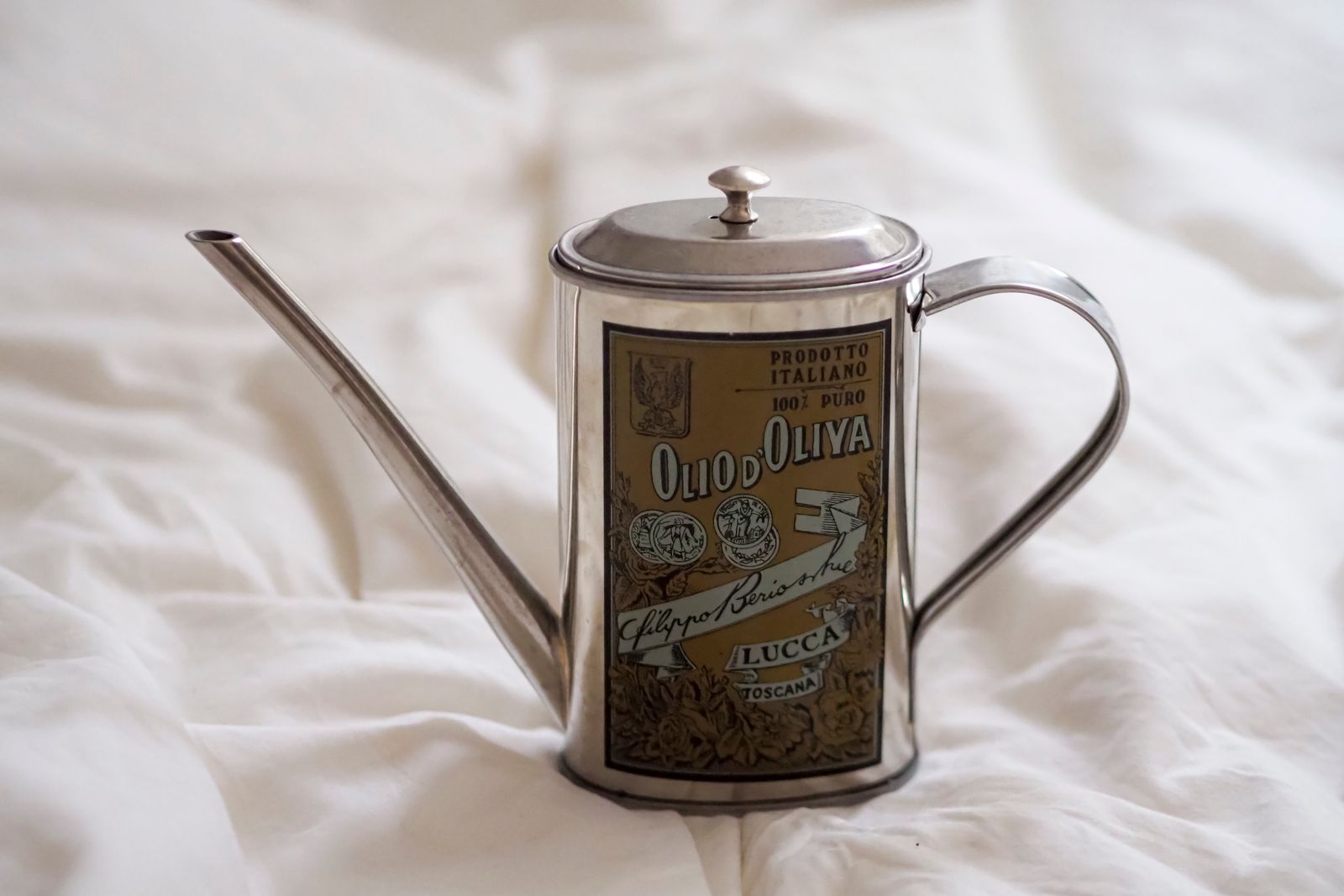
The ranking is well documented: tin and bag-in-box protect best, then dark glass, with clear glass and PET at the bottom. In the study by Pristouri, Badeka and Kontominas (Food Control, 2010), the same oil lasted six months in clear glass in the dark and under three months in clear PET in the light. The detail is in dark glass instead of plastic.
If you buy a large tin – often the best value – decant a small dark bottle for daily use and leave the rest sealed in the cupboard. That way the bulk of your stock stays untouched instead of being aerated every time you cook.
How long does olive oil keep?
The best-before date is usually 18 to 24 months after bottling. It is set by the producer, not fixed in law, and it says nothing about when the olives were picked: oil may have sat in a tank for months before bottling. Where a harvest year is given, that is the more reliable information.
| Condition | Guideline |
|---|---|
| Unopened, stored dark and cool | to the best-before date; at its best within the first year after harvest |
| Opened, bottle closed properly | one to three months for full flavour |
| Opened, near the hob, in clear glass | weeks |
Olive oil past its date is not a health hazard, it simply tastes worse – and the polyphenols that matter nutritionally are largely gone by then. What those substances do is covered in polyphenols and antioxidants in olive oil.
How to tell that oil has gone rancid
Rancidity is one of the defects a trained panel names in the sensory test. At home your nose is enough; we walk through it step by step in How to tell if olive oil is rancid: a 2-minute test. The main signs:
- Smell of old wax, putty, oil paint, damp cardboard or stale nuts.
- Taste dull and heavy, with no fruit and none of the usual pungency at the finish.
- No catch at the back of the throat any more – that pungency comes from polyphenols, and they go first.
This is different from the defect called “fusty”, which smells of fermentation or sauerkraut. That one does not come from bad storage but from olives left too long before milling – a fault from the mill, not from your kitchen.
Seven rules for a Swiss kitchen
- Keep the good oil in a cupboard, not on the shelf beside the hob.
- Decant a small dark bottle for everyday use.
- Close the bottle immediately after every use.
- Only buy large containers if you will get through them in a few months.
- Do not leave the bottle in the car after shopping.
- Look for a harvest year and light-proof packaging when you buy.
- Never top up an old bottle without cleaning and drying it first – the residue around the neck has already oxidised.
Frequently asked questions
Should olive oil go in the fridge?
It does not have to, but it does no harm. Below about 7 °C the oil turns cloudy and flaky; that is purely physical and disappears again at room temperature. For a spare bottle you will not open for months, the fridge is actually sensible.
Is cloudy olive oil bad?
No. Cloudiness comes either from cold or from the oil having been bottled unfiltered. Neither is a defect. The only thing that matters is the smell: if it smells rancid, looking clear will not save it.
How long does olive oil last once opened?
Count on one to three months for full flavour, depending on how well you store it and how full the bottle still is. It stays edible longer, but fruitiness and pungency fade noticeably.
Can you still use olive oil past its date?
Rancid olive oil is not an acute health risk, but it is a culinary one: it passes its off-flavour on to everything you dress with it. It will still do for strongly seasoned cooked dishes; for a salad it will not.
Does a tin protect better than dark glass?
Yes – tin lets no light through at all, dark glass only a little. The practical drawback of a tin is that you cannot see the level and it often reseals poorly, which is why decanting into a small bottle is the better routine.
Sources
- Pristouri, G.; Badeka, A.; Kontominas, M. G.: “Effect of packaging material headspace, oxygen and light transmission, temperature and storage time on quality characteristics of extra virgin olive oil”, Food Control 21 (2010).
- Regulation (EEC) No 2568/91, Annex XII: method for the organoleptic assessment of virgin olive oil; repealed in 2022 and replaced by Implementing Regulation (EU) 2022/2105, Annex I point 5, which refers to COI/T.20/Doc. No 15.
- International Olive Council (IOC): Sensory analysis of olive oil, COI/T.20/Doc. No 15.