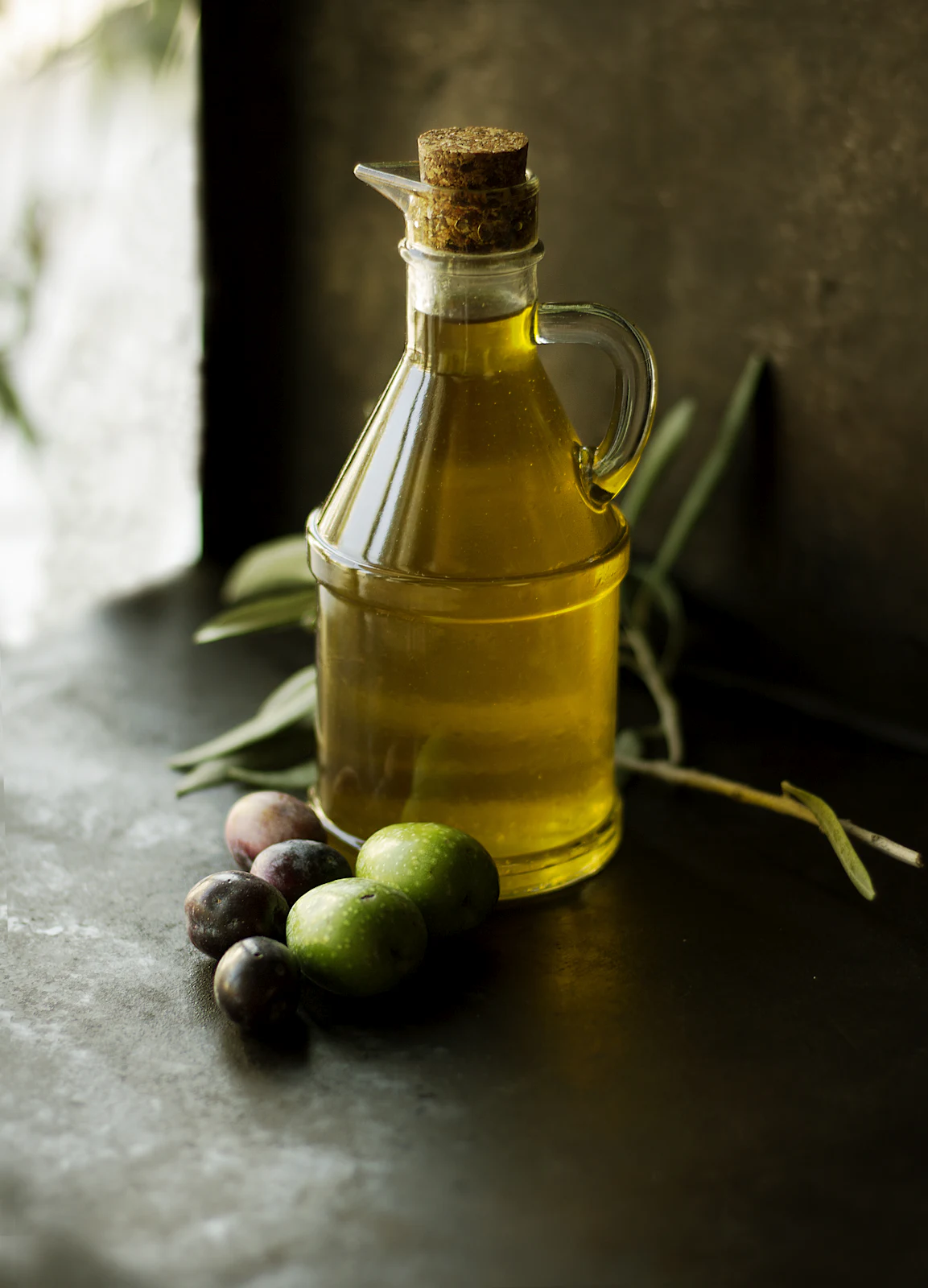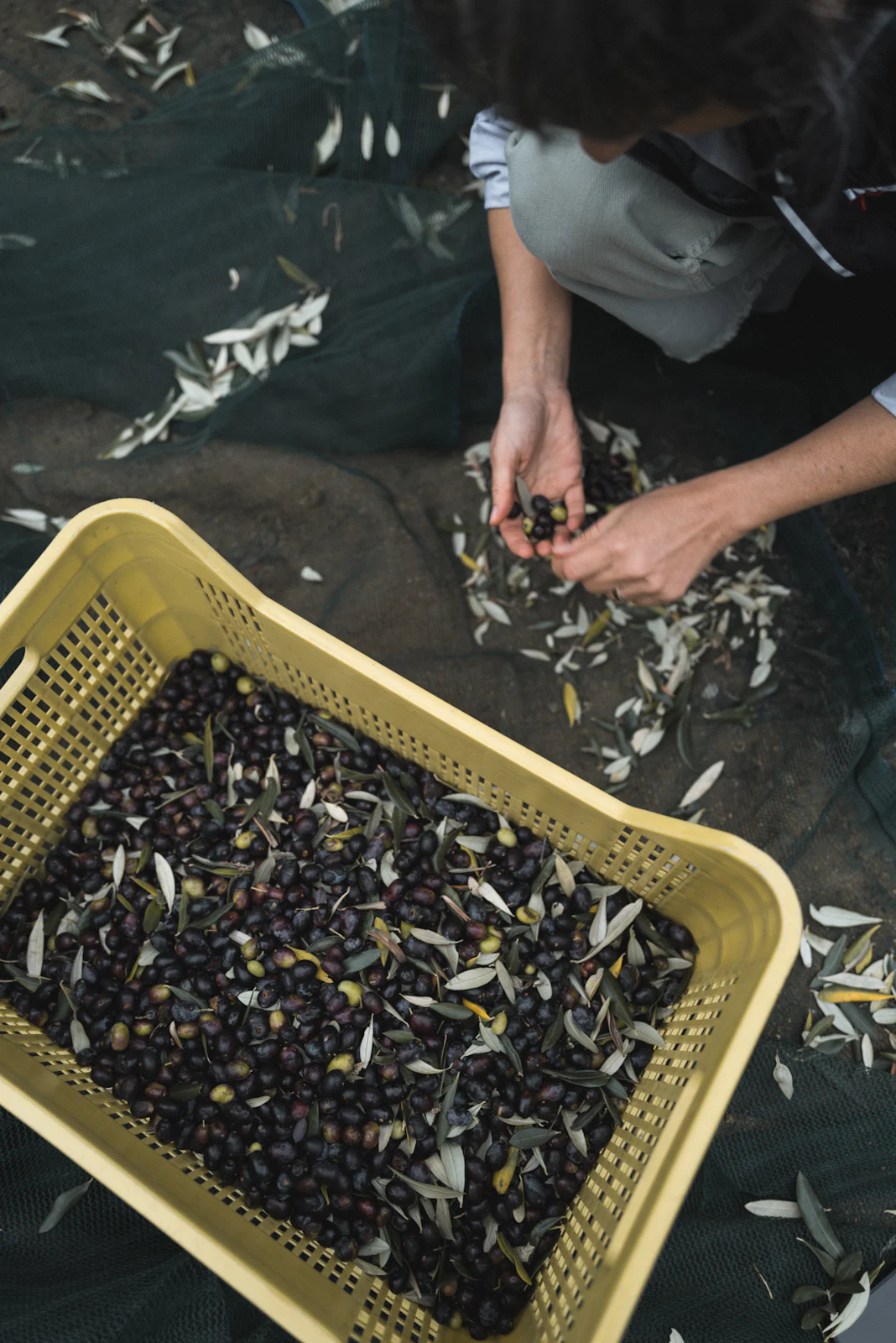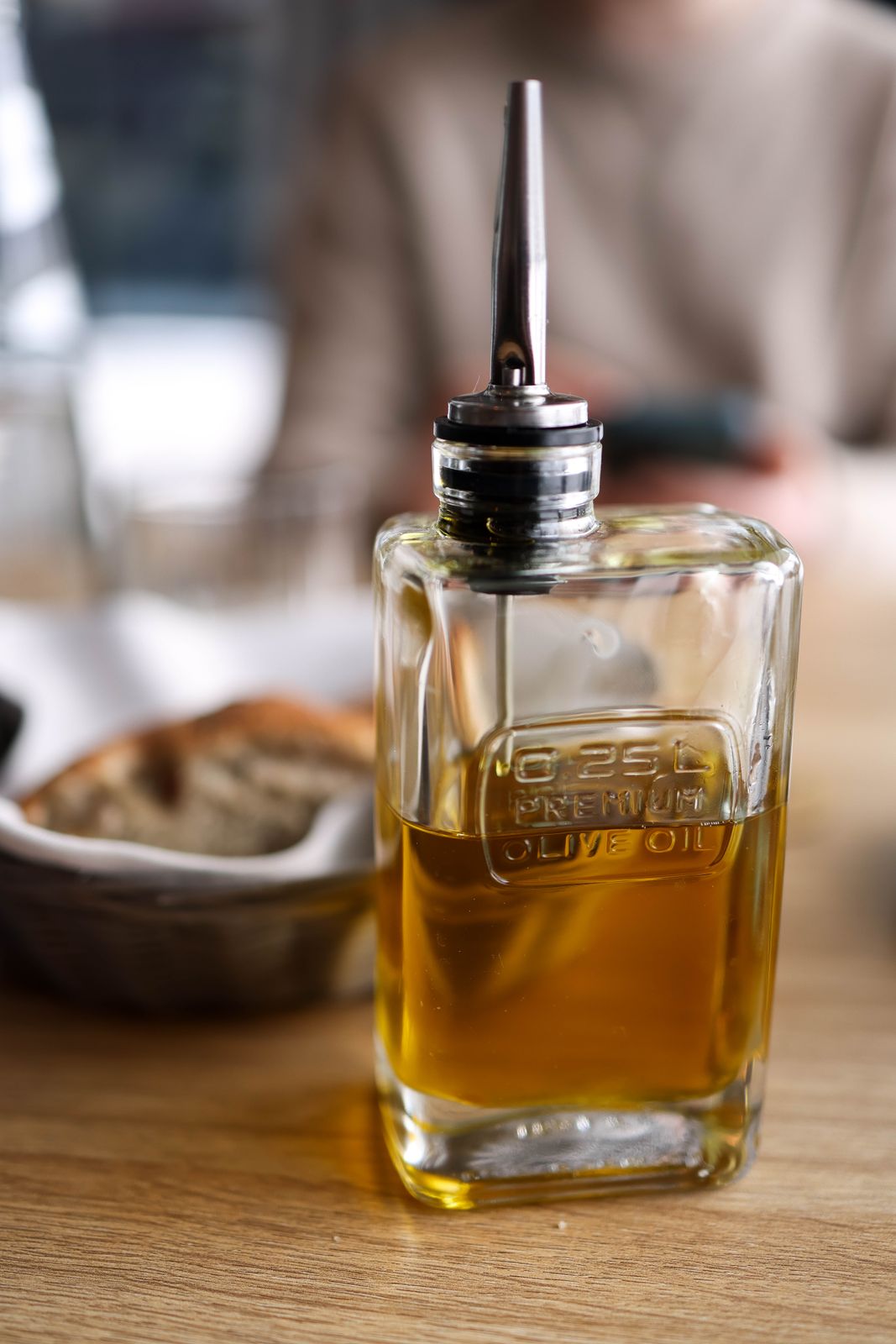
A bottle turns up at the back of the cupboard, and the date on the label has already passed. Throw it out? With olive oil, what happens after the date is almost never about safety. It is about something else: whether the bottle still holds what you paid for.
This article explains what "best before" means under Swiss food law, what actually happens to the oil after that date, how to judge an out-of-date bottle in two minutes, and when it really belongs in the bin.
What "best before" means legally
In Switzerland, date marking is governed by the FDHA Ordinance on Food Information (in German LIV, SR 817.022.16). Article 13 requires foods to carry a best-before date as a rule. Only for microbiologically highly perishable products, which after a short time could pose an immediate danger to health, is it replaced by a use-by date. Olive oil clearly belongs in the first group.
The definition is in Annex 1 of the ordinance: the best-before date is the date until which a food retains its specific properties when properly stored. Two phrases carry that sentence. "Properly stored" means the promise only holds for oil that has been kept in the dark and not too warm. "Specific properties" means it is about taste, smell and quality, not safety. The Federal Food Safety and Veterinary Office (FSVO) puts it the same way on its page about food labels: the best-before date concerns quality, not safety.
Annex 8 of the ordinance also sets the wording: "best before …" when the day is given, otherwise "best before end …" (in the German text of the ordinance «mindestens haltbar bis», in the French text «à consommer de préférence avant»). For a shelf life of more than three and up to eighteen months, month and year are enough; beyond eighteen months, the year alone. How long the period lasts is not laid down by the ordinance: the date is set by the producer.
Olive oil has a second statement that tells you more than the best-before date. Under Article 11 of Delegated Regulation (EU) 2022/2104, whose categories appear on practically every bottle on Swiss shelves, an extra virgin olive oil may state the harvest year, but only if 100 per cent of the contents come from that harvest. The best-before date is set by the bottler and says nothing about when the olives were picked. Where both are printed, the harvest year is the more honest number.
Can shops sell olive oil past its best-before date?
Yes. The FSVO states that food may still be passed on after the best-before date, provided quality and safety are guaranteed and no one is misled. The details are in the FSVO's information letter 2025/4. The use-by date works the other way round: after it, a product may no longer be supplied to consumers.
How far "after" can go was worked out for individual product groups by ZHAW in Wädenswil on behalf of the FSVO. Its guide to reducing food losses when food is passed on (Beretta et al., 2021, 2nd edition 2023) gives a limit of best-before plus 120 days for the category "fats and oils", stored at room temperature. Across all categories the range runs from 6 to 360 days. The platform foodwaste.ch translates this for the household: stored properly, oil can safely be enjoyed at least 120 days past its best-before date.
On the shelves of the big chains you will see little of this. According to «20 Minuten», Aldi Suisse, Coop, Lidl Switzerland and Migros confirmed in May 2024 that they do not sell products past their best-before date; only Lidl had run a pilot. Migros cited the logistical effort. So the question mostly comes up at home.
What happens to the oil after the date
Olive oil does not spoil like yoghurt, which is why it carries no use-by date. What carries on after the date is oxidation: oxygen, light and heat attack the fatty acids, and the oil's protective compounds are used up in the process. Why light and heat play the leading role is explained in How to store olive oil.
How fast this happens is shown by a Spanish study (Castillo-Luna et al., Food Chemistry 2021). The researchers stored 160 extra virgin olive oils for twelve months in the dark at 20 °C, conditions better than in many kitchens. Polyphenol content fell by an average of 42 per cent, though with wide variation from oil to oil (± 24 percentage points). The biggest losers were oils rich in oleacein and oleocanthal, the compounds that catch in the throat. Hydroxytyrosol, by contrast, increased because larger molecules break down; the authors see it as a marker of aged oil.
A long-term study (Mousavi et al., Foods 2021) stored three extra virgin olive oils for up to 36 months at ambient temperature, in the fridge at 4 °C and in the freezer at −18 °C. Chilled, all three oils stayed within the EU limits for most parameters for up to three years. Oleocanthal, squalene and total phenols reacted most strongly to temperature; the aroma held up best at −18 °C.
In plain terms: an olive oil past its best-before date does not suddenly turn bad. But it is very likely poorer in exactly the compounds that set an extra virgin olive oil apart from cheap cooking oil. What polyphenols do in the body and what amounts that takes is covered in Olive oil polyphenols.
The test: decide in two minutes
The date is a guideline; the evidence is in the bottle. Here is how to check an out-of-date oil:
- Look at it. Flakes or oil that has set solid after cool storage are not a fault, as foodwaste.ch also notes. Unfiltered oil is naturally cloudy from the start. If, however, an originally clear oil turns cloudy at room temperature, be careful: foodwaste.ch lists cloudiness and a rancid or pungent smell among the signs of spoiled oil.
- Pour a tablespoon into a small glass, cover it with your hand, warm it briefly, then smell. A spoon alone is not enough, because the aromas have nowhere to collect.
- Check for rancidity. Old walnuts, wax crayons, glue, damp cardboard: that is the oxidation defect, and it does not go away.
- Taste a small sip. A good oil tastes of something: green, fruity, often bitter and peppery. An old one tastes flat and greasy, with no catch in the throat at all.
Important: bitterness and pungency are not defects in olive oil but a sign that polyphenols are still there. What the individual defects smell like and what they reveal about production is shown in the detailed guide How to tell if olive oil is rancid.
When the bottle really has to go
Three cases, three answers:
- Out of date, but still smells fruity and clean. Use it, and use it first. It may no longer be first choice for salad, but it is perfectly fine for frying and cooking.
- Smells rancid. Discard it. In the practice of the cantonal laboratories, a rancid oil is a quality problem, not an acute safety problem. But it spoils every dish it goes into, and "it's still fine for cooking" is a fallacy here: the off-flavour goes into the pan with it. We are not giving a medical assessment here.
- Home-made oil with garlic, chilli or fresh herbs. No best-before date applies here, only caution. The German Federal Institute for Risk Assessment (BfR) advises against making and storing such oils at home in advance, because in the absence of air Clostridium botulinum can multiply and produce toxin, especially when the oil goes raw onto a salad. An old home-made garlic oil belongs in the bin, however it smells.
How to avoid it in the first place
The best remedy against out-of-date olive oil is the right bottle size. A household that takes a year to empty a one-litre bottle pays less per litre, but ends up using old oil or throwing the rest away. How to match container size to consumption is worked out in 500 ml, 1 litre or a bulk tin. When shopping, it pays to look at the harvest year rather than just the best-before date, and what the common oils currently cost at Migros, Coop, Denner, Aldi, Lidl and Manor is shown in the overview Olive oil prices in Switzerland.
Frequently asked questions
Is olive oil still good after the expiry date?
As a rule, yes, if it was unopened, kept in the dark and does not smell rancid. Under Swiss food labelling law the best-before date is a quality date, not an expiry date. For fats and oils, the ZHAW guide produced for the FSVO gives a limit of 120 days after the best-before date for passing food on. What decides, though, is the smell test, not the calendar.
How long does olive oil keep after the best-before date?
There is no fixed period. The 120 days from the ZHAW guide apply to businesses passing on correctly stored goods; at home, oil kept cool and dark can stay usable for longer, oil next to the cooker for much less. Either way, the polyphenol content keeps falling.
Is expired olive oil harmful to health?
An out-of-date oil that still smells clean is not a risk in the sense of food law; that is what the use-by date is for, and olive oil does not carry one. A rancid oil is first and foremost a quality defect. Home-made garlic or herb oils are a different matter: the BfR advises against storing them because of botulism. For medical questions, ask your doctor or pharmacist.
Does the fridge make olive oil last longer?
Yes. In the long-term study by Mousavi et al., oils stored at 4 °C and at −18 °C stayed within the EU limits for most parameters for up to three years. In the fridge the oil turns cloudy and flaky, which disappears again at room temperature. This is mainly practical for an unopened reserve bottle.
Which tells you more: the best-before date or the harvest year?
The harvest year. The best-before date is set by the bottler and does not reveal how old the olives were. Under Regulation (EU) 2022/2104, the harvest year may only appear on the label if the entire contents come from that single harvest.
Sources
- FDHA Ordinance on Food Information (LIV), SR 817.022.16: Art. 13, Annex 1 items 5 and 6, Annex 8 (in German)
- FSVO: Information on the food label (best-before and use-by dates, in German)
- FSVO: Information letters, including 2025/4 on passing on food after the best-before date (in German)
- Beretta et al., ZHAW on behalf of the FSVO: Guide to reducing food losses when passing on food (2021, 2nd edition 2023, PDF, in German)
- foodwaste.ch: How long oil keeps after the best-before date (in German)
- 20 Minuten: Retailers hesitate to sell food past its best-before date (May 2024, in German)
- Castillo-Luna, A. et al.: The decrease in the health benefits of extra virgin olive oil during storage is conditioned by the initial phenolic profile, Food Chemistry 336 (2021)
- Mousavi, S. et al.: Evolution of Extra Virgin Olive Oil Quality under Different Storage Conditions, Foods 10 (2021)
- Delegated Regulation (EU) 2022/2104 on marketing standards for olive oil, Art. 11 (harvest year)
- BfR: Home-made herb oils and vegetables preserved in oil pose health risks (communication 001/2016, PDF, in German)