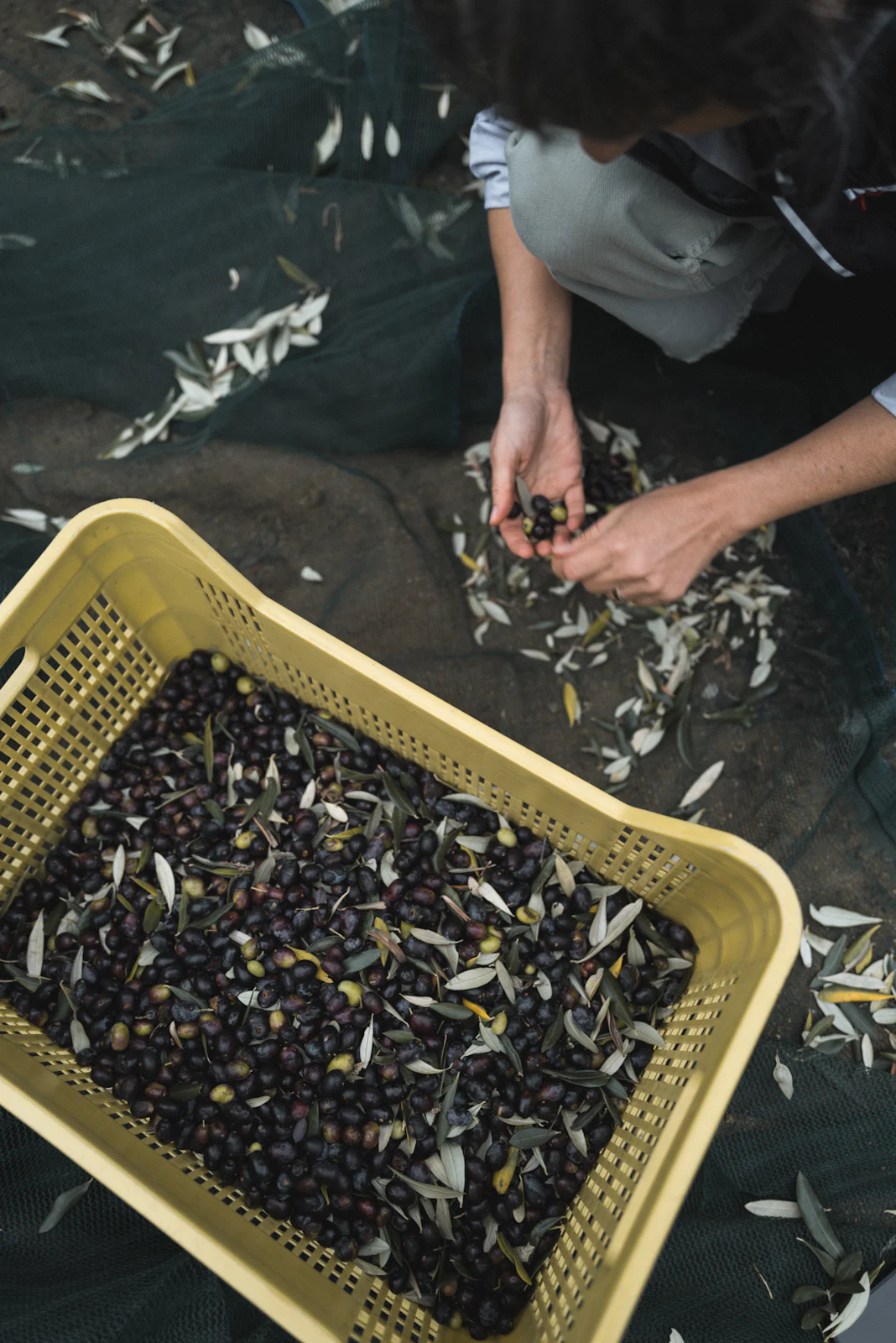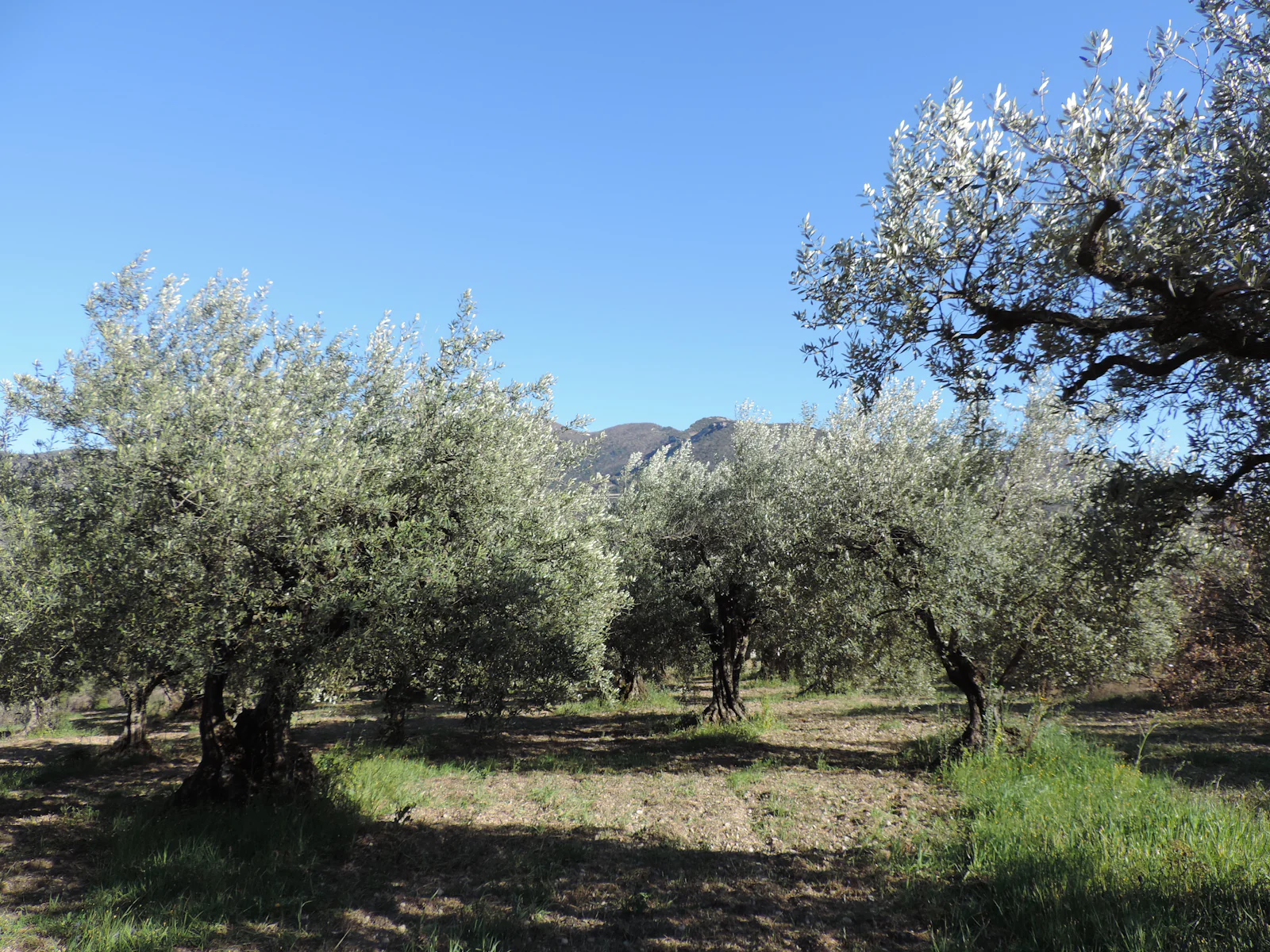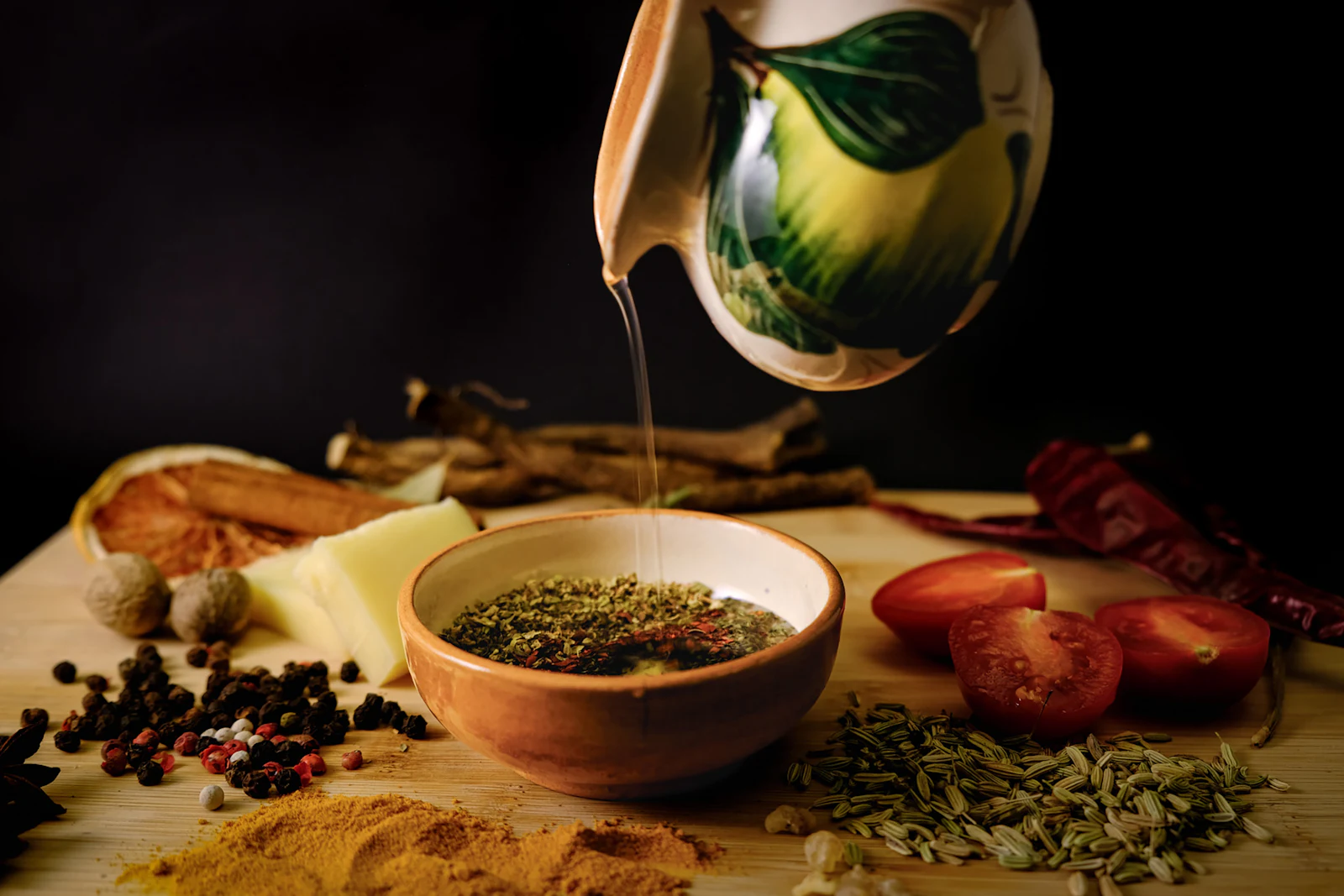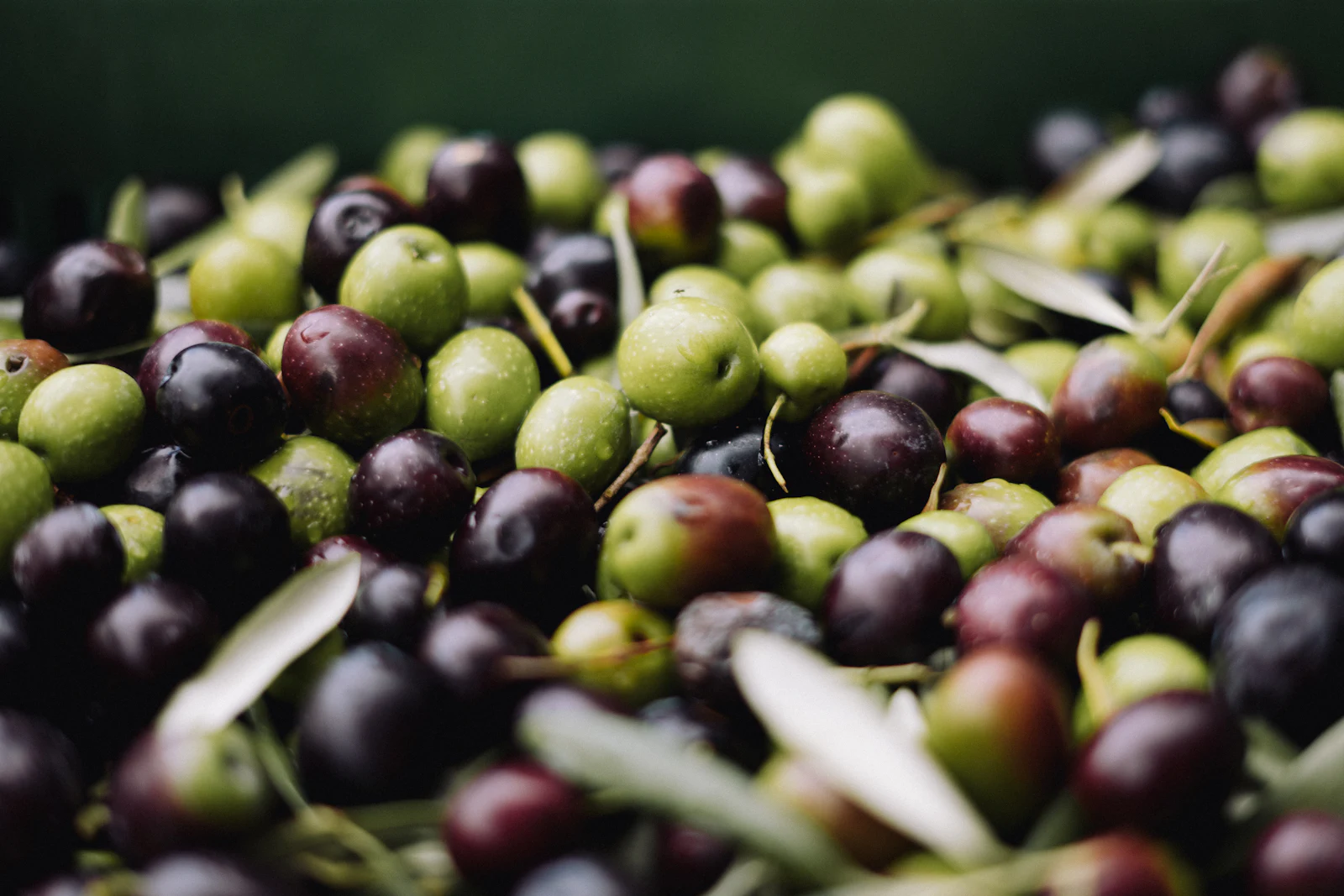
In Greece, olive oil is part of almost every meal. The country produces mainly extra virgin olive oil, most of it from the small, aromatic Koroneiki olive. At the same time, Greeks consume more olive oil than any other nation.
Greece in figures
| Production 2024/25 | 250,000 tonnes (IOC, provisional) |
| Share of world production | around 7% |
| Consumption per person | 9.3 kg (2022/23, highest in the world) |
| Protected olive oils (EU register) | 33 (20 PDO, 13 PGI) |
| Key varieties | Koroneiki, Manaki, Athinolia, Kolovi and Adramytini (Lesbos), Tsounati, Lianolia (Corfu) |
| Virgin olive oil exports 2023 | 174,097 tonnes worth USD 1.15 billion |
The main growing areas
- Peloponnese: the largest growing area, with Messinia around Kalamata and Laconia around Sparta. Koroneiki dominates.
- Crete: with Chania, Heraklion, Rethymno and Lasithi, one of the best-known olive oil regions in the world; the island alone has 13 protected olive oils (10 PDO, 3 PGI).
- Lesbos and the Aegean: mild oils from the Kolovi and Adramytini varieties.
- Ionian Islands: Corfu, Zakynthos and Kefalonia with old olive groves.
- Mainland: Aetolia-Acarnania, Attica and Chalkidiki, which is known mainly for table olives.
Koroneiki is small and productive and gives green-fruity, rather bitter and pungent oils high in polyphenols. More in our comparison Arbequina, Picual and Koroneiki.
Designations of origin: 33 protected olive oils
Greece ranks third for protected olive oils, behind Italy and Spain. The EU register eAmbrosia lists:
- 20 protected designations of origin (PDO): Kalamata, Sitia Lasithiou Kritis, Kolymvari Chanion Kritis, Apokoronas Chanion Kritis, Archanes Irakliou Kritis, Peza Irakliou Kritis, Viannos Irakliou Kritis, Vorios Mylopotamos Rethymnis Kritis, Messara, Selino Kritis, Thrapsano, Krokees Lakonias, Petrina Lakonias, Finiki Lakonias, Kranidi Argolidas, Lygourio Asklipiou, Trizinia, Agoureleo Chalkidikis, Galano Metaggitsiou Chalkidikis, Makri.
- 13 protected geographical indications (PGI): Kriti (Kreta), Chania Kritis, Kritsa, Lakonia, Olympia, Lesvos/Mytilini, Samos, Rodos, Thasos, Kefalonia, Zakynthos, Preveza, Agios Mattheos Kerkyras.
Competitions and awards
- Olympia Health & Nutrition Awards: the competition of the World Olive Center for Health, in cooperation with the National and Kapodistrian University of Athens, rewards olive oils with particularly high polyphenol content that meet the requirements of EU Regulation 432/2012 for the health claim. More than 1,000 samples from Greece and other countries took part in 2024.
- International competitions: Greek producers are regularly among the winners of international competitions and guides such as Flos Olei.
Where Greece exports its olive oil
According to UN trade statistics (World Bank WITS, tariff code 150910), Greece exported virgin olive oils worth USD 1.15 billion in 2023. The table shows the five largest markets plus Switzerland, which ranks eighth:
| Destination | Value (USD million) | Volume (tonnes) | Share of export value |
|---|---|---|---|
| Italy | 730.8 | 116,059 | 64% |
| Germany | 89.6 | 11,469 | 8% |
| United States | 76.3 | 10,336 | 7% |
| Spain | 69.9 | 12,604 | 6% |
| United Kingdom | 21.8 | 2,607 | 2% |
| Switzerland | 10.4 | 1,130 | 1% |
Almost two thirds of export value goes to Italy, much of it in bulk to be bottled or blended there. If you are looking for Greek oil, check the specific origin or a designation of origin on the label. Around 10 per cent of the olive oil imported into Switzerland in 2020 came from Greece.
Three Greek recipes with olive oil
Horiatiki (village salad)
Serves 4: 4 ripe tomatoes, 1 cucumber, 1 red onion, 1 green pepper, 16 Kalamata olives, 200 g feta, dried oregano, 6 tbsp extra virgin olive oil, salt.
- Cut the tomatoes and cucumber into chunks and the onion and pepper into rings; season lightly with salt.
- Add the olives and place the block of feta on top.
- Sprinkle with oregano and drizzle generously with olive oil.
Dakos (Crete)
Serves 4: 4 barley rusks (paximadia), 3 ripe tomatoes, 150 g mizithra or feta, capers, oregano, 6 tbsp extra virgin olive oil.
- Sprinkle the rusks with a little water and soak them with 2 tbsp olive oil.
- Grate the tomatoes and spread over the rusks.
- Top with crumbled cheese, capers and oregano and drizzle with the remaining oil.
Fasolakia ladera (green beans in olive oil)
Serves 4: 800 g green beans, 2 onions, 2 garlic cloves, 2 potatoes, 400 g chopped tomatoes, 100 ml extra virgin olive oil, parsley, salt.
- Soften the onions and garlic in the olive oil.
- Add the beans and potato chunks and cook briefly.
- Add the tomatoes and a little water and braise, covered, for 40 minutes until the beans are tender and the sauce has thickened. Serve with parsley.
Read more: Olive oil consumption and life expectancy by country.
Frequently asked questions
How much olive oil does Greece produce?
250,000 tonnes in 2024/25 according to the International Olive Council, around 7 per cent of world production.
Where in Greece is olive oil produced?
Mainly in the Peloponnese and Crete, plus Lesbos, the Ionian Islands and the mainland.
Is Kalamata olive oil protected?
Yes. Kalamata is registered in the EU as a protected designation of origin (PDO).
Why does so much Greek olive oil go to Italy?
Italy often buys Greek oil in bulk to bottle or blend it. In 2023 around 63 per cent of Greek export value went to Italy.
Sources
- International Olive Council: Olive sector statistics – December 2025
- International Olive Council: Olive Sector Statistics – March 2025 (per capita consumption)
- EU register of geographical indications (eAmbrosia), accessed 17 Sep 2026
- World Bank WITS / UN Comtrade: Greece exports of virgin olive oil (HS 150910), 2023
- World Olive Center for Health: Olympia Health & Nutrition Awards 2026
- Bioarmonia: Olympia Health & Nutrition Awards 2024
- Wikipedia: Koroneiki