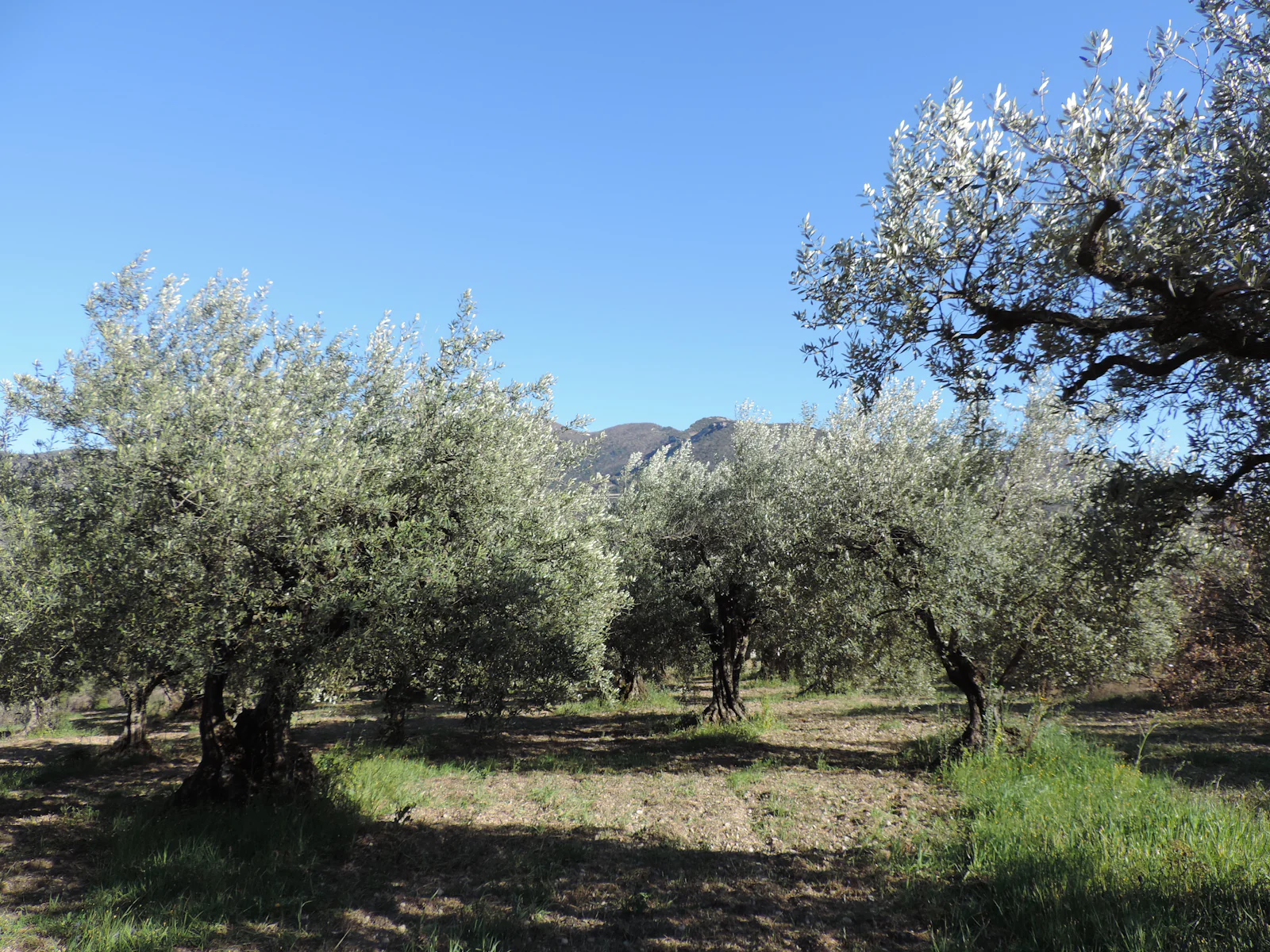
Anyone who knows Spanish olive oil knows Jaén: Picual, endless hillsides, a quarter of world production out of a single province. Alongside it there is a second Spain that virtually never reaches a Swiss shelf – more than two dozen protected designations of origin, many of them a few thousand hectares in size, each with its own olive variety and a handful of mills that between them bottle less than one mid-sized discounter order. That is where the country's most idiosyncratic oils are made.
What a PDO actually guarantees
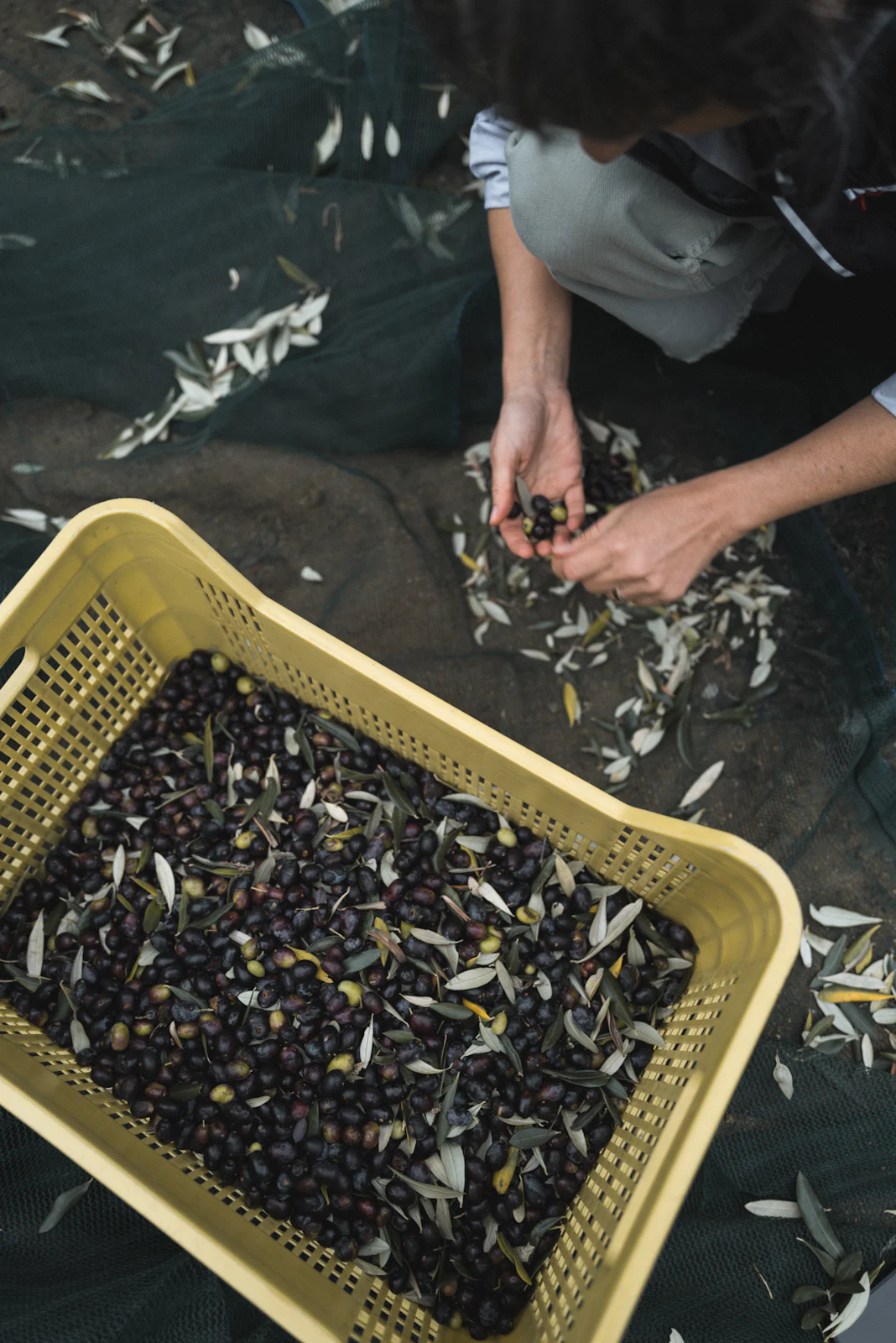
"Denominación de Origen Protegida" (DOP) is the Spanish form of the EU protected designation of origin under Regulation (EU) 2024/1143, which has replaced the earlier Regulation (EU) No 1151/2012 since 13 May 2024. It is stricter than the related PGI mark, because a PDO requires every step to happen inside the defined area: growing, harvesting and milling. An oil may not call itself PDO simply because the olives came from there – they must have been milled there too.
Each PDO has a specification that fixes three things the bottle does not always mention:
- The permitted varieties, often only one or two, sometimes one that grows nowhere else.
- Tighter limits than EU law. The EU allows extra virgin olive oil up to 0.8 per cent free acidity; many PDOs require 0.3 or 0.5 per cent.
- A control body, the Consejo Regulador, which tests every lot and issues the numbered back labels.
Spain's oldest olive oil PDOs date from the 1980s; the youngest are barely ten years old. Why Spain competes at the very top on quality is covered in Why Spanish Olive Oil Ranks Among the World's Best.
The small PDOs and their varieties
What matters to a Swiss buyer is not the high-volume PDOs but the areas whose variety you would otherwise never get to hold.
| PDO | Region | Main variety | Character |
|---|---|---|---|
| Sierra de Cazorla | Jaén | Royal de Cazorla | Red fruit, soft, little bitterness; a variety found almost nowhere else |
| Montoro-Adamuz | Córdoba (Sierra Morena) | Nevadillo Negro, Picual | Extremely high in polyphenols, pungent, astringent – mountain oil on poor soil |
| Aceite de La Alcarria | Guadalajara, Cuenca | Castellana (Verdeja) | Cold highland, grassy and almondy, very small volume |
| Gata-Hurdes | Cáceres (Extremadura) | Manzanilla Cacereña | Mild, fruity, apple-like; doubles as a table olive |
| Oli de l'Empordà | Girona | Argudell | Tramuntana wind, fine bitterness, artichoke notes |
| Aceite de Terra Alta | Tarragona | Empeltre | Golden, sweetish, barely any pungency – the opposite of a Picual |
| Sierra del Moncayo | Zaragoza | Empeltre, Arbequina, Verdial | Young PDO on the edge of the Ebro valley, a blend with structure |
| Aceite de Mallorca | Balearics | Mallorquina, Arbequina, Picual | Island oil, often from terraced groves; mild to medium fruity |
| Poniente de Granada | Granada | Lucio, Loaime, Picual and others | Local varieties in blends you will not find elsewhere |
| Aceite Campo de Montiel | Ciudad Real | Cornicabra, Picual | La Mancha plateau, robust, long-keeping |
Three of these varieties deserve a closer look. Royal de Cazorla counts among Spain's rarest oil varieties; the planted area is estimated at a few hundred hectares, and the oil tastes atypical – of red berries rather than grass. Nevadillo Negro from Montoro-Adamuz yields oils whose polyphenol content sits regularly far above average; if you read a catch in the throat as a mark of quality, this is your region – see Polyphenols and Antioxidants in Olive Oil Explained. And Empeltre is the proof that Spanish oil need not be pungent at all: golden, mild, almost sweet, traditional in Aragón and the Balearics.
An overview of the major European varieties is in Olive Varieties in Europe, and portraits of the two best known in Picual and Arbequina.
Brands you can actually find
With small PDOs the brand is rarely the first criterion – often there are only a handful of bottlers per area. These are the ones most likely to be available outside Spain, each standing as an example for its region:
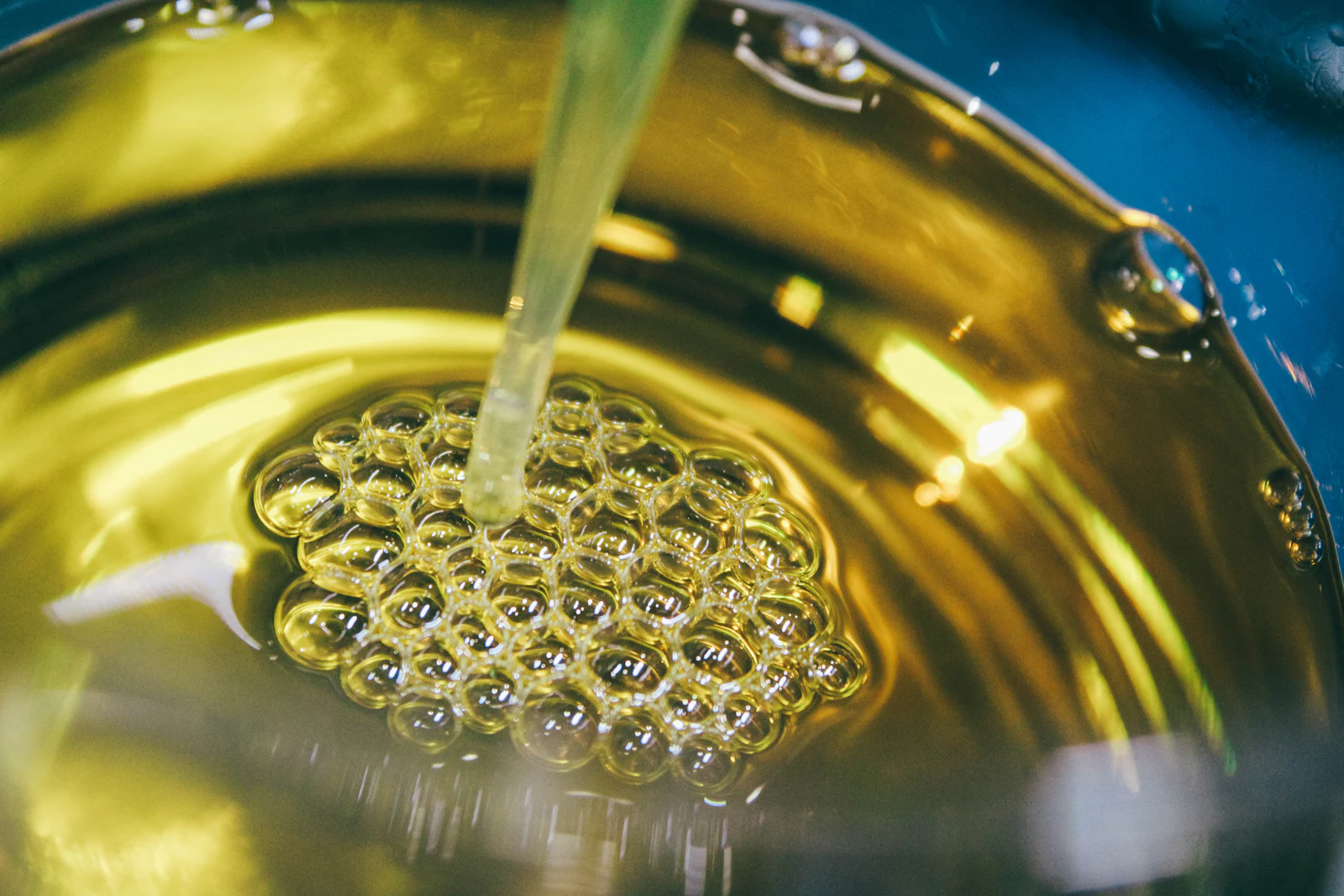
- Núñez de Prado (PDO Baena, Córdoba). The classic among Spanish family mills, known for its "flor de aceite": oil that drips out under the weight of the paste alone, with no mechanical pressure. The yield is low and the price follows.
- Venta del Barón (PDO Priego de Córdoba). A blend of Picuda, Hojiblanca and Picual, for years one of Spain's most decorated oils.
- Oleoestepa (PDO Estepa, Seville). A large cooperative with unusually strict quality control; the most accessible way into Hojiblanca.
- Oro de Génave (PDO Sierra de Segura, Jaén). Cooperative, organic, Picual from the uplands – one of the region's oldest organic initiatives.
- Aubocassa (PDO Aceite de Mallorca). Arbequina from a single Mallorcan estate, cleanly made and well distributed in Europe.
- Empordàlia (PDO Oli de l'Empordà, Girona). A cooperative in the Alt Empordà that bottles Argudell oil alongside its wine.
- Agrícola Sant Josep (PDO Aceite de Terra Alta, Tarragona). Cooperative in Bot, classic Empeltre.
This is a selection, not a ranking, and it goes out of date faster than the specification does. If you want to know which mills belong to a given PDO, there is only one reliable place to look: the public register of that Consejo Regulador. It lists every certified bottler, and it shows what the area's official back label looks like.
How to recognise a genuine PDO oil
- The EU logo plus the area name. The EU's red-and-yellow PDO mark alone is not enough; the protected name must appear beside it, for instance "Priego de Córdoba".
- The control number. Many Consejos issue numbered back labels. No number means no certified area oil, however prominent the region is on the front.
- Harvest year, not just a best-before date. Serious small bottlers name the campaign, for example "2025/26 harvest".
- Beware region names without a seal. "From Andalusia" or "Sierra oil" are marketing, not protected terms.
Getting them to Switzerland
Honestly: not from a supermarket. Migros, Coop, Denner and Aldi carry volume brands and private labels, not an 8,000-bottle PDO from the Sierra Morena. That leaves three routes – direct shipping from the mill or its cooperative, Spanish and Italian delicatessens that ship to Switzerland, and the suitcase after a holiday.
For all three, what decides the cost is not the price on the bottle but what is added on top: shipping for a heavy, breakable good, import VAT and the customs duty on edible oil. How that works out in practice, and the quantity at which it starts to pay, is set out in Buying Olive Oil from Castile and León: Varieties, Labels and Customs – the arithmetic is the same for any Spanish PDO.
One practical note to close on: small PDO oils are vintage products in a far stricter sense than supermarket oil. An order placed in spring from the previous year's campaign is fresh; the same bottle in August is not. If you order once a year, order between January and April.
Frequently asked questions
Is a PDO oil automatically better?
No. The PDO guarantees origin, variety and tighter limits, not excellence. A carefully made oil with no seal can beat a careless one that has it.
What is the difference between PDO and PGI?
For a PDO, growing, harvesting and milling must all take place in the area. For a PGI it is enough that one of those stages does.
Which Spanish PDO is the smallest?
It shifts with the harvest. Aceite de La Alcarria, Gata-Hurdes and the island designations sit regularly at the bottom, with volumes a single large bottler would produce in days.
Is the price difference worth it?
For everyday use in the pan, no. For the oil that goes cold onto salad, bread or soup, the difference against a supermarket oil is clearly tasteable – that is where it is decided.
Sources
- Ministerio de Agricultura, Pesca y Alimentación: DOP e IGP de aceite de oliva virgen extra
- European Commission: eAmbrosia – the EU geographical indications register
- Regulation (EU) 2024/1143 on geographical indications; it repealed Regulation (EU) No 1151/2012
- International Olive Council: variety catalogue and trade standards