If you moved to Switzerland recently, you may assume olive oil has always been part of the Swiss kitchen. It has not. In the early 1980s the whole country imported roughly 2,000 tonnes a year, according to the US Department of Agriculture (USDA) series. By 1999 the figure was about 8,000 tonnes, and most of that growth came in a burst after 1995.
This article traces how that happened, using the sources that actually exist. That caveat matters: detailed Swiss statistics on olive oil for these two decades are thin. We rely on rounded import figures, a federal nutrition report, customs data from the early 2000s and historical accounts, and we flag every number that is our own calculation.
A fourfold rise in twenty years
Switzerland produced practically no olive oil of its own in this period, so imports are a fair stand-in for consumption. The USDA series, rounded to the nearest thousand tonnes, looks like this:
- 1980–85: about 2,000 tonnes a year
- 1986–92: about 3,000 tonnes
- 1993–95: about 4,000 tonnes
- 1996: 5,000; 1997: 7,000; 1998: 6,000; 1999: 8,000 tonnes
For 2000 the Swiss federal administration gives an exact figure of 7,847 tonnes. A separate check comes from the Federal Customs Administration, which reported in May 2004 that 2003 imports reached 9,434 tonnes, worth CHF 55.4 million, and that this was three times the 1990 volume. Working backwards, that puts 1990 at roughly 3,100 tonnes (our calculation), which sits comfortably with the rounded USDA value.
Per head, and again by our own calculation using populations of about 6.4 million (1980), 6.7 million (1990) and 7.1 million (1999), consumption went from around 0.3 kg a year in the early 1980s to 0.45 kg in 1990 and about 1.1 kg in 1999. Treat these as orders of magnitude, not official statistics. For comparison, the International Olive Council put Swiss consumption at 1.6 kg per person in 2014.
Why the late 1990s?
The flat 1980s and the sudden climb after 1995 are the most striking features of the series. No source measures exactly what drove the change, but two developments line up with it.
The Mediterranean diet goes mainstream in research
Ancel Keys's Seven Countries Study had, since the late 1950s, compared heart disease across countries and drawn attention to low rates around the Mediterranean. In 1994 Michel de Lorgeril and colleagues published the Lyon Diet Heart Study in The Lancet, reporting far fewer recurrent cardiac events among heart-attack patients on a Mediterranean-style diet than on a conventional one. Swiss imports then jumped between 1996 and 1999. That is a correlation in time, not proof of cause, and we would not claim more. If you want the current state of the evidence, our practical guide to daily olive oil covers it.
Cold-pressed oil as a flavour ingredient
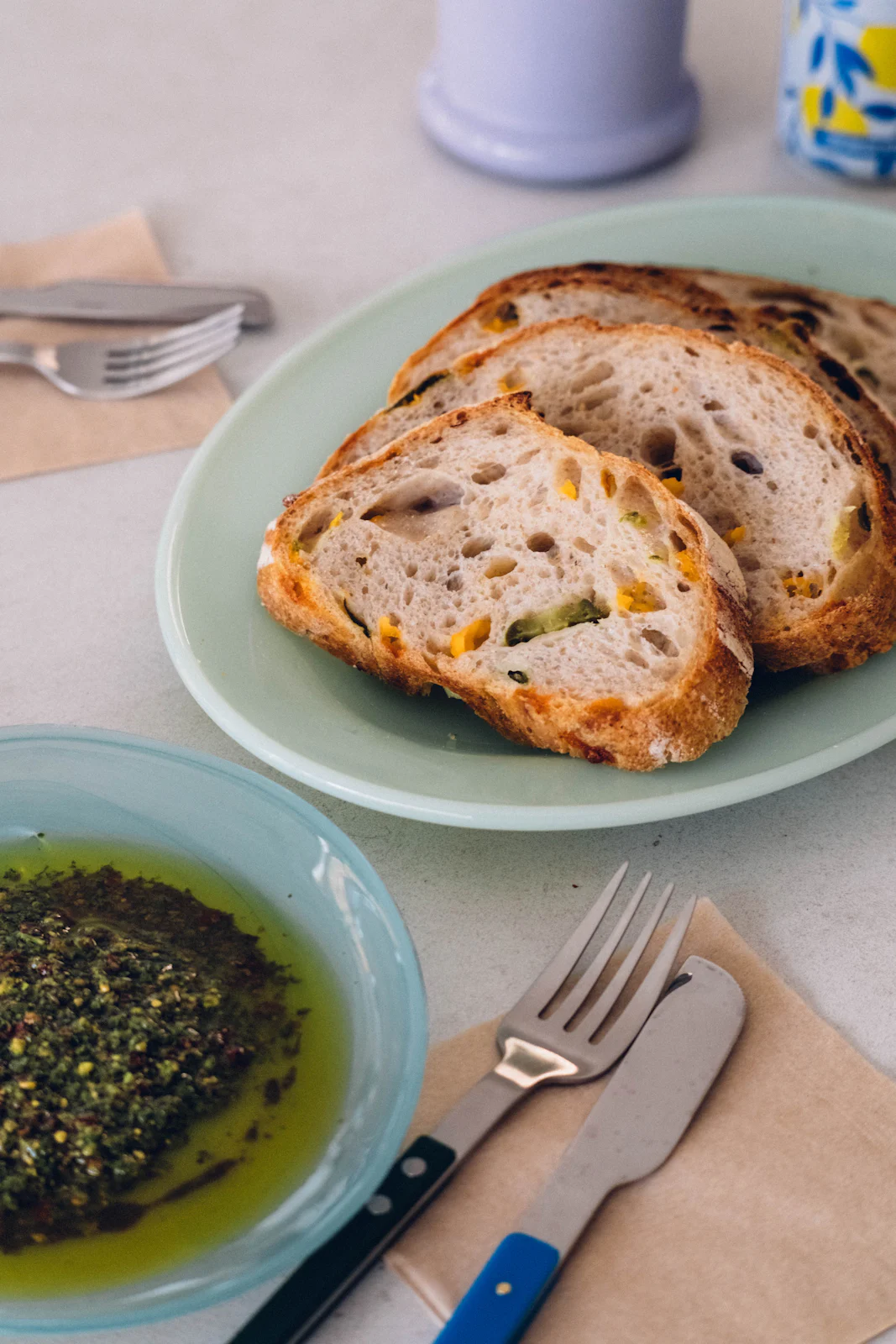
The customs administration's 2004 note says growth was driven mainly by cold-pressed oil. In other words, the new demand was not simply for a cheaper frying fat but for olive oil used for its taste: on salads, pasta and bread.
Before the boom: fat on the Swiss plate
The Fourth Swiss Nutrition Report, published in 1998, shows the background against which olive oil was competing. Between 1979/80 and 1994/95, supply of vegetable oils and fats fell from 15.0 kg to 13.6 kg per person per year. Butter went from 7.5 kg to 6.2 kg, lard dropped to 0.9 kg, and beef fat stood at around 1.5 kg. Fat provided 38% of dietary energy, against a recommended maximum of 30%.
The report does not mention olive oil at all. Setting the import figures against vegetable fats, our estimate is that olive oil made up about 3% of that category around 1990 and 7–8% by the late 1990s. A clear gain, but still a small slice of what the Swiss cooked with.
The Italian connection
The longer story begins with migration. According to historian Sabina Bellofatto, quoted by fairunterwegs.org in 2014, olive oil, mozzarella, parmesan and espresso were practically unavailable in Switzerland before the 1950s. They spread with the Italian workers who arrived from that decade onwards. The Italian population peaked at 573,085 in 1975, according to the census-based overview on Wikipedia.
The welcome was mixed. Bellofatto notes that xenophobia slowed the adoption of Italian food. On 7 June 1970 voters rejected the Schwarzenbach initiative, which aimed to cap the foreign population at 10% in every canton except Geneva, with 54% voting no. Had it passed, 300,000 to 400,000 people, mostly Italians, would have had to leave, according to the Swiss Social Archives.
Shops adapted cautiously. In the 1960s and 1970s supermarkets sold Swiss-made products with Italian-sounding names such as "Sugo" and "Cara mia". Pizzerias multiplied through the 1970s and 1980s, and they did more than any cookbook to get the Swiss used to the taste. Even so, Betty Bossi's first Italian cookbook, published in 1987, still had to explain what olive oil and mozzarella were. For how the oil later found its way into rösti, risotto and more, see Swiss recipes with olive oil; for the deep background, the history and origins of olive oil.
Shocks in the producing countries
Spain, 1981. Industrial rapeseed oil, adulterated and sold as cooking oil, caused toxic oil syndrome: more than 20,000 people were affected and over 330 died in the early phase. Olive oil was not the culprit. We found no source on how the scandal was perceived in Switzerland, and the Swiss import series shows no visible dip.
Italy, 1985. A severe cold wave in January 1985 brought −29 °C to the Po valley on 10 January. The Washington Post reported that around 90% of Tuscany's olive trees were badly damaged; Italian prices, about 4,800 lire a litre in 1984, doubled or tripled for consumers in 1985. Swiss imports stayed flat at 2,000–3,000 tonnes, with no visible effect.
The EEC, 1986. Spain and Portugal joined the European Economic Community, which regulated its olive oil market through Regulation 589/86. Switzerland was outside the EEC, and we have no data on what this meant for Swiss prices. What customs data does show is that Italy overtook Spain as Switzerland's main supplier over roughly 15 years, reaching 65% of imports in 2003, so Spain still led in the late 1980s.
Ticino plants again
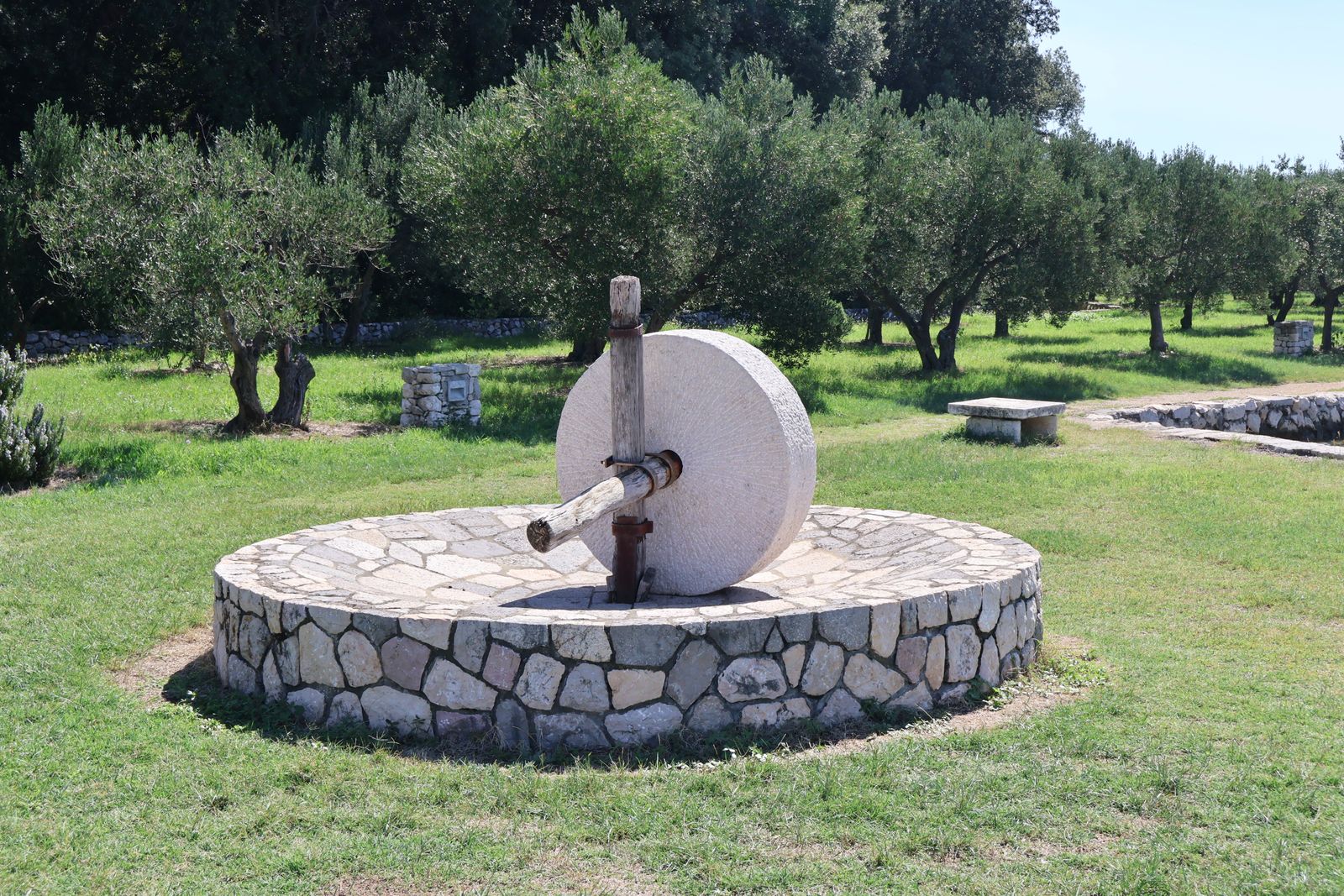
At the same time, Switzerland's only Mediterranean-leaning region made a small return to olive growing. Ticino had olive trees for centuries, but frosts in 1494, 1600 and 1709 hit them hard and many were replaced by mulberries for silkworms. In the 19th century some of the little oil produced was burned in church lamps, swissinfo reported; by the mid-20th century oil was made only at Gandria, according to Patrimoine culinaire suisse.
A revival began in Coldrerio in the late 1980s, led by Caverzasio and Tamborini; by 1993 there were 380 trees. Swissinfo wrote in 2001 that Tamborini began production in 1992 after about ten years of research. The Sentiero dell'olivo on Lake Lugano followed in 1995. The volumes were symbolic, not commercial. The story continues in our piece on olive oil made in Switzerland.
Timeline, 1980–2000
| Year | What happened | Swiss imports (rounded) |
|---|---|---|
| 1979/80 | 15.0 kg vegetable oils and fats per person (nutrition report) | c. 2,000 t |
| 1981 | Toxic oil syndrome in Spain (adulterated rapeseed oil) | c. 2,000 t |
| 1985 | January frost in Italy, heavy damage in Tuscany | c. 2,000 t |
| 1986 | Spain and Portugal join the EEC; Regulation 589/86 | c. 3,000 t |
| 1987 | Betty Bossi's first Italian cookbook | c. 3,000 t |
| Late 1980s | Olive planting resumes in Coldrerio, Ticino | c. 3,000 t |
| 1990 | One third of the 2003 volume, per customs | c. 3,000 t |
| 1992 | Tamborini starts producing oil | c. 3,000 t |
| 1993 | 380 olive trees in Coldrerio | c. 4,000 t |
| 1994 | Lyon Diet Heart Study published | c. 4,000 t |
| 1995 | Sentiero dell'olivo opens | c. 4,000 t |
| 1996 | Start of the steep rise | c. 5,000 t |
| 1997 | – | c. 7,000 t |
| 1998 | Fourth Swiss Nutrition Report published | c. 6,000 t |
| 1999 | – | c. 8,000 t |
| 2000 | – | 7,847 t |
After 2000: the story continues
By 2003 imports had reached 9,434 tonnes, Italy dominated supply and consumption per head kept climbing towards the 1.6 kg the IOC reported for 2014. Price spikes, new origins and record volumes followed; we cover them in olive oil consumption in Switzerland, 2000–2025. Looking back, the 1980s were years of slow familiarisation and the late 1990s the real breakthrough.
Frequently Asked Questions
Did the Swiss use olive oil before the 1980s?
Very little. Olive oil was practically unavailable before the 1950s and spread mainly with Italian immigration. Ticino had a long but fragile tradition that had almost disappeared by the mid-20th century.
How reliable are the figures for the 1980s and 1990s?
They give the right order of magnitude, not precise values. The USDA series is rounded to thousands of tonnes, the 1998 nutrition report does not list olive oil separately, and exact official figures are available to us only for 2000 and 2003. Per-capita values here are our own estimates.
Why did consumption jump after 1995?
No source pins it down. The rise follows the Lyon Diet Heart Study (1994) and coincides with growing demand for cold-pressed oil, according to Swiss customs, but a link is not proven.
Did the 1985 Italian frost raise prices in Switzerland?
We found no reliable Swiss retail price data for that period. Import volumes stayed flat at 2,000–3,000 tonnes.
Sources
- IndexMundi / USDA: Switzerland Olive Oil Imports by Year (data series)
- Swiss Federal Customs Administration via presseportal.ch: olive oil imports 2003 (11 May 2004)
- Swiss Federal Administration: fact sheet including olive oil imports 2000 (12 Aug 2021)
- Federal Office of Public Health / FSVO: Fourth Swiss Nutrition Report (1998)
- International Olive Council: newsletter, Swiss market data (February 2016)
- fairunterwegs.org: Was wäre die Schweiz ohne Pizza? (21 Jan 2014)
- Swiss Social Archives: Vor 50 Jahren – die Schwarzenbach-Initiative (9 May 2020)
- Wikipedia: Italian immigration to Switzerland (accessed 2026)
- Wikipedia: Toxic oil syndrome (accessed 2026)
- The Washington Post: The Italian extra virgin olive oil disaster (18 Aug 1985)
- Centro Meteo: Grande gelo gennaio 1985, cronaca di un inverno mitico
- EUR-Lex: Council Regulation (EEC) No 589/86 (1986)
- Current Atherosclerosis Reports (Springer): review of the Seven Countries Study (2013)
- The Lancet: de Lorgeril et al., Lyon Diet Heart Study (1994)
- Patrimoine culinaire suisse: Olio d'oliva ticinese
- swissinfo.ch: In Ticino rinasce la produzione dell'olio d'oliva (6 May 2001)