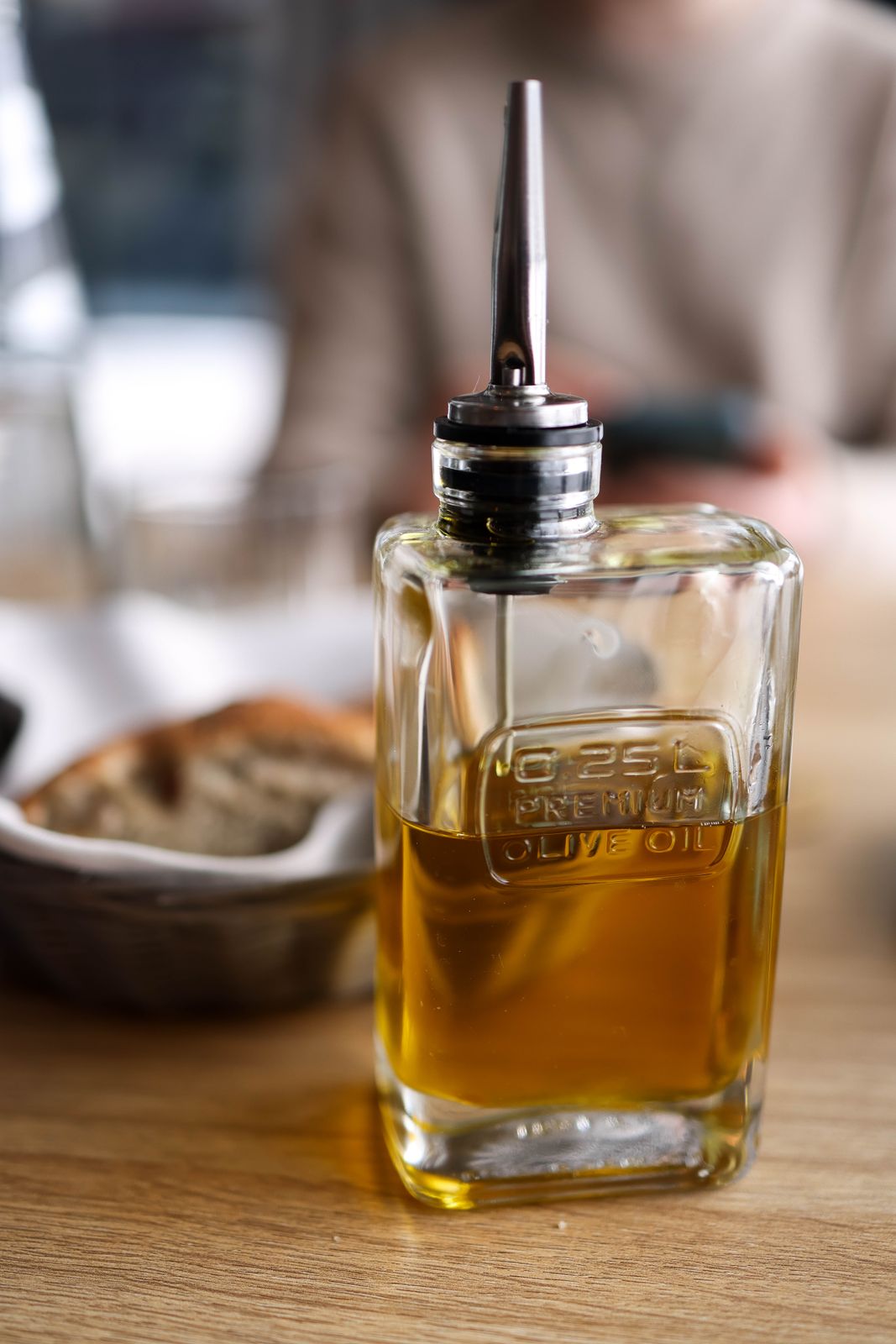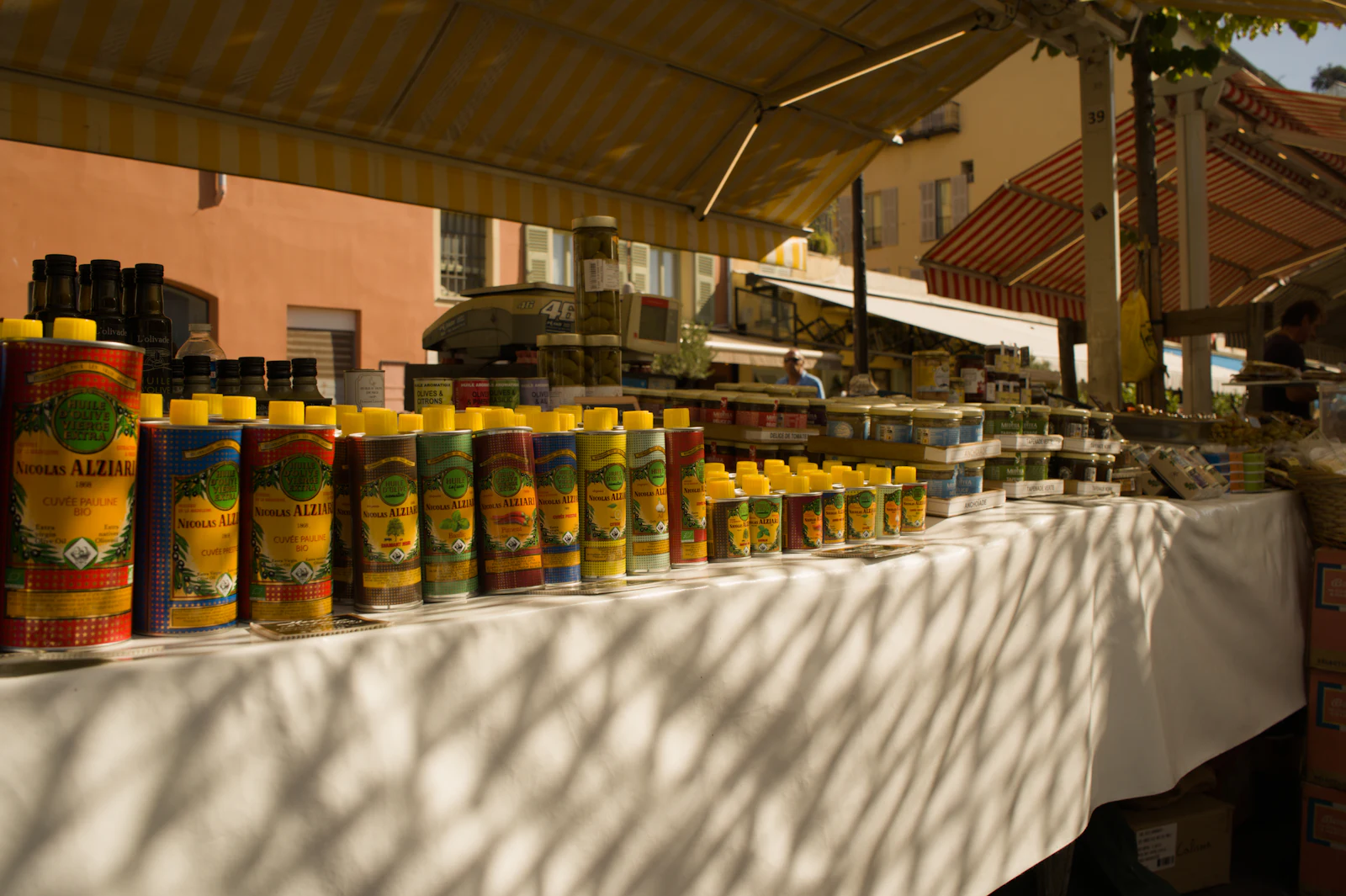
Anyone who has moved to Switzerland from elsewhere in Europe soon notices two things about the olive oil aisle: most bottles carry Italian names, and the cheapest litre of extra virgin rarely costs less than about CHF 8. Behind that shelf sits a market that has grown steadily for a quarter of a century. Switzerland imported 7,847 tonnes of olive oil in 2000 and 19,090 tonnes in 2020.
Our editorial team has pulled together what the official and trade statistics actually say about Swiss olive oil consumption from 2000 to 2025: volumes, per-capita use, prices, countries of origin and buying habits. Where sources disagree, we show both figures and explain why. Where data simply does not exist, we say so.
What a litre costs on Swiss shelves today
Prices are the part of the story most readers feel first. Between 2022 and 2024, drought and heat in Spain, by far the world's largest producer, sharply reduced harvests and drove world prices to record levels. Swiss shelves followed, with a delay.
| Period | What happened | Source |
|---|---|---|
| Feb 2021 → Mar 2023 | Don Felipe extra virgin olive oil, 1 litre: CHF 9.95 → CHF 13.70 (+37.6%) | watson.ch |
| October 2023 | Comparis price index for olive oil: +24% year on year | Blick |
| 2023 → 2024 | Average import value: US$8,430 → US$11,390 per tonne | GTAIC |
| Jan–Nov 2025 | Average import value: US$8,880 per tonne | GTAIC |
| 2026 | Entry-level extra virgin per litre: Migros/Coop CHF 9.95, Aldi CHF 8.50, Denner CHF 7.95, Lidl CHF 6–8 | Rappn |
By our calculation, the average import value per tonne rose by about 35% from 2023 to 2024 and then fell by just over 20% in 2025. Retail prices have been slower to come down: the price-comparison site Rappn notes that Swiss prices are only gradually following the fall seen in the EU during 2025.
Price is a poor guide to quality. In July 2025 the French-speaking consumer association FRC tested ten extra virgin oils priced between CHF 7.95 and CHF 58 per litre. Two were downgraded to plain virgin, and most carried no harvest date. Our overview of the Swiss olive oil tests of 2026 brings those results together with the German-language tests.
How much olive oil the Swiss actually use
No one measures per-capita olive oil consumption directly. Several estimates exist, and they land close to one another:
- Federal food balance (BLV): 5.0 g per person per day in 2020/21, up 14% since 2014/15. That works out, by our calculation, at roughly 1.8 kg a year.
- International Olive Council (IOC): 1.6 kg per person for 2014.
- tvsvizzera (2024): about 2 litres per person per year, or roughly 1.8 kg.
- Our calculation from imports: about 2.2 kg per person in the record year 2020 – some 6.0 g a day – and around 1.9 kg in 2024, using the CBI tonnage.
Import-based figures run slightly higher because they include oil used by restaurants and food manufacturers, re-exports and waste. A fair rule of thumb: just under 2 kg per person per year, or 5 to 6 g a day depending on the boundary drawn. So anyone who runs into «5 grams» in one source and «6 grams a day» in another is not reading contradictory figures, but the same quantity on two different definitions.
For readers comparing with home, a secondary source based on IOC data puts average consumption over 2015/16–2019/20 at around 0.7 litres in Germany, 1.6 litres in France and 9 litres in Italy. We could not check these figures against the IOC directly, so treat them as indicative. The IOC's own figure for Italy in 2022/23 is 7.4 kg per person. How such levels line up with longevity is the subject of our country comparison of olive oil consumption and life expectancy.
Still a second oil in Swiss kitchens
Olive oil has not displaced the Swiss staples. The same BLV balance records 14 g of sunflower oil (down 12% since 2014/15) and 13 g of rapeseed oil (up 13%) per person per day. Of these three oils, olive oil accounts for about 16% by our calculation. The Italian trade magazine Teatro Naturale puts 15,000 tonnes of olive oil at 5.4% of all animal and vegetable fats consumed in Switzerland. Federal nutrition guidance recommends 20–30 g of vegetable oil a day, at least half of it rapeseed oil.
Price again explains the gap between volume and value. In 2020 Switzerland imported 44,970 tonnes of sunflower oil at around CHF 1.30 per kilo; olive oil averaged about CHF 5.30 per kilo at the border, roughly four times as much. That is why olive oil became Switzerland's most valuable imported vegetable oil in 2020 without coming close in tonnage.
Twenty-five years of imports in figures
Because Switzerland produces only tiny quantities of its own olive oil – see our piece on olive oil made in Switzerland – imports are the best available proxy for consumption.
| Year | Volume | Value | Source |
|---|---|---|---|
| 2000 | 7,847 t | – | Federal customs (FOCBS), 2021 release |
| 2003 | 9,434 t | CHF 55.4m | Federal customs, 2004 release |
| 2015 | – | US$82.6m | UN Comtrade via TrendEconomy |
| 2019 | 13,875 t (virgin oil only, HS 1509.10) | US$88.0m (all of HS 1509) | WITS / UN Comtrade |
| 2020 | 19,090 t | CHF 101.5m | FOCBS, 2021 release |
| 2021 | – | US$110.5m | UN Comtrade via TrendEconomy |
| 2023 | 15,770 t | US$132.9m | GTAIC |
| 2024 | 16,070 t (GTAIC) / 17,056 t (CBI) | US$183.1m / €170m | GTAIC / CBI |
| 2025 (Jan–Nov) | 16,360 t | US$145.2m | GTAIC |
The 2020 figure was a jump of 25% on 2019 and the first time the import bill passed CHF 100 million. It coincided with the first year of the pandemic, when far more cooking happened at home; the link is plausible, but customs data alone cannot prove it. Volumes then settled back: tvsvizzera reported just over 15,000 tonnes for 2023. In the first eleven months of 2025, GTAIC already counts more than for the whole of 2024, which suggests to us a market holding steady at 16,000–17,000 tonnes a year.
Value tells a different story. UN trade data show import value climbing from US$82.6 million in 2015 to US$132.6 million in 2023, about 60% more by our calculation, with a single dip in 2019. In 2024 it jumped to US$183.1 million on barely higher volumes. For how olive oil first moved from Italian delis into mainstream supermarkets, see our look back at olive oil in Switzerland in the 1980s and 1990s.
Where the oil comes from, and what "Italy" really means
Italy has long led, but its lead is narrowing. In 2003 customs put Italy at around 65% of imports; by 2023 it was about half. The table mixes volume and value shares, so read the column headers carefully.
| Country | 2003 (customs) | 2019 (volume, virgin oil) | 2023 (value, UN Comtrade) | 2024 (value, GTAIC) | 2024 (CBI) |
|---|---|---|---|---|---|
| Italy | c. 65% | 6,960 t (c. 50%) | 52% | 51.9% | 47% |
| Spain | – | 4,100 t (c. 30%) | 24% | 27.3% | 32% |
| Greece | – | 1,450 t (c. 10%) | 10.4% | 10.1% | 9% |
| Portugal | – | 374 t | 4.5% | – | – |
| Tunisia | – | – | 3.9% | – | 3.4% |
| Türkiye | – | – | – | – | 2.4% |
The 2019 percentages are our own calculation from the tonnages. That year Germany also shipped 386 tonnes, which are re-exports rather than German oil.
Two things distort the picture. First, border prices: in 2020 Spanish oil averaged about CHF 3.60 per kilo, while Italian and Greek oil came in at around CHF 6, so Spain always looks bigger by volume than by value. Second, trade statistics record the country that ships the oil, not where the olives grew. Italian bottlers also pack oil from Spain, Greece or Tunisia, so an Italian bottle does not guarantee Italian olives. According to tvsvizzera, the Italian firm Monini alone sells roughly one in five bottles of olive oil in Switzerland, about 20% of its Swiss sales being organic.
Why two reports give two different figures for 2024
The Dutch export promotion centre CBI puts 2024 imports at 17,056 tonnes worth €170 million; the market analyst GTAIC gives 16,070 tonnes worth US$183.1 million. The volumes differ by about 6%, by our calculation. Converted at the 2024 average rate of roughly 1.08 dollars to the euro, the values are almost identical, which points to a difference in what is being counted rather than in the money.
- Product scope: some datasets cover only virgin oil (HS 1509.10), others the whole of heading 1509 including refined blends, others also add olive pomace oil (heading 1510).
- Reporter: Swiss customs figures, Switzerland's UN submissions and "mirror" data (what exporting countries report as shipped to Switzerland) rarely match exactly.
- Currency: figures in francs, dollars and euros move with exchange rates even when the market does not.
- Revisions: trade data are corrected after publication, and part-year figures such as January–November 2025 are provisional.
None of these sources fully documents its definitions. We therefore compare like with like wherever possible and name the source of every figure.
What Swiss shoppers put in the basket
According to CBI, about 78% of Swiss olive oil imports in 2024 were extra virgin. Roughly half arrives already bottled; the other half comes in bulk and is packed in Switzerland. Organic oil makes up about 10% of retail sales, and the private labels of Coop and Migros dominate the market.
The only detailed data on buying habits come from a survey quoted by Teatro Naturale in 2023, which names neither the organisation behind it nor its method, so the numbers deserve caution: 58% of purchases were extra virgin, 63% of buyers chose PET bottles and 31% glass, 46% mainly used the oil raw and 30% for cooking, 40% shopped in supermarkets and 25% in hypermarkets, and the largest group of buyers (39%) were aged 50 to 65. The gap between 58% and CBI's 78% need not be a contradiction: one counts purchases, the other tonnes. The high share of plastic is striking given that light and oxygen damage olive oil.
Ticino, Romandie, German-speaking Switzerland: the regional picture
Readers often ask which cantons consume the most olive oil. There is no answer, because nobody collects the data. Neither customs statistics, the food balance nor the national nutrition survey menuCH breaks olive oil down by canton, and there is no regional series for olive oil specifically.
The closest proxy is the language region. menuCH (2014–15) measured intake of all vegetable oils combined: 16 g per person per day in Italian-speaking Switzerland, 15 g in the French-speaking part, 13 g in German-speaking Switzerland, against a national average of 14 g. Butter runs the other way: a study of the same survey in the journal Nutrients found 8.1 g a day in German-speaking Switzerland, 6.4 g in Romandie and 3.7 g in Ticino. It is reasonable to suppose that olive oil follows the oil pattern, but that remains an inference, not a measurement. For how olive oil found its way into Swiss cooking at all, read Olive oil in Switzerland in the 1980s and 1990s.
Reading the trend
Twenty-five years of figures point in a few clear directions. Volumes more than doubled after 2000 (by a factor of 2.4 to 2020, by our calculation) and have grown only slowly since the 2020 peak. Per-capita use sits just below 2 kg and is gaining ground mainly from sunflower oil. Extra virgin has become the norm, organic a stable niche of about a tenth of retail. Italy is gradually ceding share to Spain, with Tunisia and Türkiye in minor roles. The open question is how quickly the lower purchase prices of 2025 reach the shelf; until they do, harvest date, origin labelling and test results tell you more than the price tag.
Frequently Asked Questions
Is olive oil the main cooking oil in Switzerland?
No. Per person, the Swiss use about 14 g of sunflower oil and 13 g of rapeseed oil a day, against 5 g of olive oil. Olive oil leads only by import value, because it costs about four times as much per kilo.
Why might an "Italian" bottle contain oil from other countries?
Trade statistics and many labels reflect where oil was bottled or shipped from. Italian bottlers also pack oil from Spain, Greece or Tunisia. Only the origin statement on the label tells you where the olives were grown.
Why do sources give different import figures for the same year?
They count different things: virgin oil only or all olive oil, with or without pomace oil, Swiss customs data or partner-country data, in different currencies. For 2024 the gap between CBI and GTAIC is about 1,000 tonnes.
Have olive oil prices in Switzerland come down?
Import prices fell by just over 20% in 2025, by our calculation from GTAIC data. Shelf prices are following slowly; in 2026 entry-level extra virgin still costs CHF 9.95 per litre at Migros and Coop.
Is there data on olive oil consumption by canton?
No. The best available proxy is vegetable oil intake by language region, which is highest in Ticino (16 g a day) and lowest in German-speaking Switzerland (13 g).
Sources
- admin.ch / BAZG: comunicato stampa sulle importazioni di olio d’oliva 2020 (12.8.2021)
- RTS: L’huile d’olive cartonne comme jamais en Suisse (12.8.2021)
- Tio.ch: Svizzera, olio d’oliva in tonnellate e franchi (2021)
- Eidgenössische Zollverwaltung via presseportal.ch: Olivenöl-Einfuhren 2003 (11.5.2004)
- tvsvizzera.it: Malgrado la siccità, l’olio d’oliva italiano resiste sugli scaffali svizzeri (30.11.2024)
- TrendEconomy (UN Comtrade): Switzerland, imports HS 1509 olive oil (2015–2023)
- World Bank WITS: Switzerland virgin olive oil imports by partner, HS 150910 (2019)
- GTAIC: Olive oil market Switzerland – trends (1.4.2026)
- CBI: Market potential for olive oil in Europe (25.3.2026)
- BLV/OSAV: Bilan alimentaire – aperçu de la consommation approximée
- BLV/OSAV: menuCH – Consommation d’huiles, de matières grasses et de fruits à coque
- Chatelan et al., Nutrients: Major differences in diet across three linguistic regions of Switzerland (2017)
- Teatro Naturale: Il consumo di olio d’oliva in Svizzera (30.1.2023)
- International Olive Council: Newsletter (2.2016)
- International Olive Council: Olive sector statistics (3.2025)
- watson.ch: Voici de combien le prix de vos courses a augmenté en deux ans (24.4.2023)
- Blick: L’huile d’olive et les chaussures pour homme ont vu leurs prix grimper en octobre (16.11.2023)
- Rappn: Olive oil prices in Switzerland (2026)
- FRC: Le comparatif des huiles d’olive (1.7.2025)
Note: This article is for general information only and does not replace advice from a doctor or dietitian. If you have health questions, please consult a professional.