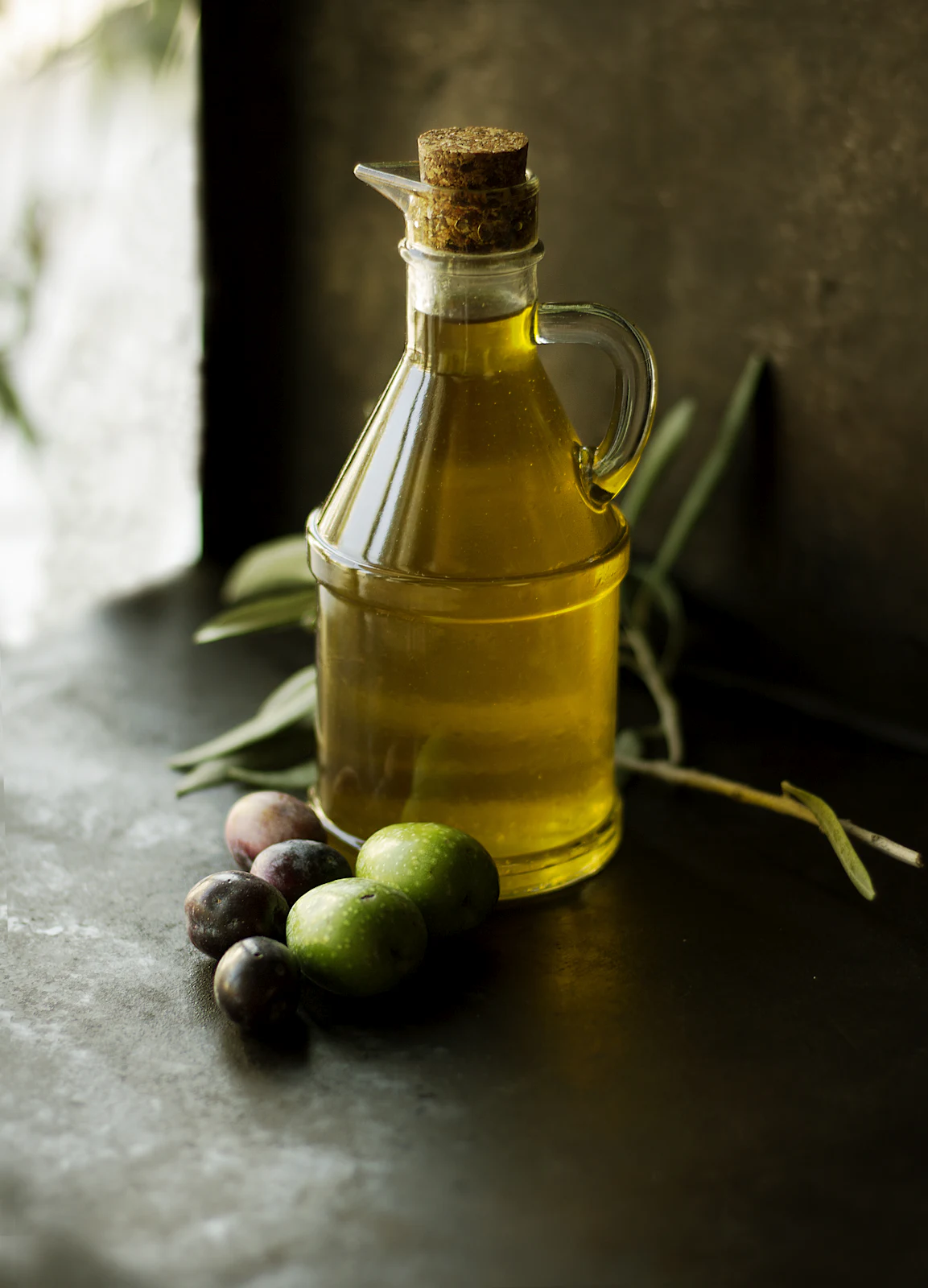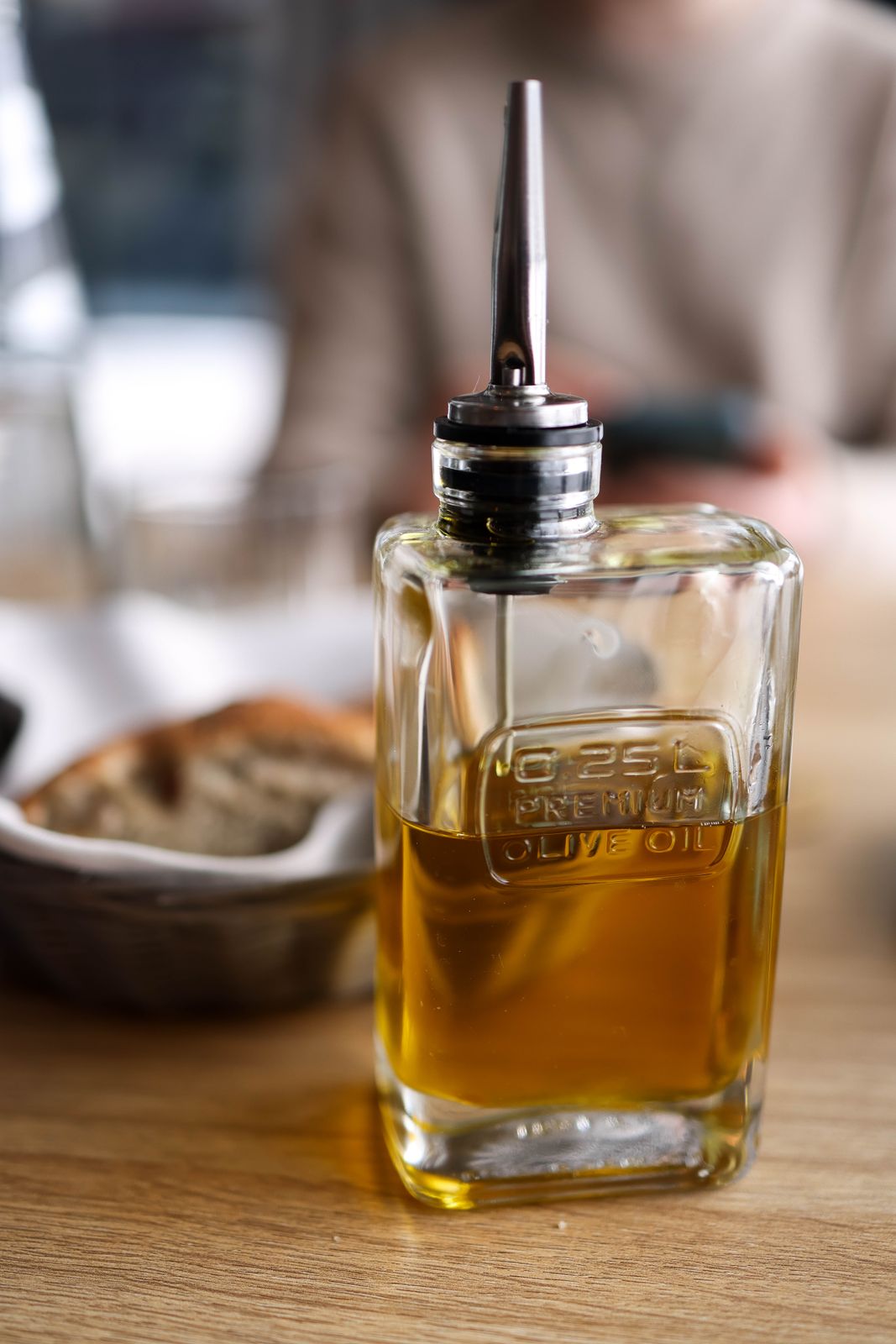
The Coop shelf shows the whole span of the Swiss olive oil market across a single metre of shelving. At the top stands a Greek oil with a protected designation of origin that took a «very good» in the strictest tasting in the country. At the bottom stands a litre bottle from the budget line that a consumer jury stripped of the highest grade. In between sits the Naturaplan step, with its growing regions declared on the label.
This page takes the six Coop olive oils listed online as part of the permanent range and says the same thing about each bottle: which grade is printed on the label, where the oil comes from, whether a Swiss test verdict exists and what the bottle is good for in the kitchen. The order is by litre price, the only figure that makes a 500 ml bottle comparable with a litre. The franc amounts are in the product cards further down, each with its survey date. The cross-check at the largest chain is in the Migros range under the test spotlight, the chronology of every Swiss test in olive oil tests in Switzerland 2026, and the prices of all the chains side by side in our price overview.
The Coop range at a glance
Ascending by litre price, as surveyed on 30 September 2026. «Test verdict» here means a verdict from a Swiss test that named this bottle individually – not a verdict on the brand or on the line.
| Bottle | Declaration and origin | Test verdict | What for |
|---|---|---|---|
| Prix Garantie extra virgin, 1 l | extra virgin; EU, bottled in Italy | downgraded to «vergine» (FRC/ACSI 2025) | Hot cooking only |
| Don Felipe extra virgin, 1 l | extra virgin; Spain, bottled in Italy | none | Frying, baking, large quantities |
| Filippo Berio extra virgin, 1 l | extra virgin; blend from the EU | none (a brand finding in the lab, see below) | Everyday cooking, familiar brand |
| Iliada Kalamata PDO extra virgin, 1 l | extra virgin, protected origin; Greece, Kalamata | «very good», Kassensturz/K-Tipp 2025 | Salad, bread, cold at the end |
| Naturaplan organic extra virgin, 500 ml | extra virgin, organic; Italy, Apulia | none for this variant | Everyday cooking with an organic claim |
| Naturaplan Demeter organic extra virgin, 500 ml | extra virgin, organic and Demeter; Portugal, Alentejo | none for this variant | Cold, when the farming method counts |
Two of the six bottles carry a verdict from a Swiss test, and the two verdicts sit at opposite ends of the scale. Four carry none: a gap in the testing, not a defect in the product – Swiss tastings take a dozen oils every few years, never a whole range. Coop additionally lists a litre bottle online under its own house label whose line is not clearly declared; it is missing here because the assignment could not be documented cleanly.
The top end: Iliada Kalamata with a «very good»
The best documented olive oil on the Coop shelf is not a house brand but a Greek oil with a protected designation of origin. In the test by «Kassensturz» and K-Tipp of 2 September 2025, the Swiss Olive Oil Panel of the ZHAW in Wädenswil – the only panel in Switzerland accredited for olive oil – tasted 13 of the best-selling «extra virgin» oils, eleven tasters per oil, poured into blue glasses so that the colour does not influence the score. Two oils were given the overall mark «very good»: an organic oil from Manor and the Iliada Kalamata PDO, bought at Coop. Eight oils came out «good», one «satisfactory».
Two caveats belong with that. The litre bottle was the one tested, as the Swiss importer notes in its statement on the test – the 500 ml version on the same shelf carries the same label, but not this verdict. And the verdict applies to a tasting, not to a laboratory analysis. At the time of our price survey this oil was also running in a weekly promotion that the card does not show: with Iliada, a look at the promotion leaflet pays off more than usual.

Iliada Kalamata PDO extra virgin, 1 l
Greece, Kalamata
CHF 18.501 L · CHF 18.50 per litre
Kassensturz / K-Tipp 2025: very good Check priceThe bottom end: Prix Garantie, downgraded by the jury
At the other end stands the cheapest oil in the chain. The French-speaking Swiss consumer organisation FRC commissioned chemical and sensory testing of ten oils sold as «extra virgin»; the Italian-speaking ACSI published the comparison in July 2025 under the title «Oli d'oliva non proprio speciali». The result: two of the cheapest oils in the selection were downgraded to the second grade, «vergine» – Coop's Prix Garantie and the budget oil from Aldi. The reason was sensory faults that must not occur in the highest grade; chemically, the Coop oil was unremarkable.
That is not a health finding but a quality finding. «Extra virgin» has to be free of sensory faults, while «vergine» is allowed to carry fault notes – musty, fusty, rancid. What those notes taste like and how to spot them yourself is in how to tell if olive oil is rancid. The comparison with the competition is the awkward part: according to K-Tipp, Aldi, Coop, Lidl and Migros sell their cheapest olive oil at exactly the same price, yet Migros has itself downgraded its M-Budget oil to «vergine» because the higher step is «challenging». Coop still declares its budget oil as «extra virgin» – the grade the panel did not grant it.
In practice that means: for the pan, the oven and the braising pot it is the lowest litre price in the range, and once the oil is heated a fault note stands out less anyway. Over the salad or onto bread belongs a different bottle.
Prix Garantie Extra virgin olive oil, 1 l
EU, bottled in Italy
CHF 7.951 L · CHF 7.95 per litre
FRC 2025: only “virgin” (downgraded) Check priceThe step in between: Naturaplan
The Coop organic line is the most interesting part of the range, because it delivers what the budget labels leave out: a growing region. The standard oil names Apulia, the Demeter variant the Portuguese Alentejo, and Coop carries the same line online as an IGP Sicilia and an IGP Lakonia as well as an organic oil from Crete and from Spain. All of them in the small bottle – you pay distinctly more per litre than for the brand-name litres on the same shelf.
Two findings speak for this step, and both apply to the line, not to the individual bottle. In the FRC comparison of 2025, a Naturaplan oil was among the three of ten oils that scored well and stood out from the field; which variant of the line was examined cannot be read from the freely available summary. And in the Saldo laboratory test of 2026, the organic oils from Coop, Aldi and Migros plus a Demeter oil from Portugal were the least contaminated with unwanted substances; the full ranking sits behind a paywall, which is why it stays open here whether that Demeter oil was the one from the Alentejo. So no verdict that may be pinned on either of these two bottles – but a pattern that points in the same direction. Organic helps against residues; it does not automatically help against taste faults.
Naturaplan Organic extra virgin olive oil, 500 ml
Italy, Apulia · Organic
CHF 11.950.5 L · CHF 23.90 per litre
Check priceNaturaplan Demeter organic extra virgin olive oil, 500 ml
Portugal, Alentejo · Organic
CHF 12.950.5 L · CHF 25.90 per litre
Check priceThe brand oils: Filippo Berio and Don Felipe
Filippo Berio is the best-known brand on the Coop shelf and the one with the most uncomfortable record. The declaration reads «blend of olive oils from the European Union», so no country of origin. There is no current Swiss tasting verdict for this bottle; in the Saldo laboratory test of 2026, by contrast, Filippo Berio, Bertolli and Monini came out at the bottom of the ranking, because they were the most heavily contaminated with unwanted substances. Which batch was examined there is not freely accessible – nothing more than «the brand came out at the back» can be derived from it. Anyone staying with the familiar brand pays more per litre than for the better documented Iliada.
Don Felipe is the cheapest genuine «extra virgin» in the range and the only budget oil with a country of production declared: Spain, bottled in Italy. A test verdict is missing, so it is a price decision and not a tested one – but one with more information on the label than the EU blends next to it. For frying, baking and everything that goes into the food in quantity, it is the sensible bottle.
Filippo Berio Extra virgin olive oil, 1 l
EU blend
CHF 15.951 L · CHF 15.95 per litre
Check priceDon Felipe Extra virgin olive oil, 1 l
Spain, bottled in Italy
CHF 12.501 L · CHF 12.50 per litre
Check priceWhat the comparison means for your shopping
The Coop range proves both of this site's theses in a single chain. First: the cheapest oil is not the one that pays off – the Prix Garantie costs the least per litre and has lost the grade it is still advertised with. Second: the most expensive oil is not the best – the two Naturaplan bottles cost more per litre than anything else on the shelf and have no tasting verdict of their own, while the only «very good» in the chain sits in the middle of the price range.
- Salad, bread, vegetables at the end: Iliada Kalamata PDO by the litre. It is the only bottle in the chain with a «very good» from the accredited Swiss panel.
- Everyday cooking with an organic claim: Naturaplan organic, with a declared growing region and the residue finding for the organic lines behind it.
- Frying, braising, large quantities: Don Felipe by the litre – a genuine «extra virgin» at a low price, with its country of production declared.
- Heat only, price above all: Prix Garantie. But in the knowledge that the jury classed it as «vergine», and without using it on the salad.
Frequently asked questions
Which olive oil should I buy at Coop?
For cold use, the Iliada Kalamata PDO in the litre bottle: in the tasting by «Kassensturz» and K-Tipp of 2 September 2025 it was one of only two oils given the overall mark «very good». For everyday cooking with an organic claim, the Naturaplan organic with its declared growing region. For frying and large quantities, the Don Felipe by the litre. The Prix Garantie is one to skip when the oil goes onto the plate cold.
Is the Coop Prix Garantie olive oil really «extra virgin»?
On the label yes, in the panel no. In the comparison commissioned by the FRC and published by the ACSI in July 2025, it was downgraded to the second grade, «vergine», because of sensory faults; chemically it was unremarkable. Coop still declares it as «extra virgin» – unlike Migros, which has itself downgraded its equally priced budget oil to «vergine». For hot cooking it is usable, for the salad it is not.
Is Naturaplan worth it compared with the brand oil?
If origin and residues are the criteria, yes. Naturaplan names the growing region – Apulia, Alentejo, Sicily, Laconia, Crete or Spain, depending on the variant – while Filippo Berio declares only an EU blend. In the Saldo laboratory test of 2026 the organic oils from Coop, Aldi and Migros were the least contaminated, and Filippo Berio was among the most heavily contaminated. Neither of the two Naturaplan bottles has a tasting verdict of its own, though, and per litre they are the most expensive in the range.
What does «PDO» on the Iliada bottle mean?
PDO stands for protected designation of origin – the same thing that Italian labels call DOP, French ones AOP and German ones g.U. It ties the oil to a defined growing region, here Kalamata in Greece, and to a controlled process. It says nothing about the taste: a protected origin can be sensorially faulty. On this bottle both pieces of evidence come together, the origin and the tasting verdict, and in the supermarket aisle that is the exception.
Coop or Migros – where is olive oil the better buy?
Both chains have a documented top end and a problematic budget oil, only distributed differently. At Coop the top end has a Swiss tasting verdict (Iliada, «very good» 2025) and the budget oil has a problem with the grade it carries anyway. At Migros the best documented bottle has a German test verdict, but the cheapest oil is openly declared as «vergine». The bottle-by-bottle comparison is in the Migros range under the test spotlight.
Sources
- SRF «Kassensturz»: «Extra vergine» olive oil tested: two rated «very good» (2.9.2025, in German)
- ZHAW Wädenswil: olive oil test at «Kassensturz» – the Swiss Olive Oil Panel (in German)
- ACSI: «Oli d'oliva non proprio speciali», comparison of ten oils, July 2025 (PDF, in Italian)
- FRC: Le comparatif des huiles d'olive (in French)
- K-Tipp: olive oil: better quality «challenging» (in German)
- Saldo: olive oils tested: many contaminants in brand products (2026, paywalled, in German)
- Saldo: olive oil: every product contaminated (2026, paywalled, in German)
- Gustav Gerig AG (Swiss importer): Olive oil test: Iliada stands out
- 20 Minuten: two «extra vergine» olive oils fail the test (in German)