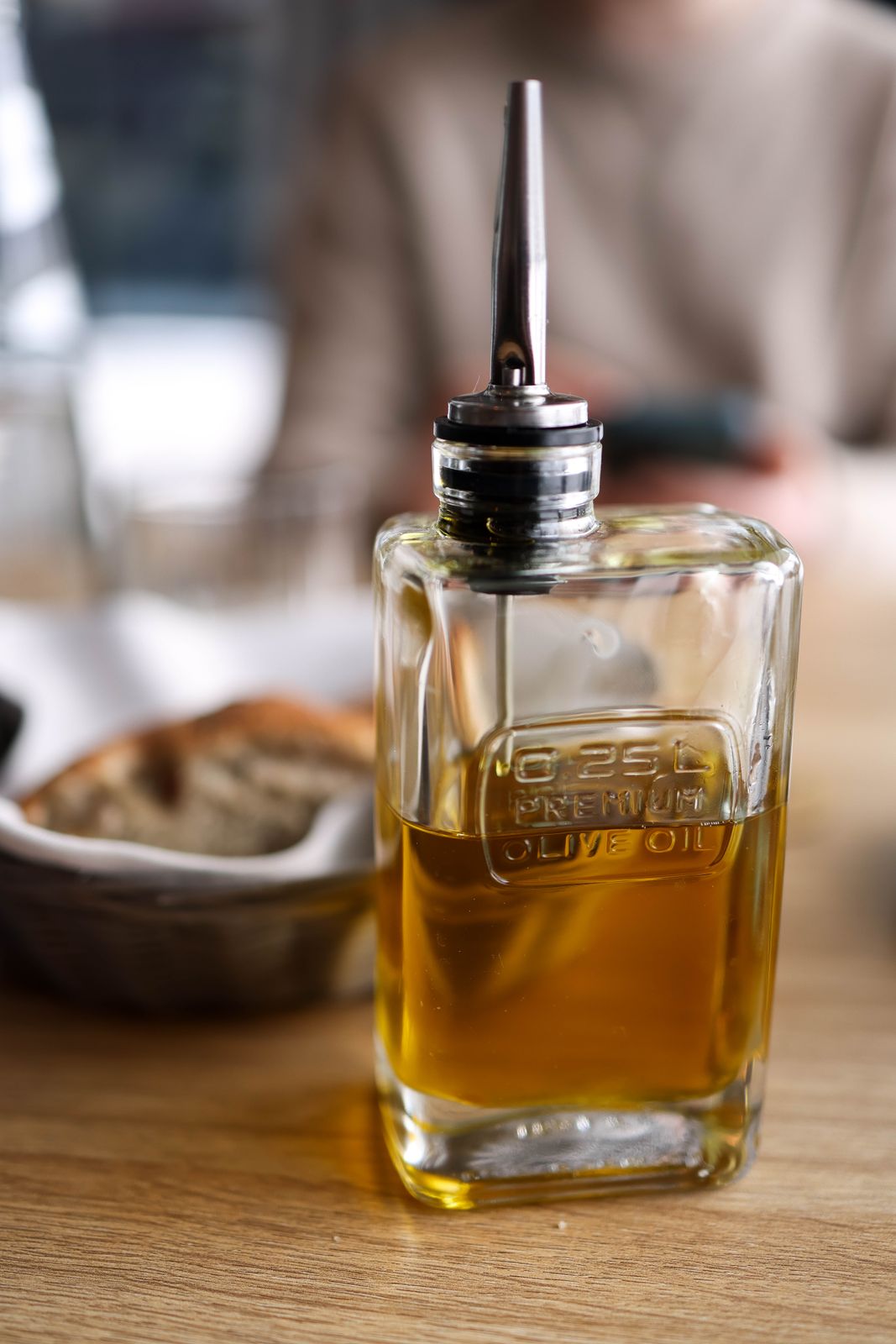
Aldi Suisse is the chain with the lowest entry price in this market and the thinnest paper trail. Its olive oil labels are BIO, Bellasan, Sabo, Lyttos and – on and off as a promotional line – I Colori del Sapore. Two of those bottles carry a Swiss test verdict, and the two point in opposite directions: the cheapest bottle in the chain lost the grade it is advertised with, while the organic oil from the same shelf took a "good" in the strictest tasting in the country.
That contradiction inside a single chain is the real shopping information, and no price comparison portal delivers it. This page takes the three Aldi oils whose price and fill volume could be documented on the retailer's own pages, and says for each bottle what was tested and what it is good for. Franc amounts appear only in the product cards, each with its survey date. The second downgrade from the same test sits in the Coop range, the chronology of every Swiss test is in olive oil tests in Switzerland 2026, and the shelf prices of all the chains side by side are in our price overview.
The Aldi range at a glance
The first three rows are sorted by ascending litre price, as surveyed on 30 September 2026. "Test verdict" here means a verdict from a test that named this exact bottle – not one about the brand, and not one about a product of the same name sold abroad.
| Bottle | Declaration and origin | Test verdict | What for |
|---|---|---|---|
| Bellasan extra virgin, 1 l | extra virgin; blend of olive oils from the EU | downgraded to "vergine" (FRC 2025) | Hot cooking only |
| Lyttos Greek extra virgin olive oil, 500 ml | extra virgin; Greece | none | Everyday cooking with a declared country of origin |
| BIO extra virgin, 750 ml | extra virgin, organic; European blend | "good", Kassensturz/K-Tipp 2025 | Salad, bread, cold at the end |
| Sabo extra virgin | extra virgin; fill volume not stated online | none | Not judged here |
| I Colori del Sapore | promotional line, not part of the permanent range | none | Not judged here |
The last two rows deliberately stay without a price and without a verdict: the Sabo product page names no fill volume, which makes a litre price impossible to calculate, and I Colori del Sapore comes and goes with the promotion leaflet. Of the three permanent bottles, two carry a verdict – a high share for a discount chain, and one that only exists because Aldi came up twice in the Swiss testing of 2025.
Bellasan: the cheapest bottle, pushed down by the panel
The French-speaking Swiss consumer organisation FRC had ten supermarket oils sold as "extra virgin" analysed chemically and sensorily – from the cheapest bottle up to an oil that costs several times as much per litre. Two of the cheapest oils in the selection lost the highest grade and were classified as "vergine": Coop's Prix Garantie and Aldi's Bellasan. The conclusion applied to the whole category: what is printed on the labels does not allow a shopper to recognise a quality oil.
A correction is due here, because the story has grown in the second-hand reporting into something bigger than it is. This is one Swiss comparison, not two independent confirmations. The FRC commissioned it and published it in French; the Italian-speaking ACSI published the same comparison a second time in Italian in July 2025, in its magazine «La borsa della spesa» 5/25. The same ten oils, the same price range, the same two downgrades, the same reason. Two languages are not two samples – and anyone who confuses the two turns a single test into a pattern.
Aldi says it passed the results on to its supplier so that the supplier could examine the case in detail. Coop stated explicitly that it did not understand the result for its own oil, because the product had passed its in-house tasting as "extra virgin". Both reactions are documented; neither changes the verdict of the testers.
Bellasan Extra virgin olive oil, 1 l
EU blend
CHF 7.951 L · CHF 7.95 per litre
FRC 2025: only “virgin” (downgraded) Check priceWhat a downgrade means – and what it does not
What was faulted were sensory defects: rancid, fusty, musty – notes that an oil in the highest grade is not allowed to have and that are permitted in the second grade, "vergine". The chemical analyses showed no problem, and there is no health finding; the comparison itself says so. Anyone who hears fraud or scandal here is hearing something this test does not say. What those fault notes taste like is in how to tell if olive oil is rancid.
What it very much does mean: you bought the second grade at the price of the first. And at Aldi that price is the same as at the competition. According to K-Tipp, Aldi, Coop, Lidl and Migros sell their cheapest olive oil at exactly the same price – the difference is on the label. Aldi and Lidl declare Bellasan and Primadonna as "extra virgin", and Coop declares its budget oil the same way. Which of the three Primadonna bottles at Lidl got which verdict is in our test of the Lidl range. Migros, by contrast, downgraded its own M-Budget oil to "vergine", saying that reliably guaranteeing the higher standard is "challenging". Of four equally priced bottles, exactly one is honestly declared as cheap, and it is not the one from Aldi.
From that follows a narrow but clear use: heat. In the pan, on the baking tray and in the braising pot, a fault note disappears behind everything else anyway. Raw on the plate it does not.
The organic oil: the counter-example from the same chain
Two metres along the same shelf stands the bottle that shows discount and fault note are not the same thing. The organic oil from Aldi Suisse, a European blend in a 750 ml bottle, was given the mark "good" in the 2025 tasting by «Kassensturz» and K-Tipp. The tasting was done blind by the Swiss Olive Oil Panel of the ZHAW in Wädenswil, the only panel in Switzerland accredited for olive oil. Two oils in the field reached "very good"; they cost considerably more per litre.
"Good" is not the top mark, and the bottle names no growing region, only "European blend". But on the Aldi shelf it is the only one with a positive Swiss tasting verdict, and per litre it comes in below the organic oils with a single declared origin at Coop and Migros.

Aldi BIO Extra virgin olive oil, European blend, 750 ml
EU blend · Organic
CHF 9.950.75 L · CHF 13.27 per litre
Kassensturz / K-Tipp 2025: good Check priceLyttos: Greek, small, untested
The Lyttos is the quiet middle of the range: the only Aldi oil in the permanent range whose label names a country of origin – Greece – and per litre it sits between the budget bottle and the organic oil. A Swiss test verdict is missing, which says nothing about the bottle and something about the sampling: a tasting comes along every few years at best and takes a handful of best-sellers, and the Lyttos was never among them.
It is therefore an origin decision and not a tested one. The declared country is more information than the "EU blend" next to it, but it is not a quality guarantee – and the 500 ml bottle is the most expensive way to buy a given quantity of oil.
Lyttos Greek extra virgin olive oil, 500 ml
Greece
CHF 5.490.5 L · CHF 10.98 per litre
Check priceThe German Aldi tests: same names, different files
Search for "Aldi olive oil test" and you land quickly on German testing, and the German testing contradicts itself. Stiftung Warentest published a test of 25 oils in the "extra virgin" grade on 26 January 2026 under the title «Olivenöl: Qualität auf dem Sinkflug»: only four good, eight "poor", and among those, according to the press release, two widely sold Aldi oils. A few months later Öko-Test examined thirty oils of the same grade in its May 2026 issue and awarded "very good" exactly twice – to an Italian organic oil from Rapunzel and to the organic olive oil from Aldi. Seven oils failed there on taste, with the same fault notes as in the Swiss comparison; the laboratory found traces of mineral oil components in every product.
The same chain, the same winter, two opposite verdicts. What follows from that is not that one of the tests was wrong, but that an olive oil verdict applies to one batch, one panel and one protocol – not to a brand name. On top of that comes a caveat that is decisive for Swiss readers: the German Aldi bottles run under their own article numbers and their own procurement. That it is the same oil as on the Swiss shelf cannot be documented.
What this means for your shopping
The Aldi shelf makes this site's central argument unusually clearly: it is not the chain that decides quality, it is the bottle. A downgraded bottle and a well-reviewed one stand side by side here, and the difference in litre price is smaller than the difference in verdict.
- Salad, bread, vegetables at the end: the organic oil in the 750 ml bottle. It is the only Aldi bottle with a positive Swiss tasting verdict.
- Everyday cooking with a declared origin: the Lyttos from Greece – untested, but with a country of origin on the label.
- Frying, baking, large quantities: the Bellasan. With the knowledge that the testers classified it as "vergine", and without putting it cold on the plate.
- Switching chains: the lowest litre price at Aldi is identical to the one at Coop, Lidl and Migros – anyone changing chains because of the olive oil saves nothing.
Frequently asked questions
Which olive oil should I buy at Aldi?
For cold use, the organic olive oil in the 750 ml bottle: the only Aldi bottle with a positive Swiss tasting verdict, the mark "good" from «Kassensturz» and K-Tipp in 2025. For everyday cooking, the Greek Lyttos, the only permanent product that declares a country of origin. The Bellasan only for hot cooking.
Is Aldi's Bellasan really "extra virgin"?
That is how it is declared, but not how it tasted. In the FRC comparison of 2025 it was pushed down to "vergine" because of sensory defects, while the chemical analyses remained unremarkable. Aldi still declares it as "extra virgin" and says it passed the results on to its supplier. Usable for heating, not for salad.
Did two Swiss organisations downgrade the Bellasan?
No, and that is a common mix-up. There is one comparison: the FRC commissioned it, and the ACSI published it a second time in Italian in July 2025. Ten oils, two downgrades – Bellasan and Coop's Prix Garantie – one sample. Two publications in two national languages are not two independent confirmations.
Is downgraded olive oil bad for your health?
Not according to this comparison. The testers stated explicitly that the defects they faulted have no consequences for health and that the chemical analyses showed no problem. "Vergine" is a legal, marketable grade; the difference lies in the taste and in the fault notes that are permitted. The problem is the price you paid for the higher grade.
Why does Aldi olive oil fail in Germany and win at the same time?
Because these are different tests and different batches. At Stiftung Warentest in January 2026, two widely sold Aldi oils were among the eight "poor" results out of 25; at Öko-Test in May 2026 the Aldi organic oil was one of only two "very good" out of thirty. An olive oil verdict applies to one batch, one panel and one protocol, never to a brand name – and the German Aldi bottles have their own article numbers and their own procurement.
Sources
- FRC: Le comparatif des huiles d'olive (1.7.2025, in French)
- ACSI, «La borsa della spesa» 5/25: Oli d'oliva non proprio speciali, July 2025 (PDF, in Italian)
- K-Tipp: olive oil, better quality called «challenging» (in German)
- SRF «Kassensturz»: «extra vergine» olive oils tested, two rated «very good» (2.9.2025, in German)
- ZHAW Wädenswil: the «Kassensturz» olive oil test and the Swiss Olive Oil Panel (in German)
- Stiftung Warentest (Germany), press release of 26.1.2026: Olivenöl: Qualität auf dem Sinkflug (in German)
- Stiftung Warentest (Germany): Olivenöl im Test, 25 oils (individual verdicts behind a paywall, in German)
- Öko-Test (Germany), press release on issue 5/2026: Olivenöl: Von wegen «nativ extra» (in German)
- Aldi Suisse: Bellasan extra virgin olive oil product page (in German)