It is one of the oddest gaps on the Swiss shelf. For years the Italian guide Flos Olei has named one region the best olive oil region in the world, and for years that has been neither Tuscany, nor Jaén, nor Kalamata, but Istria. In the 2026 edition, for the ninth time. Yet Migros, Coop and Denner stock virtually none of it. The Balkans are Europe's least-known olive coast – and in quality terms long past being a footnote.
What is meant here by "the Balkans" runs from Slovenian Istria on the Gulf of Trieste along the Croatian Adriatic and Montenegro down to Albania and North Macedonia. Greece belongs geographically, but as the world's third-largest producer it plays in a league of its own and appears here only in passing.
Istria: nine times the world's best region
In two decades the peninsula in northern Croatia has built a top-flight oil culture from nothing. The Flos Olei 2026 includes 68 Istrian producers; according to the region they account for 13.6 per cent of the guide's 500 best producers. Istria has featured in the guide for twenty years and has now been named best region for the ninth time.
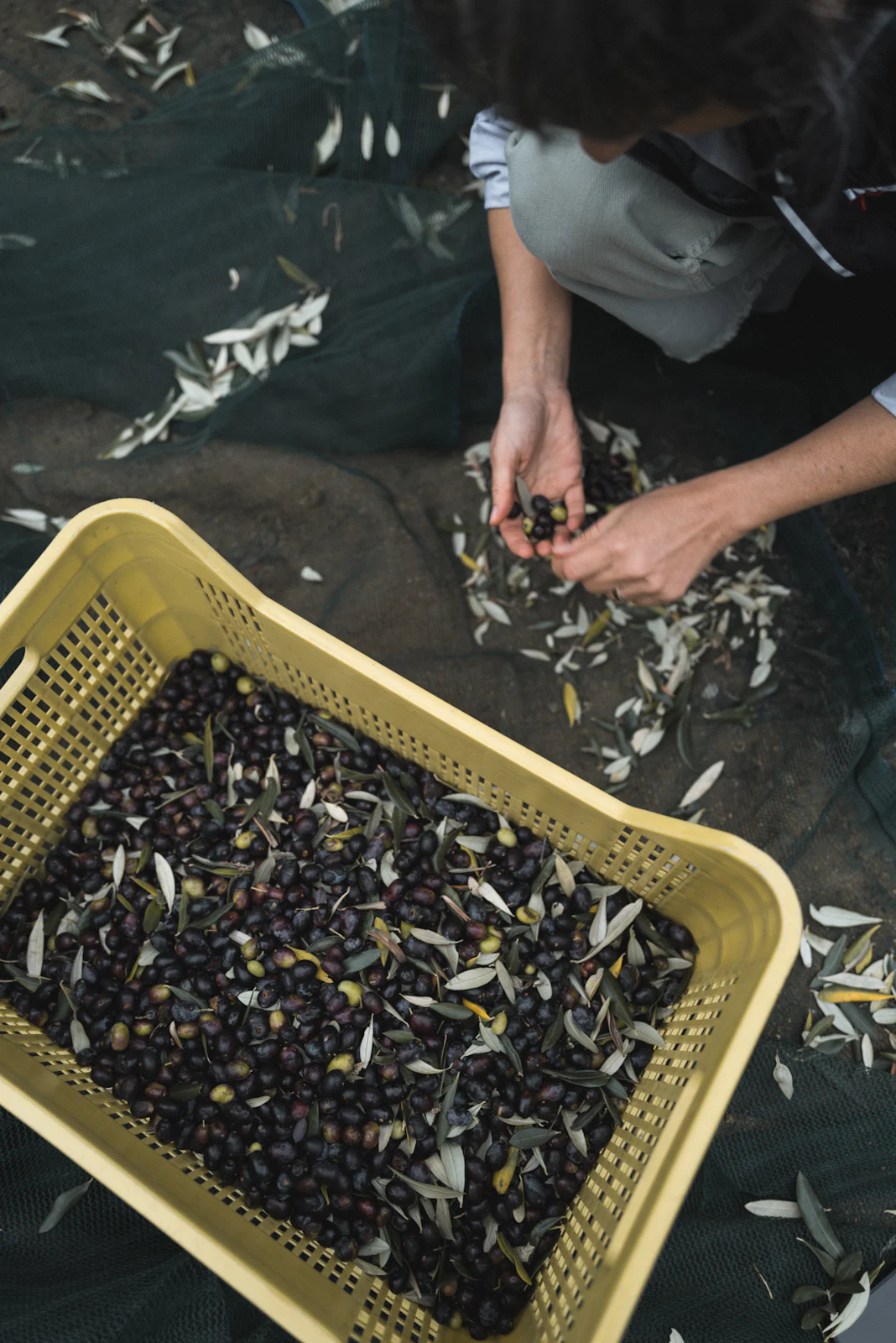
The reason is not the climate alone but a decision: from the outset Istria committed to early harvesting, hand-picking, short journeys to the mill and small batches. Precisely what lifts an oil into the top category – the criteria are explained in What Is Extra Virgin Olive Oil?
The varieties stand on their own and are barely known outside the Adriatic:
| Variety | Where | Character |
|---|---|---|
| Istarska bjelica | Istria | Very high in polyphenols, bitter and pungent, notably stable in storage |
| Buža | Istria | The most widespread Istrian variety, medium fruity, grassy |
| Rosinjola (Rošinjola) | Istria | Finer, almondy, often used in blends |
| Črnica | Istria | Dark fruit, softer, rounds out blends |
| Oblica | Dalmatia, the country's most common variety | Dual purpose for oil and table, mild to medium |
| Levantinka (Šoltanka) | Dalmatia, especially Šolta | Generous yield, harmonious, little bitterness |
A Europe-wide comparison of varieties is in Olive Varieties in Europe. If you read pungency and bitterness as marks of quality, Istarska bjelica is exactly your variety; why is explained in Polyphenols and Antioxidants in Olive Oil Explained.
Croatia in figures, and the islands with seals of their own
According to Eurostat data, Croatia harvested around 54,400 tonnes of olives for oil in the 2024 reporting year. On a European scale that is modest – Spain operates in the order of millions of tonnes – but it is no longer a hobbyist's volume. Practically all of it comes from Istria and Dalmatia.
What is remarkable is the density of protected designations in a small space. Alongside the Istrian designation, several islands carry EU seals of their own, among them Cres, Krk, Korčula, Šolta and Brač. For an Adriatic island with a few thousand inhabitants, a designation of origin is unusual; it is explained by centuries-old terraced groves and by varieties found nowhere else. The current list is held in the EU register eAmbrosia.
Slovenian Istria: small, cool, rich in polyphenols
Slovenia harvested around 3,800 tonnes of olives in the same year according to Eurostat – a twentieth of the Croatian volume, on a coastal strip barely forty kilometres long between Koper, Izola and Piran. Slovenian Istria has a protected designation of origin for its extra virgin olive oil, and the dominant variety is again Istrska belica.
The northerly position is an advantage here, not a handicap. Cooler autumn nights delay ripening, the olives are picked early and green, and the polyphenol content stays high. Such oils are pungent and bitter and keep for a long time – which also means they are stable in a pan, see Cooking with Olive Oil.
Montenegro: old trees, small volumes
Montenegro's olive culture is concentrated on the coastal strip around Bar and Ulcinj. Its emblem is the Stara Maslina near Bar, an olive tree whose age is estimated at more than two thousand years and which counts among the oldest in Europe. The most widespread native variety is reckoned to be Žutica; alongside it stand Italian varieties introduced during the 20th century.
Volumes are small and the structure is Ticino's: many smallholders, few mills, barely any export. Anyone wanting to taste Montenegrin oil will most easily do so on the spot.
Albania: the underrated producer
After Greece, Albania is the region's largest olive oil producer, and yet it is almost never perceived as an origin. Genetic studies have described 22 native cultivars; the two most important are Kalinjot for oil and Kokërrmadh Berati, which is also used as a table olive.
Albania's problem was long not the tree but the chain after it: outdated mills, long waits between picking and pressing, little certification. That is exactly where the faults arise that throw an oil out of the "extra virgin" category. Where modernisation has happened, oils are now emerging that compete internationally – and that cost markedly less than top Istrian oils.
The rest of the region
- North Macedonia: small areas in the south around Gevgelija and Valandovo, mostly for the domestic market.
- Bosnia and Herzegovina: a narrow strip in Herzegovina and around Neum; volumes at household level.
- Kosovo, Serbia: climatically almost without olive growing.
- Greece: the world's third producer, defined by Koroneiki – a story of its own, beyond the scope of this piece.
What sets Balkan oils apart
- A northern position. Istria and Slovenia sit at the northern edge of olive growing. Later ripening, cooler nights, more polyphenols.
- Early harvest as the rule. Picked green, often as early as October, with low oil yield and high aromatic density.
- Small batches. Most estates bottle a few thousand bottles. Vintage and variety are almost always on the label.
- Indigenous varieties. Bjelica, Buža, Oblica, Levantinka, Kalinjot – profiles you will not know from Italy or Spain.
- The price follows. Top Istrian oils cost as much as Tuscan ones. Albanian and Montenegrin oils sit well below.
Getting them in Switzerland
From a major retailer, essentially not at all. The routes are the same as for any small producer: direct shipping from the estate, specialist olive oil retailers online, Croatian and Balkan grocers in the larger cities, and the drive home from holiday – Istria is a day's drive from Switzerland.
The same rules apply when buying as anywhere else: harvest year on the label, dark bottle, small size, and store it cool and dark once opened. The essentials are in How to Store Olive Oil.
Frequently asked questions
Is Istrian olive oil really the best in the world?
The Flos Olei guide has rated Istria the best region for years, in 2026 for the ninth time. That is one guide's verdict, not a law of nature – but it does show the region produces consistently at the top level.
Which variety from the region should you try?
Istarska bjelica if you like pungent, bitter, polyphenol-rich oils. Levantinka or Oblica from Dalmatia if you want something milder.
Why is Croatian oil so expensive?
Small parcels, hand-picking, early harvest with low yield and batches of a few thousand bottles. On top of that, strong domestic demand driven by tourism.
Are there protected designations of origin in the Balkans?
Yes, several: for Istria, for Slovenian Istria and for individual Croatian islands such as Cres, Krk, Korčula, Šolta and Brač. The current list is in the EU register eAmbrosia.
Is Albanian olive oil an alternative?
On price yes, and the Kalinjot variety is interesting. Check the harvest year and the bottler, because processing chains vary widely in how modern they are.
Sources
- Croatia Week: Istria named world's best olive oil region for ninth time (Flos Olei 2026)
- Istra.hr: Flos Olei 2025 – Istria among the world's top olive-growing regions for 16 consecutive years
- Eurostat: Olives for oil – production (tag00122)
- Olive Oil Production in Albania, Chemical Characterization, and Authenticity (IntechOpen, 2021)
- Olive Oil Times World Ranking: country statistics for Croatia
- European Commission: eAmbrosia – the EU geographical indications register